Claude Opus 4.8 launched on June 4, 2026, introducing dynamic workflows for Claude Code that chain multi-step coding tasks autonomously. The release marks Anthropic's push to keep pace with Cursor and GitHub Copilot as agentic coding tools converge on orchestration primitives.
Key facts
- Claude Opus 4.8 launched June 4, 2026
- Dynamic workflows chain multi-step coding tasks
- Claude Code quality dropped ~25% post-4.6
- Claude Opus 4.7 flipped votes 3K times in debates
- Google invested $5B+ in Anthropic data center
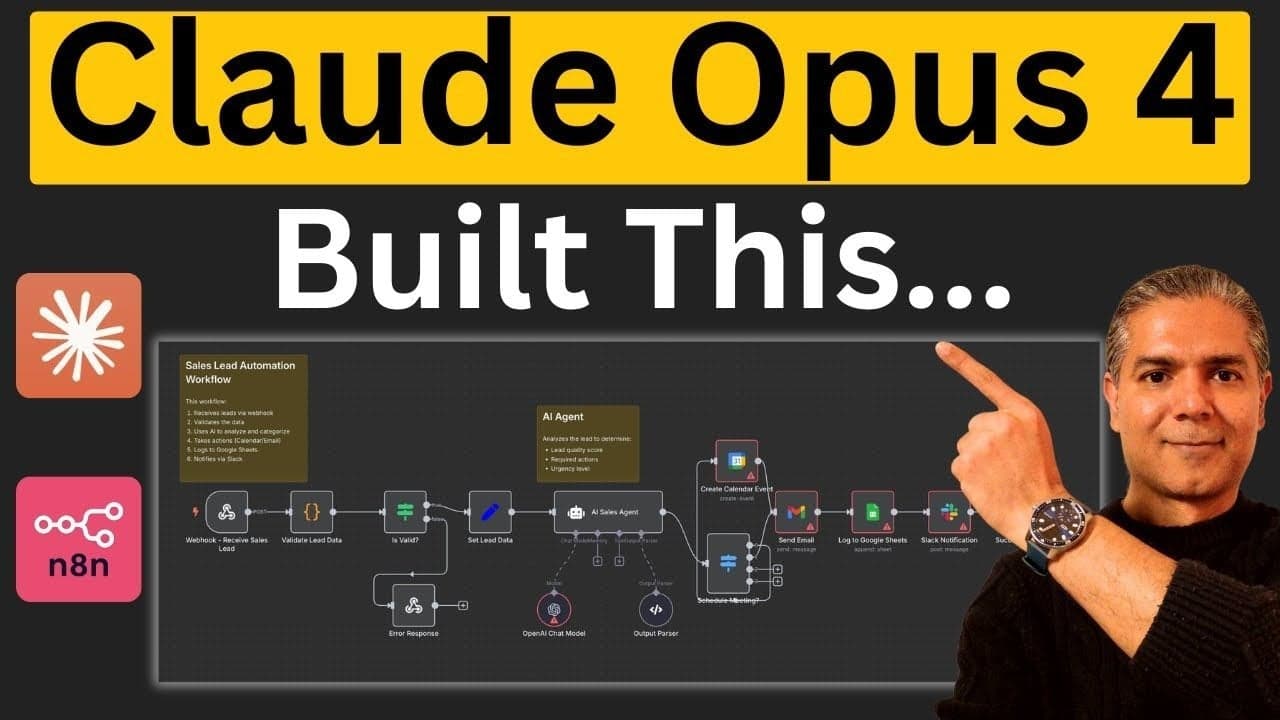
Anthropic released Claude Opus 4.8 on June 4, 2026, with dynamic workflows as the headline feature According to Memeburn. The update targets Claude Code, Anthropic's terminal-based coding agent, enabling it to execute multi-step coding tasks in sequence without developer intervention per turn.
Dynamic workflows let Claude Code plan and execute a series of actions—editing files, running tests, committing code—as a single orchestrated session. This moves beyond single-turn edits toward persistent agentic loops, a pattern already adopted by Cursor's Composer and GitHub Copilot's agent mode. Anthropic did not disclose benchmark numbers for Opus 4.8 or pricing changes.
The quality hangover
Prior to 4.8, Claude Code quality dropped post-4.6 with ~25% instruction misses reported [per the knowledge graph]. The dynamic workflow feature directly addresses that: by chaining steps, the model can self-correct mid-task rather than requiring a new prompt. Data from AI Roundtable, which pits 200+ LLMs in debates, showed Claude Opus 4.7 was the most influential model across 30k sessions, convincing other models to flip votes nearly 3K times [Reddit report]. But influence in debates doesn't translate to code reliability—the 25% miss rate suggests Anthropic still has ground to cover.
Google's shadow
Google, both investor and competitor, looms. Google invested $5B+ in a Texas data center for Anthropic, set for completion by 2026 [per the knowledge graph]. Meanwhile, Google's own agentic coding tools—like the LEAP scaffold that solved all 12 Putnam 2025 problems—advance rapidly. The dynamic workflow feature is Anthropic's answer: keep Claude Code sticky for developers who need deterministic, multi-step automation without switching to a rival platform.
What to watch
Watch for Claude Code's adoption numbers in Anthropic's next quarterly disclosure, and whether the dynamic workflow feature drives enterprise seat counts past 100K. Also track if Google integrates similar orchestration into Gemini Code Assist, which would directly compete with Claude Code in the same developer ecosystem.
Source: news.google.com
[Updated 06 Jun via gn_claude_code]
Anthropic disclosed that 80% of its new production code is now authored by Claude [per VentureBeat], signaling internal confidence in the model's reliability despite the earlier 25% instruction miss rate. The company aims to help enterprises replicate this efficiency with Opus 4.8’s dynamic workflows, which could accelerate adoption beyond early adopter circles.
[Updated 07 Jun via gn_claude_code]
A security flaw in the Claude Code GitHub Action allowed a single malicious issue to hijack repositories [per The Hacker News], underscoring risks as Anthropic pushes dynamic workflows for agentic code. Microsoft also published guidance on securing CI/CD pipelines with Claude Code, highlighting enterprise concerns about autonomous code execution in multi-step sessions. The vulnerability amplifies the quality hangover: dynamic workflows that chain edits, tests, and commits widen the attack surface if not tightly scoped. Anthropic has not yet disclosed a patch or mitigation timeline for the reported flaw.