The Token Frustration is Real
A developer on Hacker News recently vented: "I have been working on my website using claude code. But the damnn tokens always leave me frustrated." They asked if any local AI model comes close to Claude Code after seeing PewDiePie launch Odysseus. The answer? Not yet.
Local models are still "more like an expensive hobby today," as one commenter put it. If you're on a budget, they recommend trying Chinese models through OpenRouter or a subscription like OpenCode Go, which are "surprisingly good now." But for the coding quality Claude Code delivers—especially with Claude Opus 4.6's 1M-token context and multi-file editing—you're not going to get parity from a local model.
So what's the real solution? Stop burning tokens unnecessarily. Here's how.
What Changed — Claude Code's Token Economy
Claude Code usage has exploded—80x user growth—and Anthropic doubled usage limits on Pro and Max plans in May 2026. But token costs remain a pain point, especially after reports that Claude Code quality dropped post-4.6 with ~25% instruction misses. Every wasted token hurts more when you're already fighting model regression.
The key insight: you don't need a cheaper model. You need to stop paying for tokens you're wasting.
What It Means For You — Three Token-Saving Tactics
1. Use /compact Mode
Claude Code's /compact flag cuts token usage by ~40% by stripping verbose explanations, diff summaries, and redundant context from responses. It's designed for experienced developers who just want the code, not the commentary.
claude code --compact
# Or toggle it in-session with /compact
This is the single biggest lever. Try it for a week and compare your token usage.
2. Optimize Your CLAUDE.md
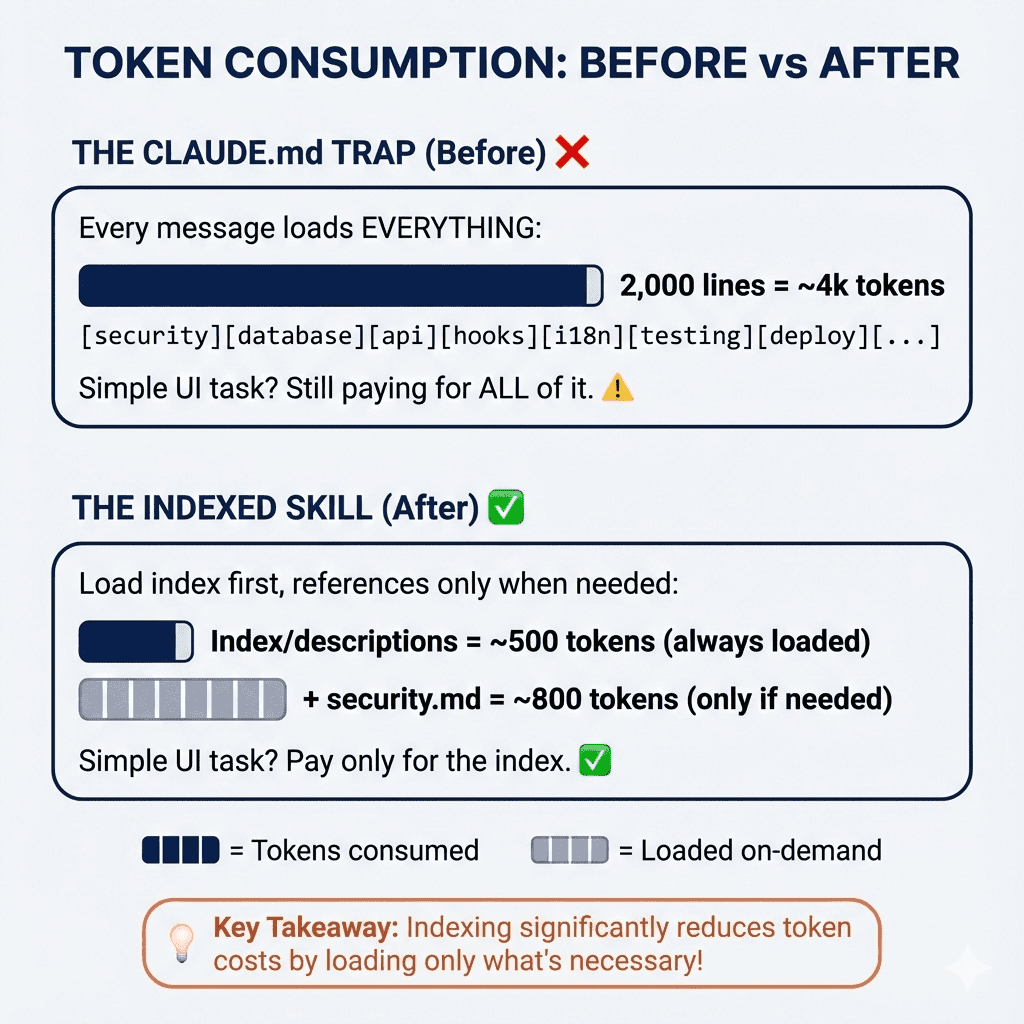
Your CLAUDE.md file is loaded into every session. If it's bloated, you're paying for tokens every time. Strip it down:
- Remove examples you've memorized
- Move project-specific context to a separate file and load it only when needed with
/load - Keep only: tech stack, testing commands, key conventions, and MCP server configs
Example lean CLAUDE.md:
# Project: My Website
- Stack: Next.js, Tailwind, PostgreSQL
- Build: `npm run build`
- Test: `npm test`
- Conventions: Functional components, named exports
3. Route Simple Tasks to Cheaper Models via OpenRouter
For tasks that don't need Claude's full power—simple refactors, boilerplate generation, or lint fixes—route them to cheaper models through OpenRouter. Keep Claude Code for complex multi-file edits, architecture decisions, and debugging.
Setup:
- Get an OpenRouter API key
- Configure Claude Code to use it for specific task types (check MCP server docs for routing)
- Use a prompt like: "Use cheapest available model for this: [task]"
Try It Now
- Immediately: Run
claude code --compacton your next session. See if the output quality is acceptable. For most experienced devs, it is. - This week: Audit your CLAUDE.md. Cut it in half. Remove anything you don't need every session.
- If still over budget: Set up OpenRouter routing for simple tasks. Keep Claude Code for the hard stuff.
The Bottom Line
Local models aren't there yet for Claude Code-level coding. But you don't need them. By using /compact, trimming your CLAUDE.md, and routing cheap models for simple work, you can cut token costs by 40-60% without sacrificing the quality that made you choose Claude Code in the first place.
Source: news.ycombinator.com
[Updated 05 Jun via devto_claudecode]
A developer cut costs by 62% ($1.96 to $0.74) on the same task by adding Neo, an AI agent that plans before coding. Neo spent two minutes researching before writing any code — reading model cards, CPU benchmarks, and build requirements. It chose ONNX Runtime over PyTorch (better CPU performance) and gTTS over espeak-ng (better test audio). The result: WER dropped from 20.9% to 4.65% and latency fell from 8.60s to 5.50s on the same Azure VM [per dev.to via Gaurav Vij].