Anthropic quietly shipped the /workflows command in Claude Code, replacing the LLM orchestrator pattern with code-based control flow. The move solves the 'token tax' problem where multi-agent orchestration degrades as context windows fill.
Key facts
- /workflows ships in Claude Code CLI.
- Uses a workflow.js file for control flow.
- Model only handles judgment inside each step.
- Replaces LLM-as-orchestrator pattern.
- Fixes token tax from sub-agent context buildup.
Anthropic quietly shipped the /workflows command in Claude Code, replacing the LLM orchestrator pattern with code-based control flow. The move solves the 'token tax' problem where multi-agent orchestration degrades as context windows fill.
The problem with LLM-as-orchestrator
In the old pattern, one LLM orchestrates everything — spawns sub-agents, holds every result, plans the next step [According to @_vmlops]. Every sub-agent result re-enters the orchestrator's context, so spinning up 10 agents means the main session pays a 'token tax' and gets sloppier as the window fills. This is the same degradation pattern documented in Liu et al. 2023 on lost-in-the-middle effects, where LLM performance drops sharply when relevant information appears in the middle of long contexts.
How /workflows works
Developers define a workflow.js file where code handles the control flow and the model only handles judgment inside each step [Per @_vmlops]. The principle: use code for what code is good at, use models for what models are good at. This is structurally identical to the DAG-based approach used by LangGraph and Haystack, but Anthropic bakes it directly into the CLI, eliminating the need for an external framework.
Why this matters
The /workflows command represents a structural admission that current LLM context windows are not reliable enough to serve as multi-agent orchestrators. Rather than waiting for longer context windows or better attention mechanisms, Anthropic chose to offload control flow to deterministic code — a pragmatic design decision that prioritizes reliability over purity. The unique take: this is Anthropic's quiet bet that code-based orchestration, not model-level reasoning, will win for production multi-agent systems.
What to watch
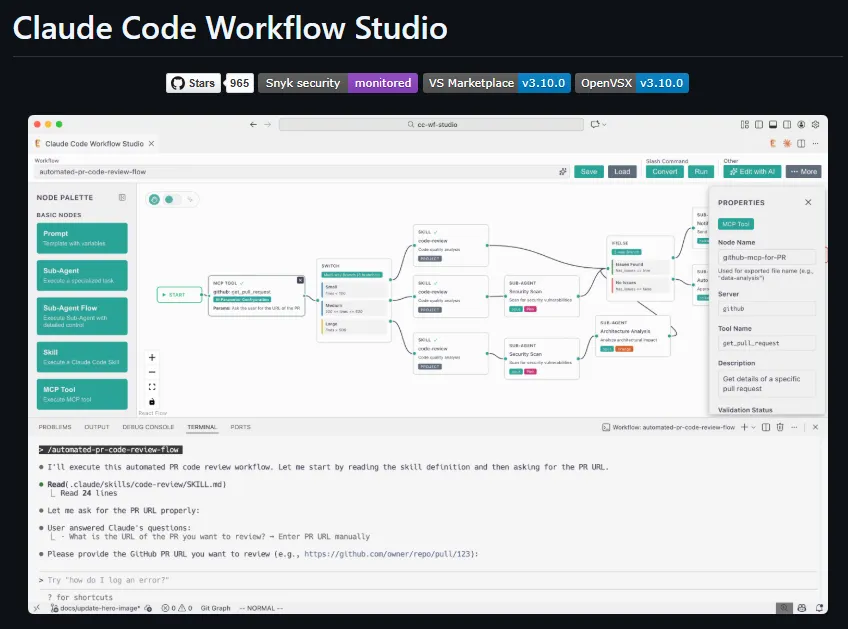
Watch for Anthropic to extend /workflows with step-level caching or parallel execution in the next Claude Code release. If they add conditional branching and retry logic to the workflow.js spec, it becomes a direct competitor to LangGraph. Also watch whether OpenAI ships a similar control-flow primitive in Codex CLI.