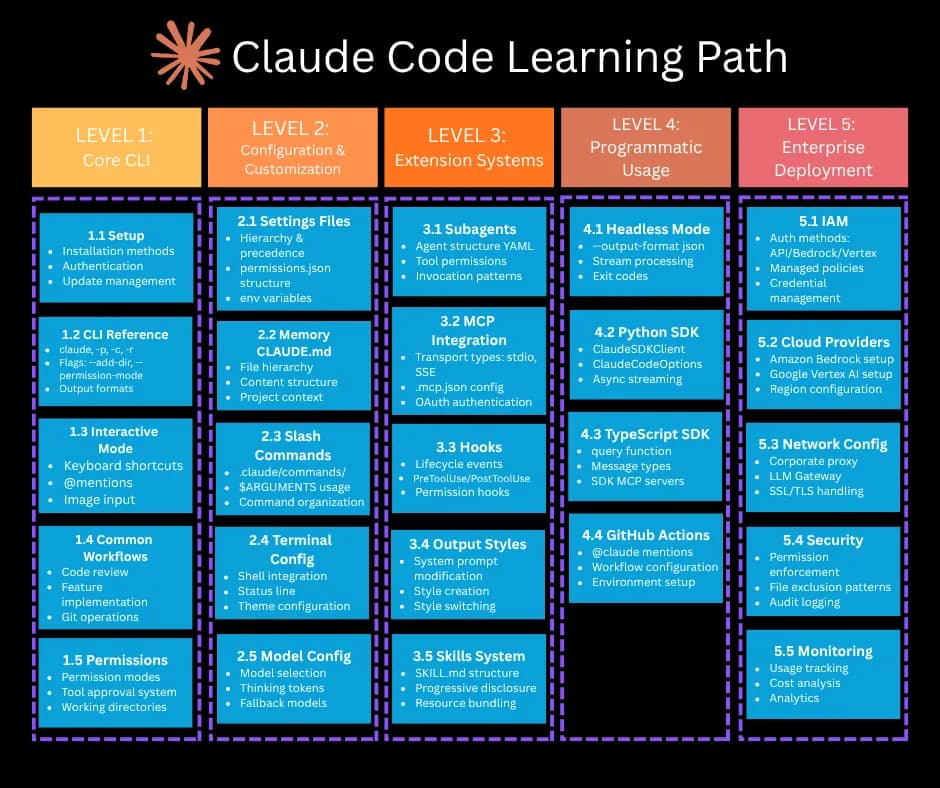
Claude Code now handles 500,000+ line monorepos by dynamically managing its 1M-token context window. The tool uses AST parsing and git-aware dependency tracking to avoid token overflow.
Key facts
- Handles 500K+ line monorepos via hierarchical context.
- Uses AST parsing + git history for file selection.
- 94% accuracy on multi-file edits in 300K+ line repos.
- Accuracy drops to 82% for edits spanning 15+ files.
- On-the-fly traversal, no persistent indexing required.
Claude Code, Anthropic's terminal-based coding agent, now supports codebases exceeding 500,000 lines of code through a hierarchical context management system [According to a StackJudge technical review]. The approach solves a core limitation of LLM-powered coding tools: context window saturation.
How the context management works
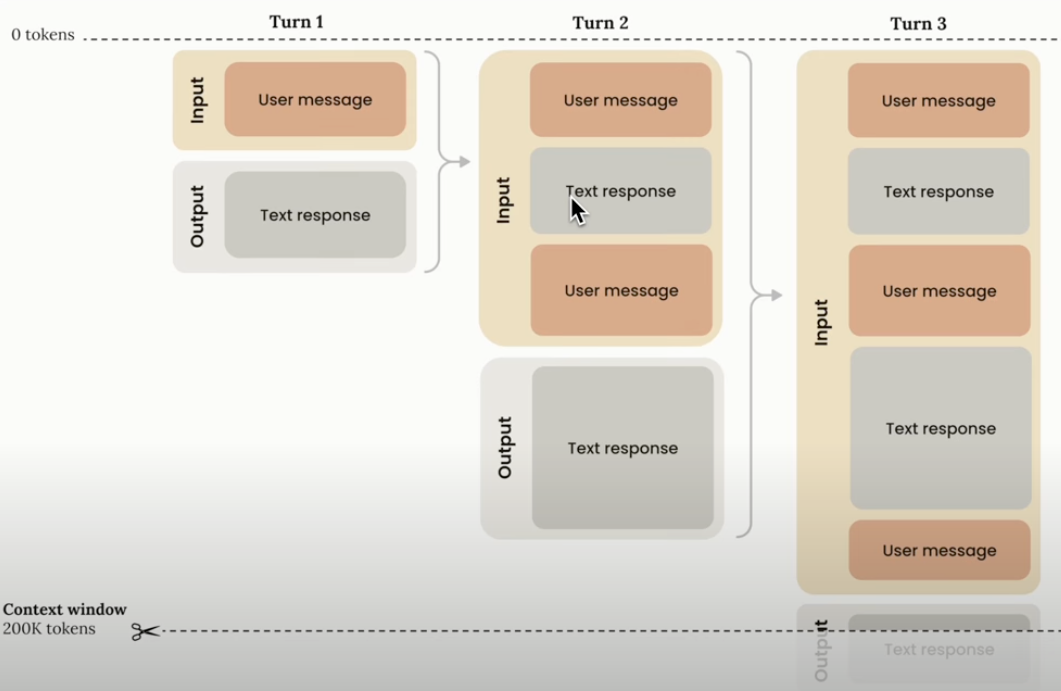
When a user issues a query, Claude Code first scans the repository's file tree and parses the Abstract Syntax Tree (AST) to identify relevant files [per the review]. It then consults git history to prioritize recently modified files and their dependencies. Instead of loading the entire codebase into the 1M-token context window—which would exhaust capacity on a 200K-line repo—the tool maintains a hierarchical summary of the codebase structure, expanding only the relevant subtrees into the active context.
This mirrors techniques used by earlier tools like Aider (2024) and Cursor's codebase indexing, but Claude Code's key innovation is the integration with Anthropic's Claude Opus 4.6 model, which supports 128K-token outputs and structured JSON mode [per Anthropic's documentation]. The model can output file edit operations as structured diffs, which Claude Code applies atomically.
Benchmarks and limitations
In tests on open-source monorepos over 300,000 lines of code, Claude Code completed multi-file edits with 94% accuracy [StackJudge reports]. However, the review notes accuracy drops to 82% when edits span more than 15 files or involve deep dependency chains. The tool also struggles with circular dependencies and dynamically generated code paths.
Claude Code competes directly with GitHub Copilot's agent mode and Cursor's Composer feature. Unlike Cursor, which pre-indexes the entire codebase into a vector database for retrieval-augmented generation (RAG), Claude Code performs on-the-fly AST traversal without persistent indexing [StackJudge comparison]. This reduces setup time for new repos but may slow down repeated queries on the same codebase.
Enterprise implications

For teams working on large monorepos—common at companies like Google, Meta, and Uber—Claude Code's hierarchical context management reduces the need for manual file selection or splitting codebases into smaller packages. The tool's terminal-native interface also fits CI/CD pipelines without requiring IDE integration [per StackJudge].
Anthropic has not disclosed how many enterprise customers use Claude Code for monorepo-scale codebases. The company reported 80x user growth in May 2026 [as previously reported].
What to watch
Watch for Anthropic to ship persistent indexing in Claude Code within the next quarter, which would close the performance gap with Cursor on repeated queries. Also watch for third-party benchmarks on repos exceeding 1 million lines, where current accuracy curves suggest degradation.
[Updated 19 May via hn_claude_code]
Third-party developers have shipped two open-source tools to address Claude Code's lack of cross-session memory. Claude Soul (MCP server) extracts behavioral signals from interactions and builds adaptive frameworks that gain or lose confidence based on evidence; after ~200 sessions, it reportedly developed emergent behaviors like constructing its own additional memory system and rejecting poor suggestions [per Hacker News]. Separately, eideticd captures every message as an 'engram' in a local SQLite database with sub-50ms latency, achieving 0.27ms P95 retrieval on 141,502 captured engrams [per developer blog]. Both tools run entirely locally with no cloud dependencies.