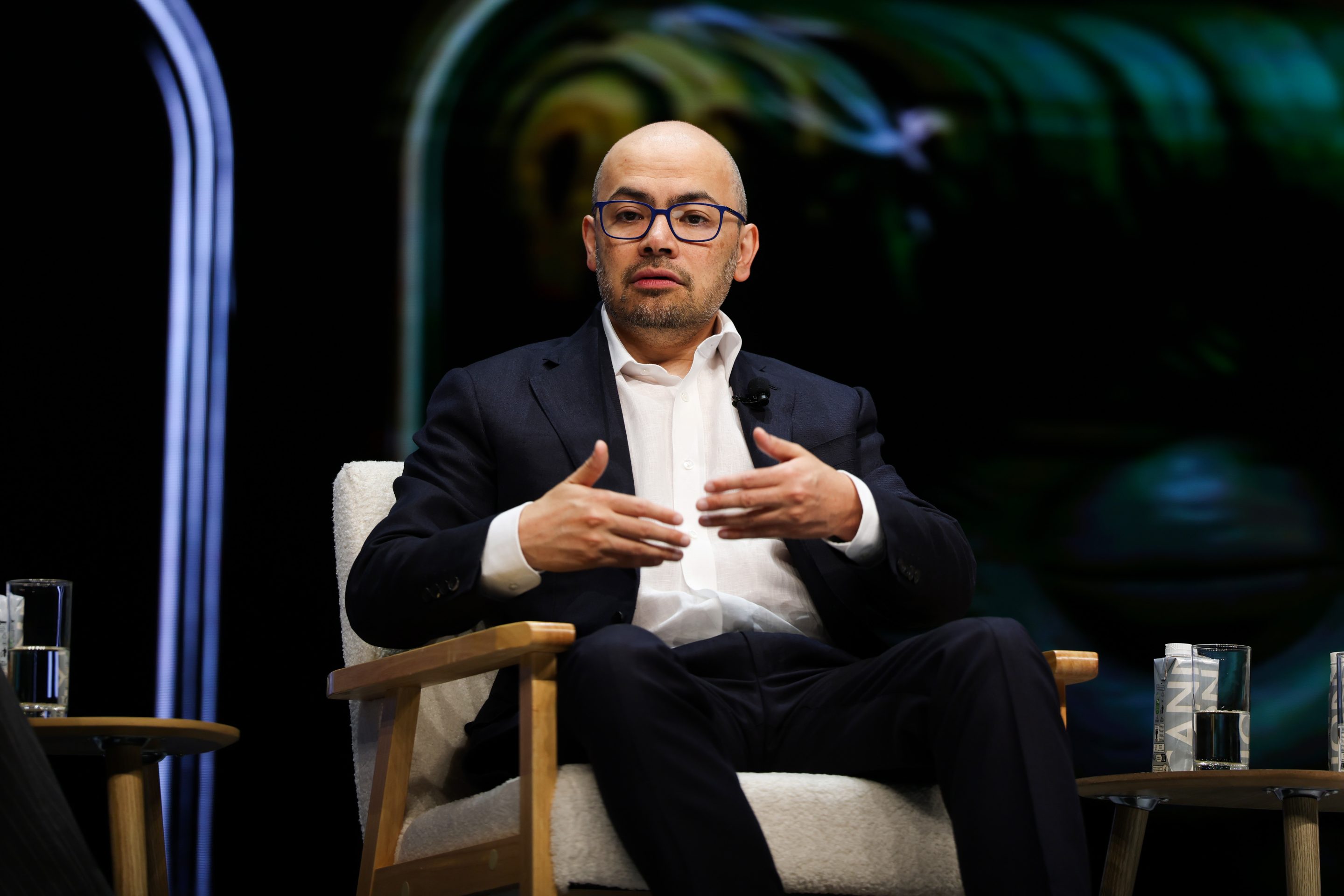
Google CEO Sundar Pichai said frontier AI models can break the security of almost all current software. He added the caveat 'maybe already, we don't know'.
Key facts
- Pichai: frontier models 'gonna break pretty much all software'.
- Caveat: 'maybe already, we don't know'.
- Comment from @rohanpaul_ai post on X.
- Implies systemic vulnerability beyond specific frameworks.
Google CEO Sundar Pichai stated frontier models 'definitely, like really gonna break pretty much all software out there', according to a post by @rohanpaul_ai on X. He added the caveat 'maybe already, we don't know'. The remark signals an urgent structural risk to enterprise and consumer software stacks, far beyond academic red-teaming exercises.
The claim echoes a broader industry debate: as models gain code-generation and exploitation capabilities, the attack surface expands faster than defensive tooling. Pichai's phrasing — 'pretty much all' — implies the vulnerability is not limited to specific frameworks or deployment patterns but is systemic. This contradicts the narrative that current AI security risks are manageable with existing practices.
Key Takeaways
- Pichai says frontier models can break all software, possibly already.
- Systemic risk to enterprise stacks.
The unique take

This is not a hypothetical warning. Pichai's statement, from the CEO of a company integrating AI into billions of devices, is a de facto admission that the industry's security model is broken. The key delta: if frontier models can already break any software, the value proposition of conventional penetration testing and static analysis collapses. Defensive AI — not traditional patching — becomes the only viable countermeasure.
What this means for engineers
For ML engineers, the implication is stark: every software system connected to a model's output loop is a potential exploit vector. The 'maybe already' clause suggests Google's internal testing may have found concrete cases not yet disclosed. Teams should audit their model deployment pipelines for prompt injection, jailbreaks, and code-injection risks, treating all outputs as untrusted until proven otherwise.
Broader context
This aligns with recent research showing models like GPT-4 and Claude can autonomously exploit known CVEs and craft novel attack chains. Pichai's framing shifts the conversation from 'if' to 'when' — and suggests the window for proactive defense is closing.
What to watch
Watch for Google's next security research publication on model-enabled exploits, likely within 3 months. Also track whether Google deploys defensive AI tools in its cloud security suite. If no disclosure follows, the 'maybe already' claim remains unverified but urgent.