Key Takeaways
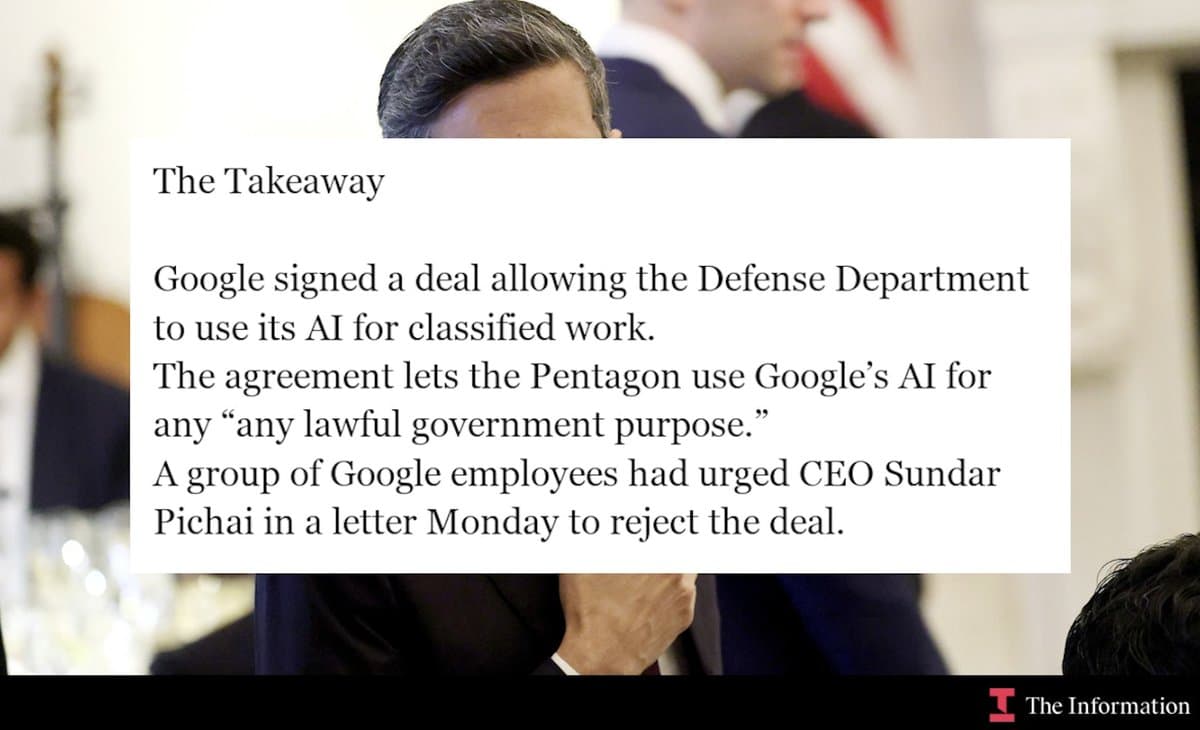
- Google signed a deal allowing the Pentagon to use its AI models for classified work and 'any lawful government purpose,' reversing its 2018 exit from Project Maven.
- The contract includes non-binding language on surveillance and autonomous weapons, and requires Google to adjust AI safety filters at government request.
What Happened

Google has signed a contract with the Pentagon permitting the use of its AI models for classified work and "any lawful government purpose," according to a report from @kimmonismus. The deal marks a dramatic reversal from 2018, when Google pulled out of Project Maven after over 600 employees urged CEO Sundar Pichai to reject the agreement.
Google now joins xAI and OpenAI in having classified Pentagon AI deals, with terms that appear even more permissive than OpenAI's. The contract includes language stating that Google's AI "is not intended for" mass surveillance or autonomous weapons without human oversight, but legal experts note this wording is not legally binding.
Notably, the deal also requires Google to adjust its AI safety filters at the government's request. This follows Anthropic's public refusal to drop its red lines on those exact use cases, which led to the Pentagon declaring Anthropic a supply chain risk — a designation Anthropic is currently fighting in court.
Context
Google's 2018 Project Maven exit was a landmark moment in tech ethics. Nearly 4,000 employees signed a letter demanding the company not renew the contract, which involved using AI to analyze drone footage. The company ultimately withdrew, citing "AI Principles" that prohibited development of weapons systems.
Since then, the landscape has shifted dramatically. OpenAI and xAI have both signed classified Pentagon deals, and the broader trend of AI companies partnering with the U.S. Department of Defense has accelerated. The competitive pressure to secure government contracts appears to have eroded earlier ethical commitments.
Key Details
- Contract scope: Applies to "any lawful government purpose"
- Safety filters: Google must adjust AI safety filters at government request
- Legal protections: Language on surveillance and autonomous weapons is non-binding
- Employee response: Over 600 employees had urged rejection
- Competitive context: Google joins xAI and OpenAI in Pentagon deals
What This Means in Practice

This deal signals that the major AI labs are now competing for classified government work, with permissive contract terms that allow military applications. The non-binding language on surveillance and autonomous weapons means Google's AI could be used in sensitive operations without legal accountability. The requirement to adjust safety filters at government request raises questions about whether the company's safety research could be overridden for military purposes.
gentic.news Analysis
This development represents a significant inflection point in the relationship between Big Tech and the U.S. military. Google's 2018 Project Maven exit was a defining moment that established industry norms around AI ethics. The company's reversal — combined with the contract's permissive terms — suggests those norms are eroding under competitive pressure.
The timing is notable. We've previously covered OpenAI's classified Pentagon deals and xAI's military contracts, which created a competitive dynamic that made it difficult for any single company to maintain ethical red lines without losing business. Anthropic's public refusal and subsequent Pentagon supply chain risk designation shows the consequences for companies that do maintain those lines.
The legal architecture here is critical. Non-binding language on surveillance and autonomous weapons creates a situation where the Pentagon can use Google's AI for those purposes while maintaining plausible deniability. The requirement to adjust safety filters at government request goes further than any previous deal we've seen — it effectively gives the Pentagon control over Google's safety infrastructure.
This also raises questions about Google's AI Principles, which were established after the Project Maven controversy. If the company is now obligated to disable safety filters at government request, those principles appear to have been effectively suspended for classified work. The employee backlash — over 600 signatures — suggests internal dissent, but the lack of a larger public outcry may indicate that the AI ethics movement has lost momentum since 2018.
Frequently Asked Questions
What does the Google Pentagon deal allow?
The contract permits the Pentagon to use Google's AI models for classified work and "any lawful government purpose." It includes non-binding language suggesting the AI is not intended for mass surveillance or autonomous weapons without human oversight, but legal experts say this wording is not legally enforceable.
How does this compare to Google's 2018 Project Maven exit?
In 2018, Google withdrew from Project Maven after massive employee backlash over using AI to analyze drone footage. The company cited its newly established AI Principles, which prohibited weapons development. This new deal represents a complete reversal of that position.
Why did Anthropic get designated a supply chain risk by the Pentagon?
Anthropic publicly refused to drop its ethical red lines on military use of AI, including surveillance and autonomous weapons. The Pentagon subsequently declared Anthropic a supply chain risk, a designation the company is currently fighting in court.
Is the contract's language on surveillance and weapons legally binding?
No. Legal experts cited in the report say the wording stating Google's AI "is not intended for" mass surveillance or autonomous weapons is not legally binding. This means the Pentagon could use the AI for those purposes without violating the contract's terms.