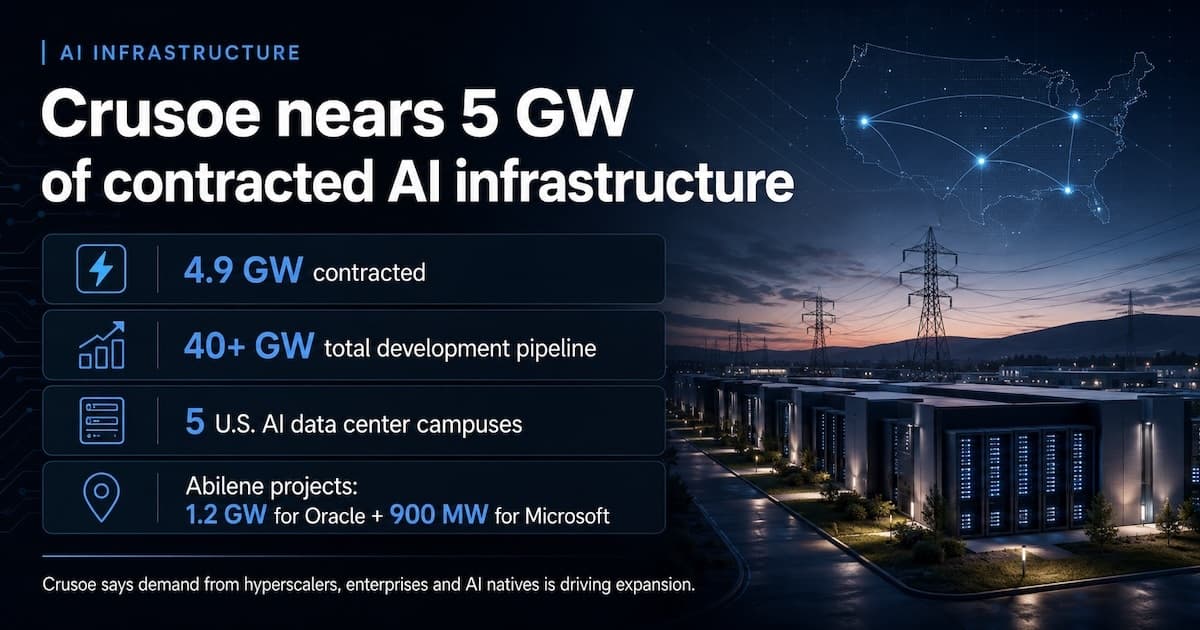
Crusoe and ON.energy will deploy 5 GW of AI UPS™ at multiple hyperscale campuses. The system pairs gas-fired generation with carbon capture to deliver dispatchable backup power for AI training clusters.
Key facts
- 5 GW total AI UPS capacity planned.
- Partnership between Crusoe and ON.energy.
- System uses gas-fired turbines with carbon capture.
- Crusoe previously deployed 1.5 GW of stranded gas data centers.
- Targets multiple hyperscale campuses.
Crusoe Energy Systems and ON.energy announced a partnership to deploy 5 GW of AI UPS™ — a branded uninterruptible power supply system — at multiple hyperscale campuses According to the Crusoe press release. The 5 GW figure targets the growing gap between grid interconnection timelines and AI buildout schedules, where hyperscalers like Google, Microsoft, and Amazon face multi-year waits for utility power.
The Gas-Fired Backup Play
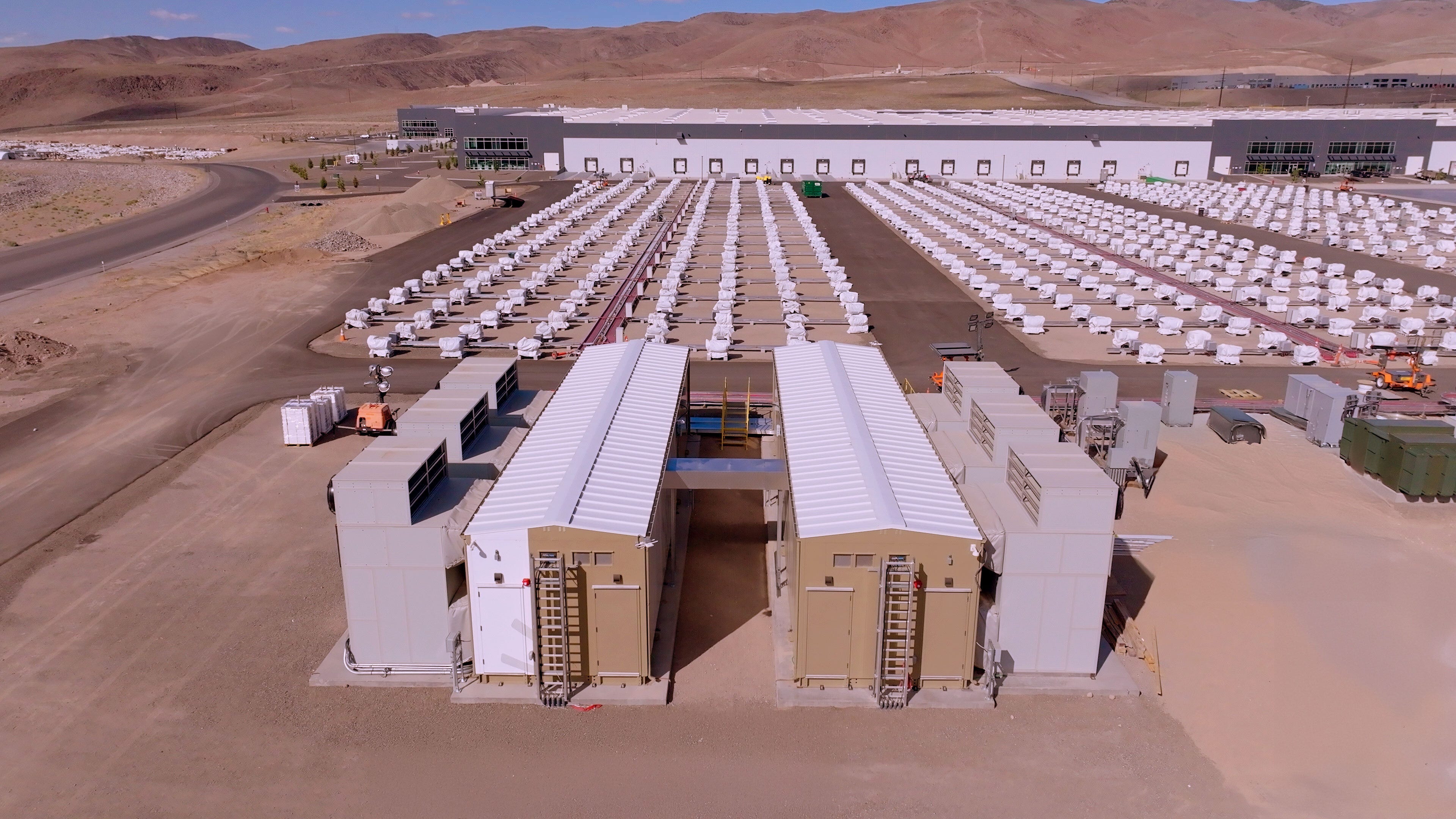
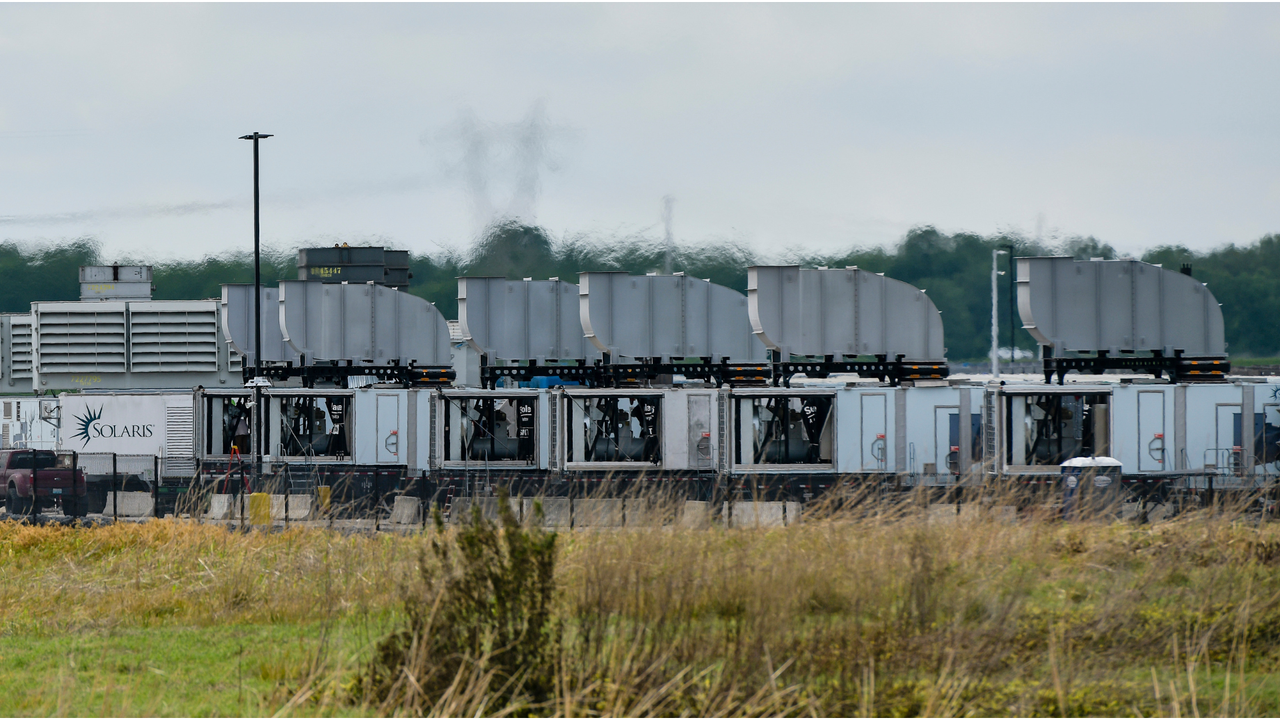
AI UPS™ combines ON.energy's fleet of gas-fired turbines with Crusoe's modular data center pods and carbon capture technology. The system is designed to provide backup power during grid outages or when utility capacity falls short, a growing problem as AI clusters draw 100+ MW each. Crusoe previously deployed 1.5 GW of stranded gas-powered data centers in the Bakken oil field, capturing flare gas that would otherwise be burned. This deal scales that model by an order of magnitude and pivots from stranded gas to dedicated gas infrastructure.
Why 5 GW Matters
The 5 GW commitment is equivalent to roughly five large nuclear reactors or the entire power demand of a small country. It signals that hyperscale operators are willing to bypass traditional grid expansion timelines — which can stretch 5-10 years — by building their own generation. The carbon capture component aims to blunt criticism from climate-focused investors, though the technology remains unproven at this scale. ON.energy did not disclose the cost per MW or the carbon capture rate.
The Structural Shift

This deal represents a structural shift in AI infrastructure: the industry is moving from renting grid capacity to owning generation. Google, for instance, has booked Intel to package 3 million TPUs by 2028 and is building its own chip supply chain. Similarly, Crusoe's move into gas-fired backup suggests that even the largest cloud providers cannot rely on utilities alone to power the next wave of AI training clusters.
What to watch
Watch for the first campus deployment timeline and carbon capture rate disclosure. If ON.energy achieves >90% capture at scale, it could unlock additional 10+ GW orders from hyperscalers seeking to avoid grid interconnection queues entirely.
Source: news.google.com