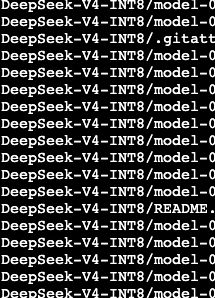
A new generation of China's homegrown AI appears to be on the horizon. According to recent social media reports, DeepSeek is preparing to launch DeepSeek V4, the latest iteration in its series of large language models. The development signals continued momentum in China's fiercely competitive AI sector, where domestic companies are racing to match and potentially surpass international counterparts.
The DeepSeek Trajectory
DeepSeek has established itself as a significant player in China's AI ecosystem through its previous model releases. The company's progression through V1, V2, and V3 versions demonstrates a commitment to rapid iteration and improvement. While specific technical details about V4 remain undisclosed in the initial announcement, the pattern suggests this release will represent another substantial step forward in capabilities.
Chinese AI companies like DeepSeek operate within a unique technological and regulatory environment. They must navigate both technical challenges and policy frameworks while competing against well-funded international organizations. The announcement of V4 indicates DeepSeek's confidence in maintaining its development pace despite these complexities.
China's AI Competitive Landscape
The Chinese AI market has become increasingly crowded with contenders ranging from tech giants like Baidu (with Ernie), Alibaba (with Qwen), and Tencent to specialized AI firms. DeepSeek's continued model development suggests it maintains both the technical talent and computational resources to stay in this race.
Each new model generation typically brings improvements in several key areas: reasoning capabilities, coding proficiency, multilingual understanding, and reduced hallucination rates. While we await official benchmarks, V4 will likely be measured against both domestic competitors and leading international models like GPT-4, Claude 3, and Gemini.
Implications for Global AI Development
The emergence of DeepSeek V4 represents more than just another model release—it reflects the ongoing globalization of AI innovation. As Chinese models advance, they contribute to a more diverse technological ecosystem with different approaches to AI safety, alignment, and application development.
For developers and businesses worldwide, the proliferation of capable AI models creates more options and potentially lowers costs through increased competition. It also raises important questions about technological standards, interoperability, and the geopolitical dimensions of AI leadership.
What to Expect Next
Following this initial announcement, the AI community will be watching for several developments:
- Official release details including technical specifications and performance benchmarks
- Accessibility information regarding API availability, pricing, and open-source considerations
- Specialized capabilities that might distinguish V4 from previous versions and competing models
- Integration pathways for developers and enterprises looking to leverage the new model
DeepSeek's previous releases have typically been followed by detailed technical papers and evaluation results, suggesting similar transparency may accompany V4's launch.
The Road Ahead for Chinese AI
The announcement of DeepSeek V4 comes at a pivotal moment for China's AI industry. Recent export restrictions on advanced semiconductors have created challenges for training cutting-edge models, making continued progress particularly noteworthy. DeepSeek's ability to advance to a fourth-generation model suggests successful adaptation to these constraints through software innovations, algorithmic efficiencies, or alternative hardware strategies.
As the global AI landscape continues to evolve at breakneck speed, developments like DeepSeek V4 remind us that innovation is becoming increasingly distributed. The center of AI development is no longer concentrated in a single region or company, but rather emerging through parallel efforts worldwide.
Source: Social media report from @kimmonismus indicating DeepSeek V4 appears to be forthcoming.