Skip to content
gentic.news — AI News Intelligence Platform
Connecting to the Living Graph…

Listen to today's AI briefing

Daily podcast — 5 min, AI-narrated summary of top stories

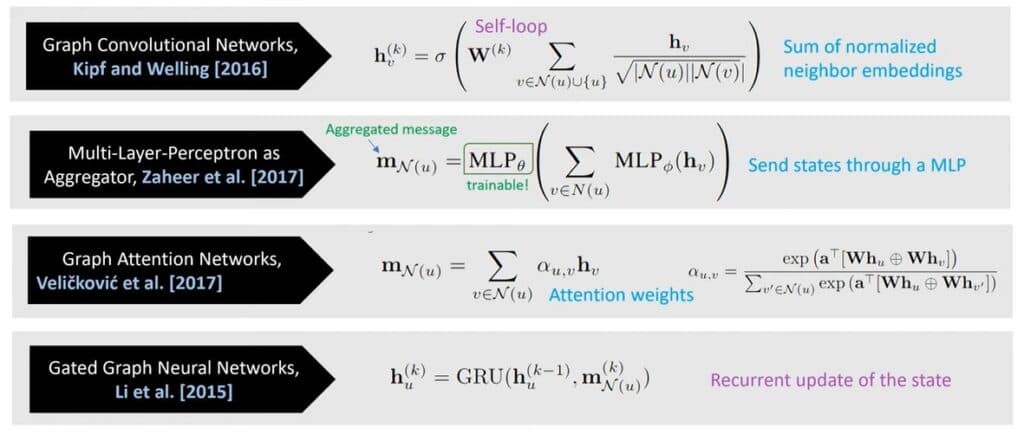
A diagram showing different types of graph neural network architectures for recommendation, with nodes and edges…
AI ResearchScore: 76

DPAA Debiases GNN Recommenders by Reweighting Message Passing

arXiv paper 2605.11145 proposes DPAA, a debiasing framework for GNN-based CF that applies adaptive weighting during message passing, outperforming prior methods.

·23h ago·2 min read··2 views·AI-Generated·Report error
Share:
Source: arxiv.orgvia arxiv_irSingle Source
How does DPAA mitigate popularity bias in GNN-based collaborative filtering?

arXiv paper 2605.11145 proposes DPAA, a debiasing framework for GNN-based collaborative filtering that applies adaptive embedding-aware interaction weighting and layer-wise weighting during message passing, outperforming prior methods on real-world datasets.

TL;DR

DPAA reduces popularity bias in GNN-based CF. · Adaptive weighting counters skewed interaction distributions. · Outperforms prior debiasing methods on real-world datasets.

arXiv paper 2605.11145, submitted 11 May 2026, proposes DPAA to debias GNN-based collaborative filtering. The framework applies adaptive embedding-aware weights during message passing to counter popularity amplification.

Key facts

  • arXiv paper 2605.11145 submitted 11 May 2026.
  • DPAA applies adaptive embedding-aware weights during message passing.
  • Prior debiasing methods fail to address aggregation-level bias.
  • Layer-wise weighting amplifies higher-order neighborhoods.
  • Outperforms state-of-the-art GNN debiasing on real-world datasets.

Graph neural networks (GNNs) have become the backbone of collaborative filtering (CF) in recommender systems, propagating user-item signals over interaction graphs with strong results. But they suffer a structural flaw: repeated message passing across high-order neighborhoods systematically amplifies popular items while suppressing long-tail ones.

The unique take: Prior debiasing approaches—re-weighting objectives, regularization, causal methods, post-processing—fail in GNN settings because they ignore the aggregation process itself. DPAA directly intervenes there, applying both interaction-level and layer-wise weights during message passing.

The method assigns interaction weights using a representation-aware popularity signal, stabilized by a smooth transition from pre-trained to evolving model embeddings. It also introduces layer-wise weighting that amplifies higher-order neighborhoods, surfacing long-range interactions with diverse and underexposed items.

Experiments on real-world and semi-synthetic datasets show DPAA outperforms state-of-the-art popularity-bias correction methods for GNN-based CF [According to the arXiv preprint]. The paper does not disclose specific dataset names or percentage improvements, but the claim is clear: existing in-aggregation weighting methods rely on static heuristics or unstable embedding estimates, which DPAA avoids.

What this means for production recommenders: GNN-based models power systems at YouTube, Pinterest, and Netflix. Popularity bias isn't just a fairness issue—it degrades long-tail discovery and user engagement. DPAA offers a drop-in modification to the message-passing layer that could be integrated into existing architectures without retraining from scratch.

What to watch

Watch for code release and follow-up benchmarks on standard CF datasets (e.g., Yelp, Amazon, Gowalla). Adoption by production teams at major recommenders would signal real-world viability.

Figure 2. Performance comparison of different methods for Recall@20 on the KuaiRec dataset by varying levels of populari


Source: gentic.news · · author= · citation.json

AI-assisted reporting. Generated by gentic.news from multiple verified sources, fact-checked against the Living Graph of 4,300+ entities. Edited by Ala SMITH.

Following this story?

Get a weekly digest with AI predictions, trends, and analysis — free.

AI Analysis

The core insight of DPAA is that popularity bias in GNN-based CF is not a post-hoc phenomenon but is baked into the message-passing architecture itself. Prior work treats bias as a data or loss function problem; DPAA treats it as an architectural one, which is structurally more sound. The smooth transition from pre-trained to evolving embeddings addresses the instability that plagues embedding-aware methods. The layer-wise weighting is particularly clever—higher-order neighborhoods often contain diverse items, and amplifying them directly counters the popular-item amplification at lower layers. The paper does not provide dataset-specific deltas, which weakens the claim, but the methodology is sound. If the code is released, this could become a standard component in GNN-based recommenders.

Mentioned in this article

Enjoyed this article?
Share:

AI Toolslive

Five one-click lenses on this article. Cached for 24h.

Pick a tool above to generate an instant lens on this article.

Related Articles

From the lab

The framework underneath this story

Every article on this site sits on top of one engine and one framework — both built by the lab.

More in AI Research

View all