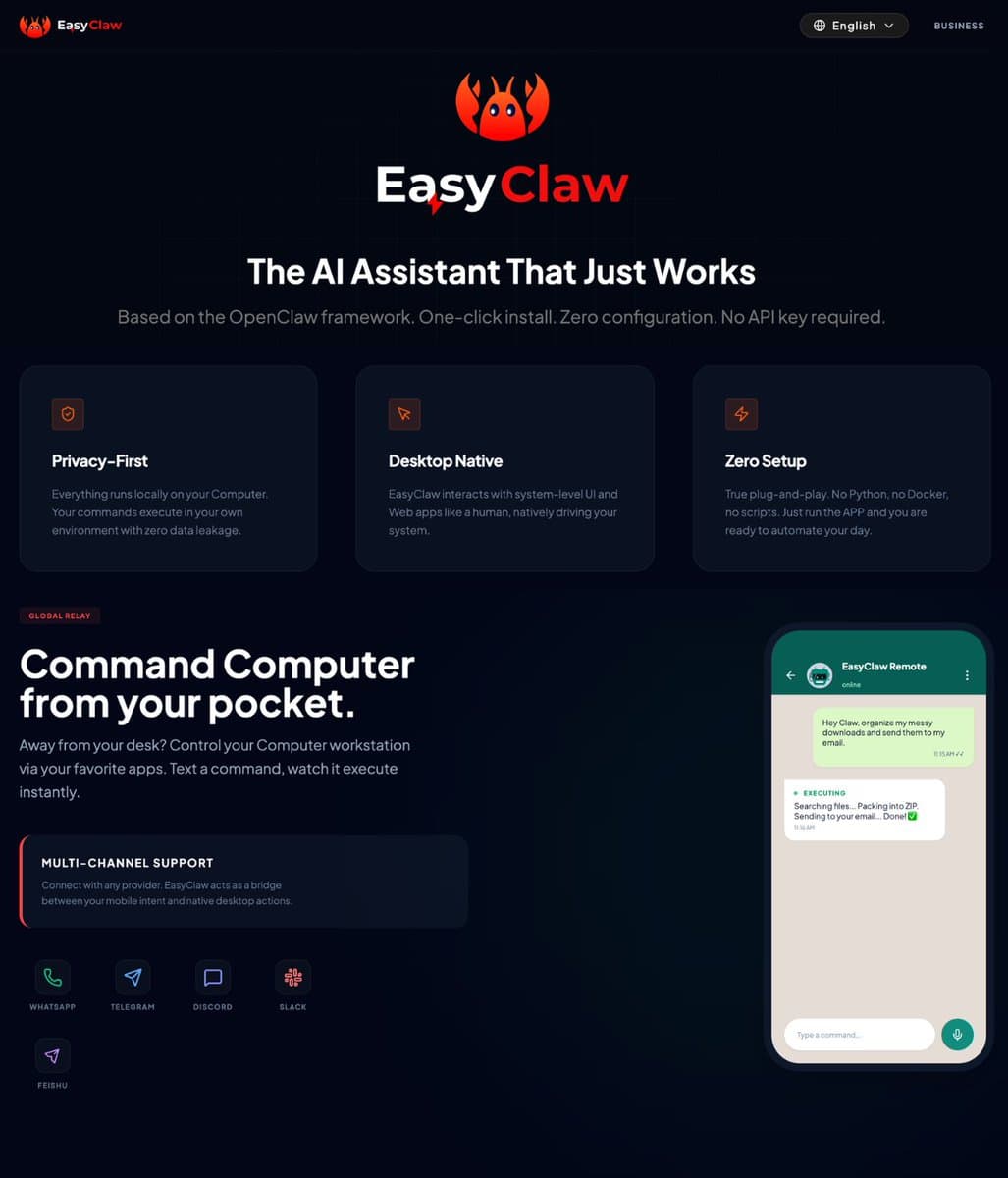
A new AI agent called EasyClaw is making waves in the automation space by offering human-like control over desktop computers without the technical barriers typically associated with such tools. According to developer Hasaan Ali, EasyClaw can click, type, and automate tasks across both Mac and Windows operating systems directly from a user's machine. What sets it apart is its simplicity: no API key, Python knowledge, or Docker setup is required—just one click to run.
What Is EasyClaw?
EasyClaw is an AI-powered automation agent designed to interact with desktop interfaces as a human would. It uses computer vision and machine learning to navigate graphical user interfaces (GUIs), recognize elements like buttons and text fields, and perform actions such as clicking, typing, and scrolling. This approach eliminates the need for scripting or integrating with specific application programming interfaces (APIs), making it accessible to users without programming expertise.
The tool runs locally on a user's machine, which addresses privacy and security concerns by keeping data on-device. This local execution also means it doesn't rely on cloud services, potentially offering faster performance and offline functionality.
How Does It Work?
EasyClaw leverages advanced AI models, likely similar to those used in robotic process automation (RPA) and computer vision applications. It observes the screen, interprets visual elements, and executes actions based on user-defined goals or learned patterns. For example, a user could instruct EasyClaw to "open my email client, download all attachments from unread messages, and save them to a folder," and the agent would carry out these steps autonomously.
Its ability to work across Mac and Windows suggests robust cross-platform compatibility, possibly achieved through abstraction layers that translate high-level commands into OS-specific interactions. The "no Python, no Docker" claim indicates a packaged, user-friendly interface—perhaps a standalone application with a graphical setup—lowering the entry barrier significantly.
Implications for Productivity and Accessibility
EasyClaw's emergence signals a shift toward democratizing automation. Traditionally, desktop automation has required tools like AutoHotkey, Selenium, or RPA platforms that demand technical skills. By removing these barriers, EasyClaw could empower a broader audience, including small business owners, administrative staff, and casual users, to automate repetitive tasks.
Potential use cases include:
- Data Entry: Automating form filling or spreadsheet updates.
- File Management: Organizing downloads, renaming files, or backing up data.
- Software Testing: Simulating user interactions for quality assurance.
- Personal Assistance: Scheduling meetings or managing notifications.
This could lead to significant productivity gains, especially in sectors where manual computer work is prevalent. However, it also raises questions about job displacement and the need for reskilling in roles heavily reliant on routine digital tasks.
Technical and Ethical Considerations
While EasyClaw's simplicity is a major advantage, it may face limitations in handling complex, dynamic interfaces or tasks requiring nuanced decision-making. AI agents can struggle with unexpected dialog boxes, UI changes, or ambiguous visual cues. Robust error handling and user feedback mechanisms will be crucial for reliability.
Ethically, such tools could be misused for activities like automated spamming, gaming systems, or unauthorized data scraping. Developers and users must consider responsible deployment, possibly through built-in safeguards or usage guidelines. Additionally, the local processing approach, while privacy-friendly, might limit advanced features that cloud-based AI could offer, such as continuous learning from aggregated data.
The Future of AI-Driven Automation
EasyClaw represents a step toward more intuitive human-computer interaction, where AI agents understand and act upon natural language instructions. As these technologies mature, we might see deeper integration with operating systems, enabling seamless automation across applications without manual setup.
Competition in this space is growing, with companies like Microsoft integrating AI assistants into Windows and startups developing similar agents. EasyClaw's success will depend on its ease of use, reliability, and ability to adapt to diverse user needs. If it delivers on its promises, it could set a new standard for accessible automation tools.
For now, EasyClaw offers a glimpse into a future where AI handles mundane digital tasks, freeing humans for more creative and strategic work. As with any powerful technology, its impact will hinge on how thoughtfully it is adopted and regulated.
Source: @hasantoxr on X