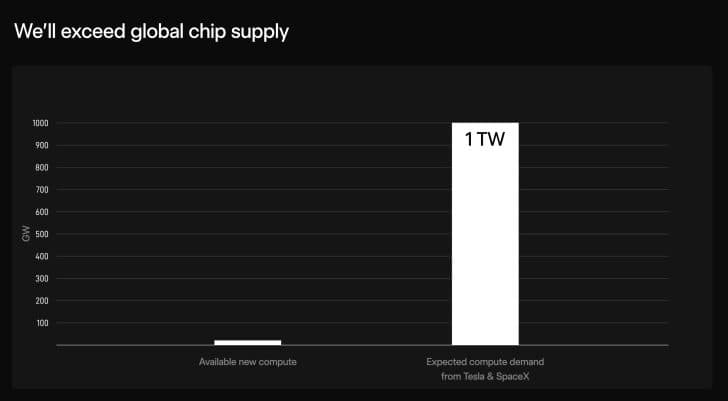
Elon Musk Says Global Chip Fabs Supply Only 2% of Tesla's AI Compute Needs, Driving Terafab Build

Elon Musk Says Global Chip Fabs Supply Only 2% of Tesla's AI Compute Needs, Driving Terafab Build

Elon Musk stated current global chip fabrication capacity can supply only about 2% of Tesla's AI compute requirements, necessitating the construction of a 'terafab' even if suppliers expand.

Ggentic.news Editorial·4h ago·2 min read·21 views·via @rohanpaul_ai
Share:

What Happened

In a statement shared by AI researcher Rohan Paul, Elon Musk explained the fundamental driver behind Tesla's plan to build its own massive semiconductor fabrication facility, dubbed the "Terafab." According to Musk, the current global capacity for chip fabrication can supply only about 2% of the compute hardware Tesla would need for its AI ambitions, particularly for autonomous driving and robotics.

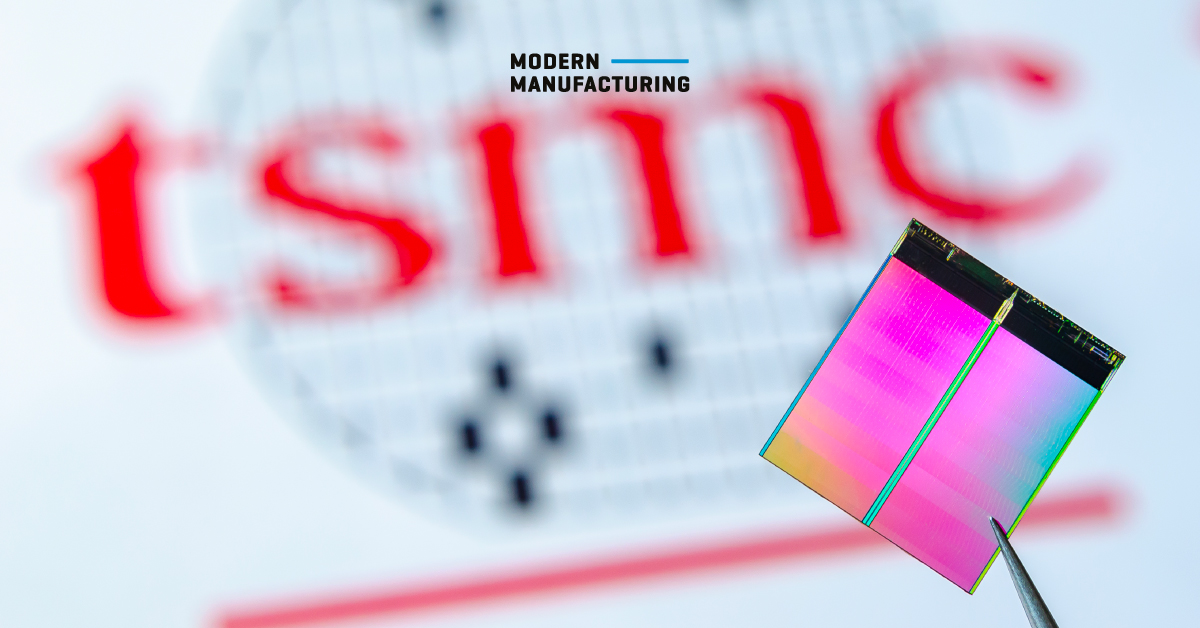
Musk's logic is straightforward: even if existing suppliers like TSMC, Samsung, or Intel were to expand their production capacity, and even if Tesla purchased every chip they could make, it would still fall drastically short of the company's projected demand. This supply gap makes building a dedicated, in-house fabrication facility—a terafab—a strategic necessity, not merely an option.

Context

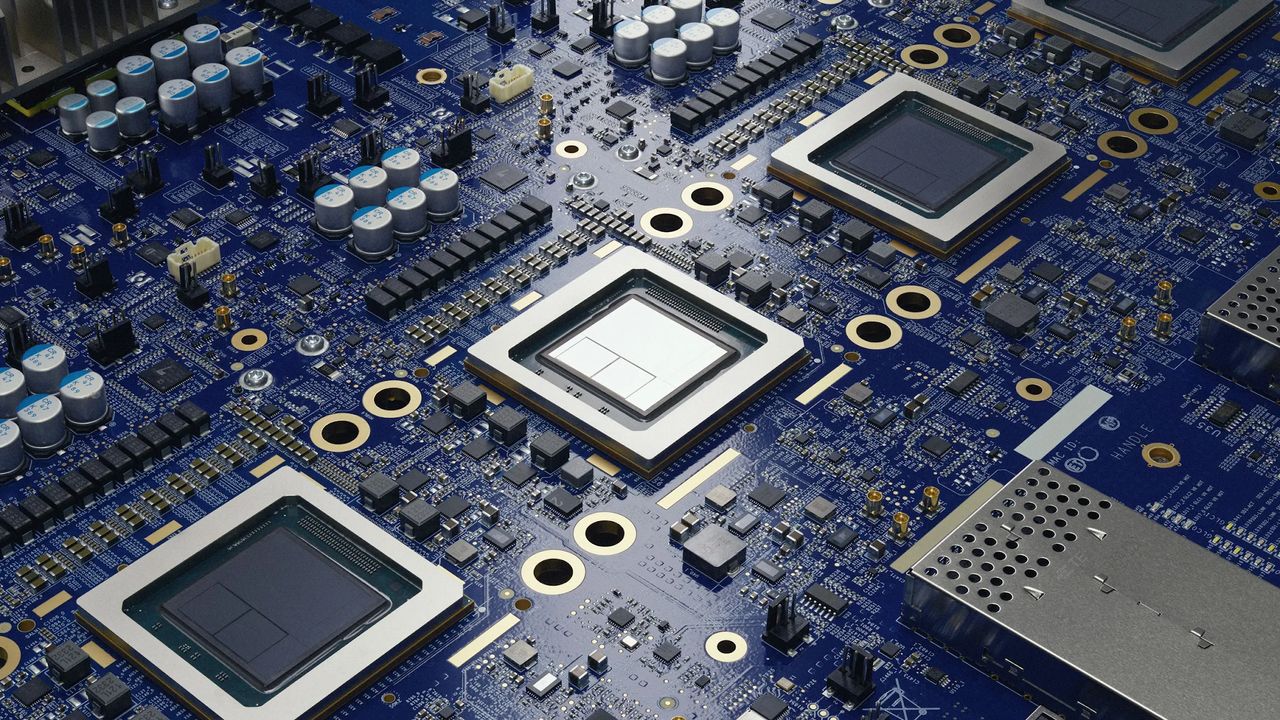
This statement aligns with Tesla's long-standing vertical integration strategy and its escalating compute needs. The company's Full Self-Driving (FSD) development relies heavily on massive AI training clusters. Tesla has already developed its own AI inference chip (the FSD Computer) and its Dojo supercomputer platform, which uses custom D1 training chips. Building a fab represents the next, most capital-intensive step in bringing the entire silicon supply chain in-house.

Musk's "terafab" concept suggests a facility designed for unprecedented scale, likely targeting production of tens or hundreds of thousands of wafer starts per month, far beyond the capacity of a typical "gigafab." The move pits Tesla against not only other automakers but also against tech giants like Google, Amazon, and Microsoft, who are also designing custom AI chips but largely rely on third-party fabs for manufacturing.

Key Implication: The primary bottleneck for scaling advanced AI is shifting from algorithmic innovation and data availability to physical hardware manufacturing capacity. Tesla's project highlights that the industry's growth is now constrained by the slow, expensive, and geopolitically sensitive semiconductor supply chain.
AI Analysis

Musk's 2% figure, while likely a rough estimate, underscores a critical and often under-discussed constraint in the AI race: absolute silicon supply. Major cloud providers (AWS, Google Cloud, Azure) and AI labs (OpenAI, Anthropic) compete for capacity on leading-edge nodes (e.g., TSMC's N3/N5) for both training and inference. Tesla's needs are unique because they are building for a specific, mass-produced product (cars and robots) with a potential volume in the millions of units per year, each requiring high-performance AI chips. This creates a demand profile that is both enormous and inflexible. From a technical strategy perspective, controlling the fab allows Tesla to co-optimize its chip architecture, packaging, and manufacturing process specifically for its AI workloads, potentially achieving performance or efficiency gains that off-the-shelf processes cannot. However, the capital expenditure (likely well over $10 billion) and operational complexity of running a leading-edge fab are staggering. It also locks Tesla into the relentless cycle of process node advancement (e.g., moving from 5nm to 3nm to 2nm), requiring continuous re-investment. For the broader AI engineering community, this signals that the era of treating compute as a readily purchasable commodity is ending for entities at the largest scale. Strategic control over the hardware stack, from silicon design to fabrication, is becoming a key competitive differentiator. It also suggests that alternative compute paradigms (neuromorphic, optical, analog) that can be manufactured on older or more available process nodes may receive increased attention as a way to bypass the cutting-edge logic fab bottleneck.
Original sourcex.com

Trending Now

More in Products & Launches

View all