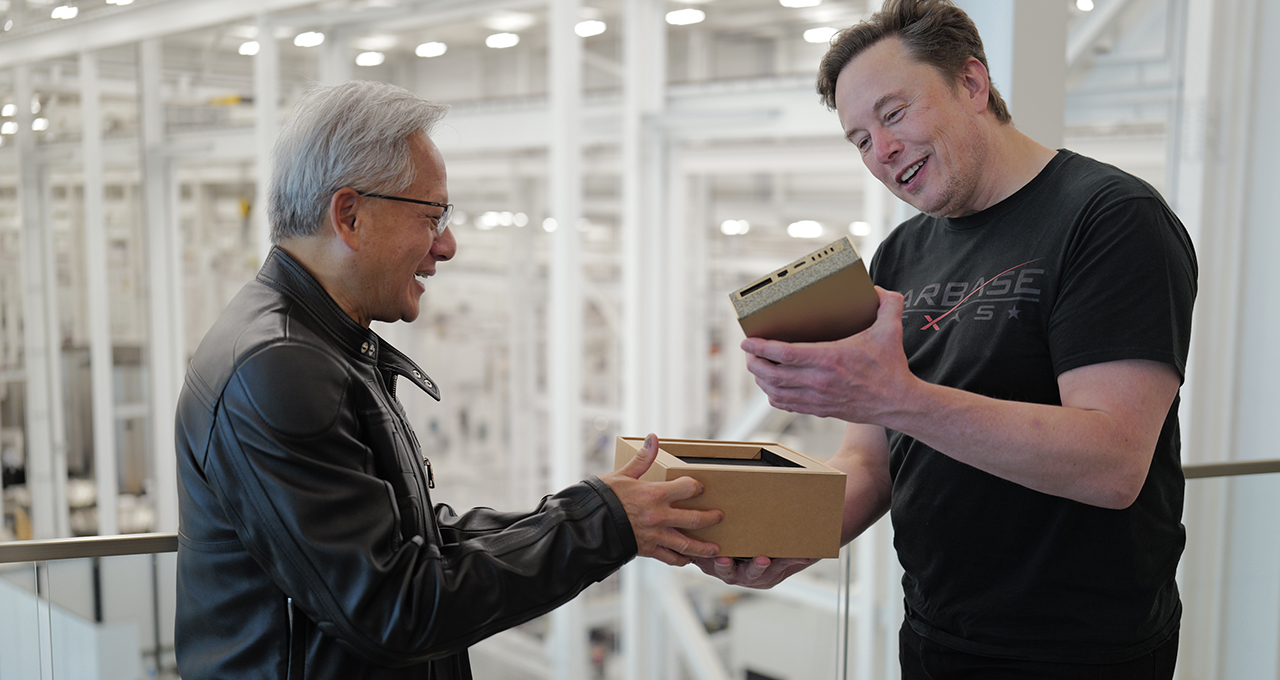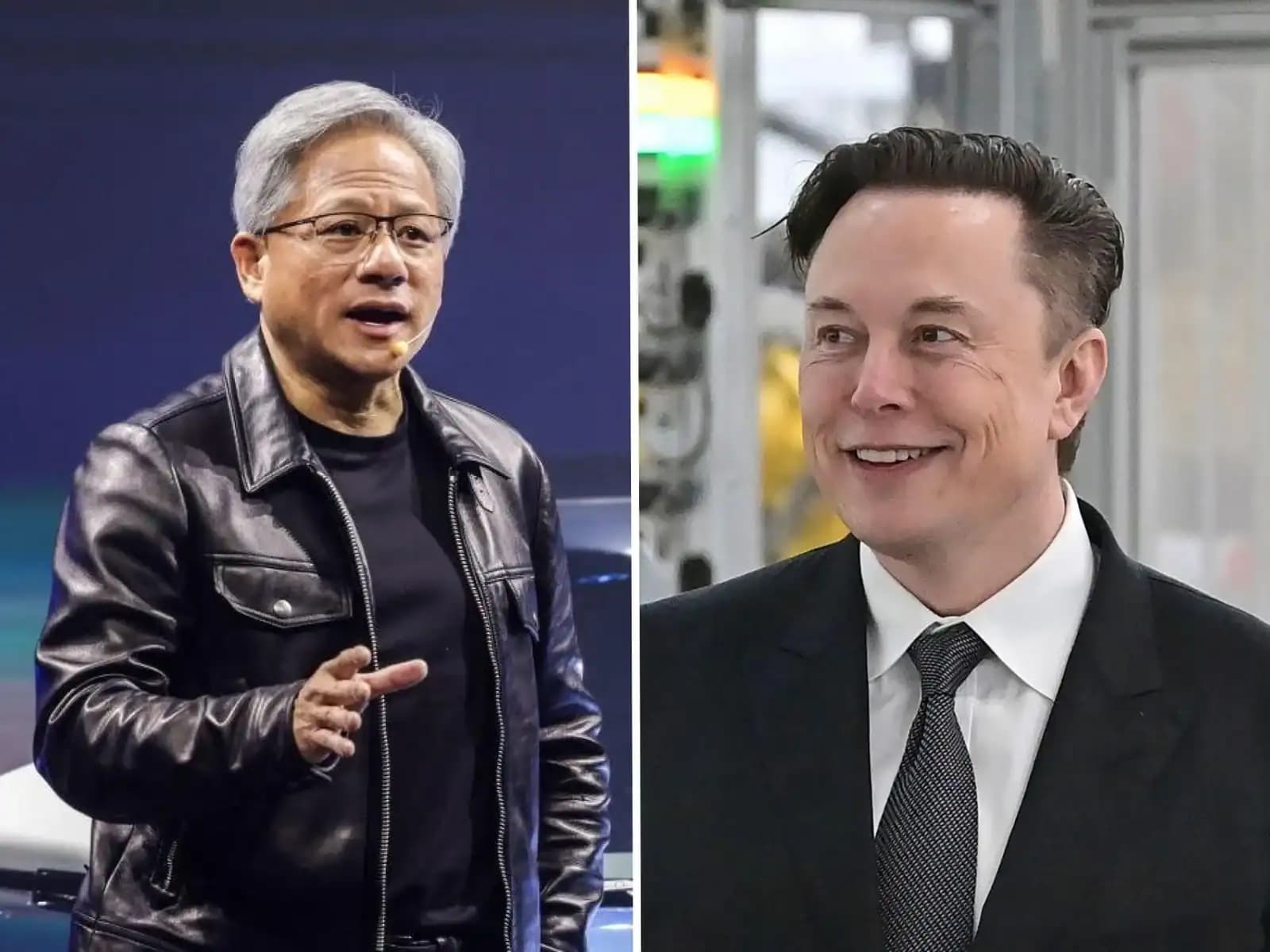
NVIDIA CEO Jensen Huang has publicly responded to a prediction made by Tesla and xAI CEO Elon Musk regarding the future scale of humanoid robotics. In a brief social media exchange highlighted by AI commentator Rohan Paul, Huang directly addressed Musk's stated expectation of "one robot per person."
Huang's counter-argument is grounded in immediate economic and labor market realities. He stated he hopes for "more than 1" robot per person, citing two core reasons:
- Existing labor shortages are already in the "millions."
- Companies could achieve faster growth if equipped with a greater number of robotic workers.
This positions Huang's view as fundamentally supply-driven and productivity-oriented, contrasting with a vision based purely on eventual per-capita saturation.
The Context of the Exchange
The discussion originates from Elon Musk's repeated forecasts about the proliferation of Tesla's Optimus humanoid robot. Musk has previously suggested that demand for Optimus could eventually reach 10-20 billion units, extrapolating to more than one per person globally. His vision often frames robotics as an ultimate consumer and industrial product.
Jensen Huang, whose company NVIDIA provides the foundational GPUs and AI platforms (like Isaac and Project GR00T) for virtually every major robotics developer—including Tesla—is approaching the question from the perspective of a critical enabler. His response shifts the frame from a distant theoretical maximum to a near-term imperative: there is a massive deficit of labor that automation needs to fill, and simply matching the human population one-to-one won't be sufficient to close that gap and fuel desired economic expansion.
Why This Matters for AI & Robotics Development
This isn't merely a war of big numbers between two tech billionaires. It highlights a strategic fork in how the industry views the scaling of robotics:
- Musk's "Saturation" View: Focuses on the long-term endpoint where robots become ubiquitous personal and professional tools, potentially defining the total addressable market (TAM).
- Huang's "Deficit-Driven" View: Focuses on the immediate and growing vacuum in the global labor force, particularly in manufacturing, logistics, and elder care. This view suggests demand will be driven not just by replacement but by enabling growth that is currently capped by human resource limits.
For developers and investors, Huang's comment reinforces the investment thesis around robotics as a solution to structural macroeconomic problems, rather than solely a consumer tech novelty. It underscores the potential for multi-robot deployments in single enterprises—warehouses with dozens of robots, factories with hundreds—well before personal robot ownership becomes commonplace.
gentic.news Analysis
This exchange is a succinct public manifestation of the strategic divergence between two of the most influential architects of the AI ecosystem. Elon Musk, through Tesla, Neuralink, and xAI, is building vertically integrated stacks aimed at ultimate consumer and general-purpose applications. Jensen Huang's NVIDIA operates as the horizontal enabler, providing the essential hardware and software infrastructure upon which companies like Tesla, 1X Technologies, Figure, and Boston Dynamics build.
Huang's push for "more than 1" aligns perfectly with NVIDIA's business model. A world with multiple robots per person in industrial and commercial settings means exponentially higher demand for NVIDIA's robotics simulation platforms (Isaac), foundational AI models (Project GR00T), and, most critically, GPU clusters for training and inference. This perspective was telegraphed at NVIDIA GTC 2024, where Huang introduced GR00T and showcased a multitude of humanoid partners, emphasizing a future of large-scale robotic deployment.
Furthermore, Huang's reference to a labor shortfall "in the millions" directly connects to trends we've covered extensively, including the rapid adoption of cobots in manufacturing and the push for automation in sectors facing demographic cliffs. His comment is less a rebuttal and more a recalibration of the timeline and driver: the robot revolution will be accelerated by necessity, not just possibility.
Frequently Asked Questions
What did Elon Musk originally say about robots per person?
Elon Musk has predicted that demand for Tesla's Optimus humanoid robot could be 10 to 20 billion units in the long term, which exceeds the global human population and implies a future with more than one robot per person. He views this as the ultimate scale for the technology.
Why does Jensen Huang think we need more than one robot per person?
Jensen Huang bases his argument on current economic constraints, not a distant theoretical maximum. He points out that millions of labor positions are already unfilled globally, and that companies cannot grow at their desired pace due to this shortage. Therefore, to solve existing problems and unlock growth, the density of robots in the workforce needs to be high, potentially requiring multiple robots per human in an economic context.
How does NVIDIA benefit from a future with more robots?
NVIDIA is the leading provider of AI computing power. Every advanced robot requires AI models for perception, navigation, and dexterity, which are trained and run on NVIDIA GPUs. NVIDIA also sells the Isaac robotics platform for simulation and development. A world with hundreds of millions or billions of robots represents the largest possible market for NVIDIA's core AI infrastructure products.
Is anyone building robots at the scale Huang and Musk discuss?
Not yet. Current humanoid robot deployments are measured in dozens or hundreds for pilot projects. However, major manufacturers like Tesla are designing for mass production, and global manufacturing giants like Foxconn have expressed intent to deploy large numbers of robots. Huang's comment is about the scale required to make a dent in macro-level labor shortages, which is still a future goal.