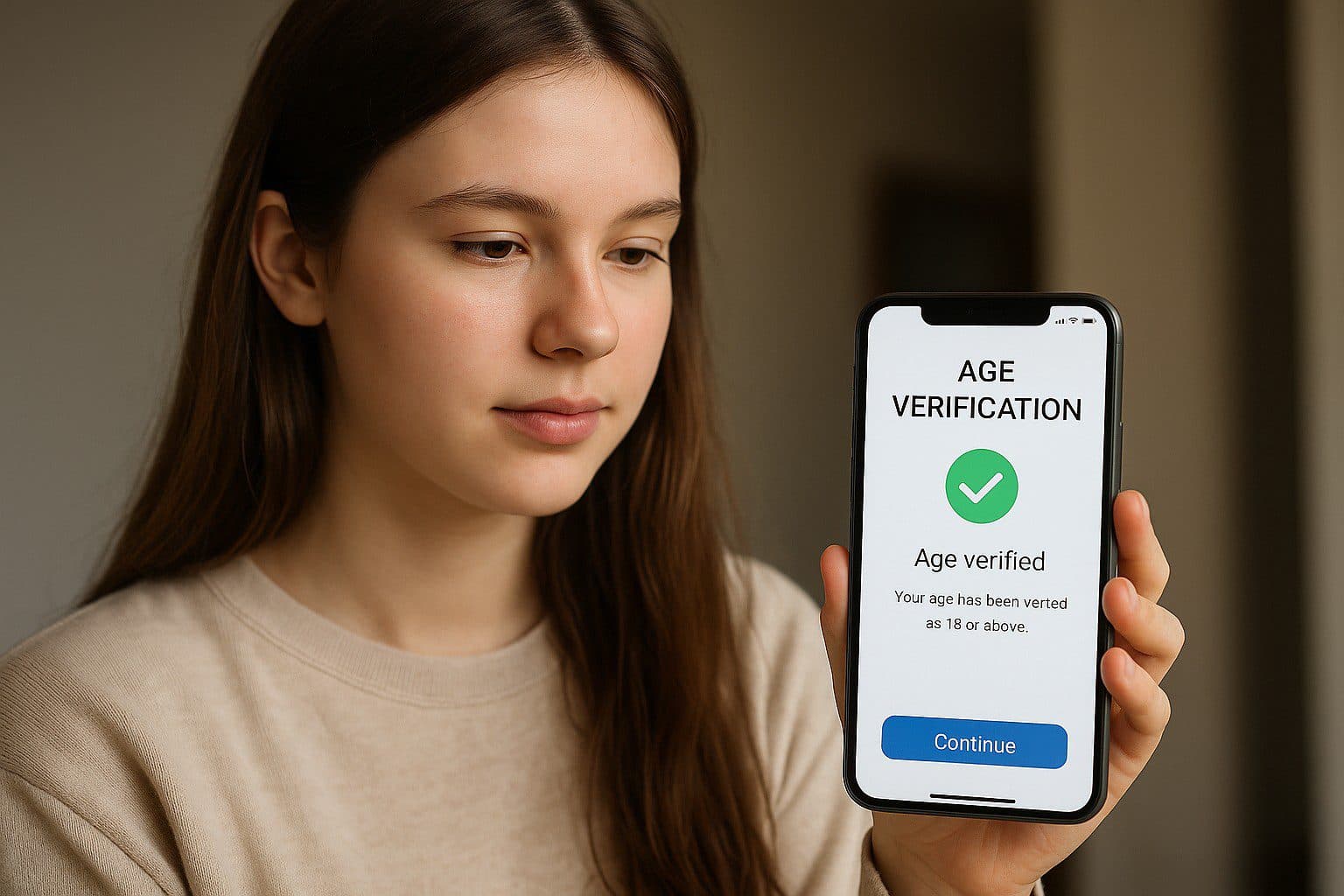
A security researcher has demonstrated a critical flaw in the European Union's newly launched Age Verification app, revealing that its core verification mechanism can be completely bypassed by editing a simple configuration file. The finding, highlighted by independent commentator @kimmonismus, exposes fundamental security and design failures in an application intended to gatekeep internet access under new EU regulations.
The app is a cornerstone of the EU's approach to enforcing age restrictions and, potentially, broader identity verification online. The researcher's method required no complex exploit chain, reverse engineering of cryptography, or advanced hacking techniques—just a basic text edit.
What Happened
The specific technical details of the bypass have not been fully disclosed to prevent misuse, but the description indicates a catastrophic failure in the app's security architecture. Typically, a mobile app's configuration file might contain flags or variables that control feature access, debug modes, or server endpoints. If a user can modify this file—often possible on a "jailbroken" or rooted device—and change a value from verified=false to verified=true, the entire verification system is rendered useless.
This type of vulnerability suggests the app performs "client-side" trust checks, meaning it asks the device itself if verification has occurred, rather than validating with a secure, remote server each time. It is a basic security anti-pattern for any system requiring assured verification.
The Policy Context
The flawed app is linked to the EU's ongoing efforts to implement age verification for accessing online content, part of a broader push under regulations like the Digital Services Act (DSA). Proponents argue such tools are necessary to protect minors. Critics, like @kimmonismus, contend they are a "gateway for further restrictions" on internet anonymity and freedom, poorly designed, and open to abuse.
The researcher's proof-of-concept validates these criticisms on a technical level. If the official verification tool can be trivially defeated, it cannot serve its stated policy goal. Instead, it creates a false sense of compliance while punishing only those who use the internet as intended.
Technical Implications
For AI and ML engineers, this failure is a stark case study in the gap between policy mandates and technical execution. Building a robust, tamper-proof verification system is a significant challenge, especially on consumer devices where users control the hardware. It often requires a combination of hardware-backed security (like Trusted Execution Environments), continuous online attestation, and sophisticated anti-tampering code—measures that are complex, costly, and can impact user privacy.
The app's apparent failure to implement even basic obfuscation or integrity checks indicates a rushed development process, possibly driven by regulatory deadlines rather than security best practices. It serves as a cautionary tale for any team building "compliance-critical" software.
gentic.news Analysis
This incident is not an isolated technical bug; it's a symptom of a growing tension between regulatory ambition and technical reality in the AI governance space. The EU has positioned itself as a global regulator with the AI Act and DSA, setting rules that often require complex technical implementations—from watermarking AI-generated content to real-age estimation. This app failure demonstrates the risk of those requirements outpacing the state of the art in secure, user-friendly technology.
Historically, similar simple bypasses have plagued digital rights management (DRM) systems and early parental control software, teaching a clear lesson: client-side restrictions on a non-trusted device are inherently fragile. For the EU's broader tech agenda to be credible, its mandated tools must be designed with adversarial testing in mind from the outset. This event will likely fuel further debate about the feasibility of anonymized age verification and whether alternative, less intrusive architectural approaches (like device-level age attestations) are necessary.
Furthermore, it highlights the critical role of independent security researchers. Their work, often conducted without the resources of large firms, is essential for stress-testing the systems that increasingly mediate our digital rights. As regulations force more of these gatekeeping apps into existence, we should expect a surge in such disclosures, creating recurring crises of confidence for policymakers.
Frequently Asked Questions
What is the EU Age Verification app?
It is a mobile application developed to comply with EU regulations, notably the Digital Services Act (DSA), which requires platforms to implement "reasonable, proportionate and effective" measures to protect minors. The app is intended to verify a user's age before granting access to certain online content or services.
How was the app bypassed?
According to a security researcher, the app's verification check could be completely circumvented by editing a single configuration file on the device. This suggests the app trusts a local, user-modifiable flag to determine verification status, rather than relying on a secure, server-side validation process for each access request.
What does this mean for the EU's digital regulations?
This technical failure undermines the enforcement mechanism of a key policy goal. It exposes a significant implementation gap, suggesting that the mandated technical solutions may not be robust enough to reliably achieve their aims. It will likely lead to calls for more thorough security audits of compliance tools and potentially a re-evaluation of the technical feasibility of certain regulatory requirements.
Can this be fixed?
Yes, but it requires a fundamental architectural change. A fix would involve moving the trust anchor from the user's device to a remote server that cannot be tampered with, using cryptographic attestation. However, this makes the system more complex, introduces latency, and raises different privacy concerns, as it requires constant communication with a central service.