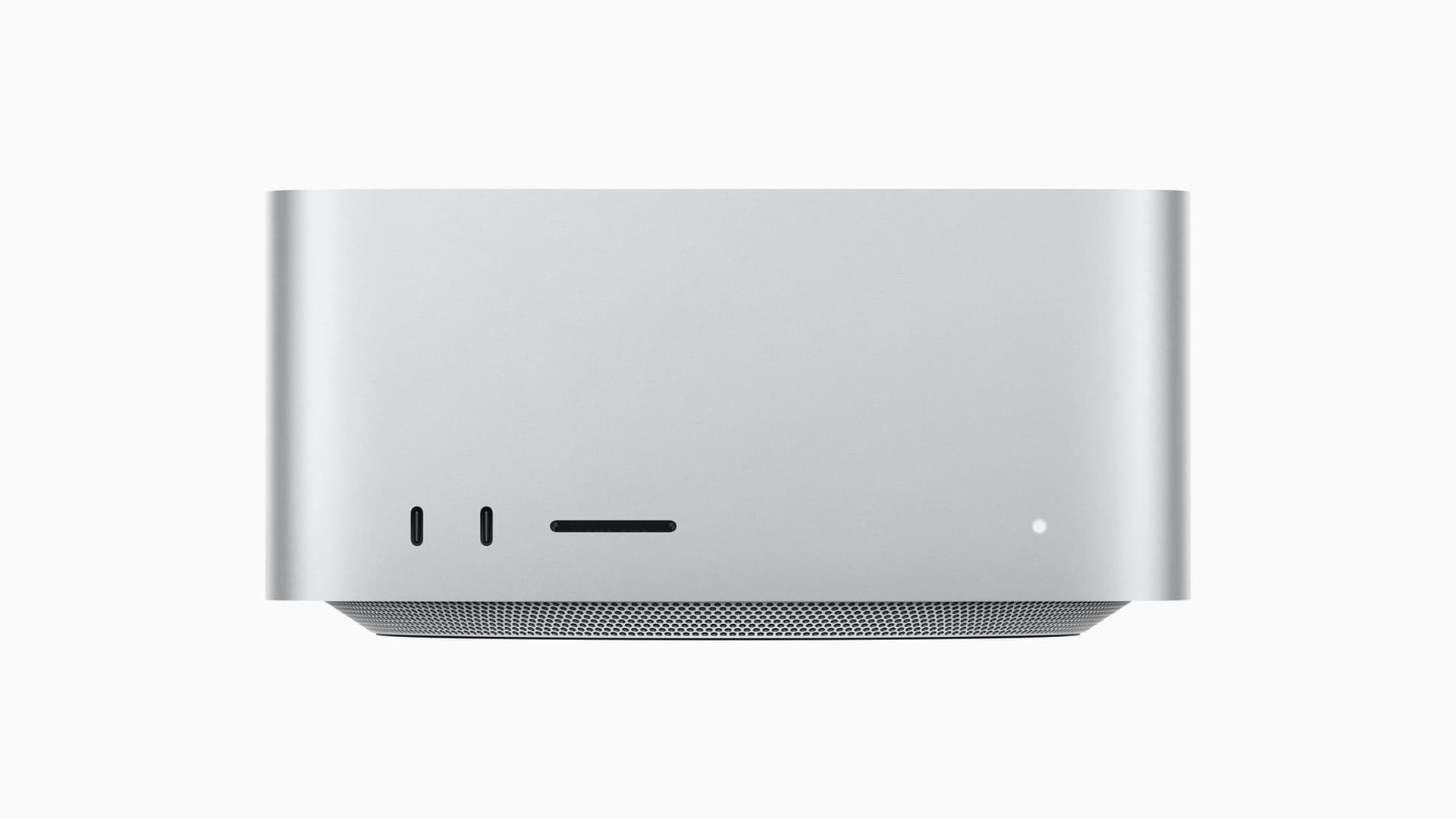
A developer's social media post has highlighted a significant shift in the economics of running large language models (LLMs). The claim: a consumer-grade Apple Mac Studio can run a 122-billion-parameter AI model entirely locally, and the cost comparison to cloud services is stark.
Key Takeaways
- A developer demonstrated that a $3,999 Mac Studio can run a 122B-parameter AI model locally.
- Compared to a $5/hour AWS instance, the Mac pays for itself in roughly five weeks of continuous use.
What Happened

Developer George Pu posted on X that a $3,999 Mac Studio is capable of running a 122B parameter AI model locally. For comparison, he states that running an equivalent model on an AWS instance would cost approximately $5 per hour.
The math is straightforward: a $5/hour cloud instance running 24/7 costs about $3,700 per month. The one-time $3,999 cost of the Mac Studio is recouped in just over five weeks of equivalent continuous cloud usage. After that point, the local hardware continues to operate with no incremental inference cost, aside from electricity.
Pu noted the perceived improbability of this, writing, "I didn't think this was possible. Most people still don't."
Context & Technical Feasibility
While the post doesn't specify the exact 122B model or the precise AWS instance type, the underlying claim aligns with broader industry trends.
Apple Silicon's ML Capabilities: Modern Mac Studios are powered by Apple's M-series Ultra chips (like the M2 Ultra), which feature a unified memory architecture and a powerful Neural Engine. The key advantage is memory bandwidth and capacity. High-end configurations can be equipped with 192GB of unified RAM, which is critical for loading large model parameters. A 122B parameter model in 16-bit precision (FP16) requires roughly 244 GB of memory just for the weights, suggesting the model in question is likely being run in a quantized format (e.g., 4-bit or 8-bit quantization), which drastically reduces memory footprint while preserving most of the model's capability.
The Cloud Cost Baseline: The $5/hour figure likely corresponds to a cloud GPU instance capable of hosting a model of this size, such as an AWS g5.48xlarge (8x A10G GPUs) or a similar instance with sufficient VRAM. This pricing is consistent with on-demand rates for high-end inference instances.
The Local vs. Cloud Calculus
This demonstration reframes a critical decision for developers and companies: pay-for-compute versus pay-for-hardware.
- For Prototyping & Development: A local Mac Studio provides a fixed-cost environment for experimentation, fine-tuning, and inference without unpredictable cloud bills. Latency is also consistent and not subject to network variability.
- For Sustained, Predictable Workloads: If an application requires continuous or very frequent inference, the total cost of ownership (TCO) for local hardware can quickly undercut cloud expenses.
- For Data Privacy & Sovereignty: Running models locally eliminates data transfer to a third-party cloud, addressing privacy, compliance, and intellectual property concerns.
The break-even timeline of ~5 weeks is a powerful heuristic. It makes local inference a compelling option for any use case with a known, sustained demand.
Limitations and Considerations
- Upfront Capital: The cloud model offers elasticity—you pay only for what you use. The Mac Studio requires a significant upfront investment.
- Scalability: A single Mac Studio has a fixed capacity. Scaling horizontally to handle more concurrent requests requires buying more hardware, whereas cloud services can scale instantly.
- Maintenance & Obsolescence: The developer owns the hardware maintenance and refresh cycle. Cloud providers manage underlying infrastructure.
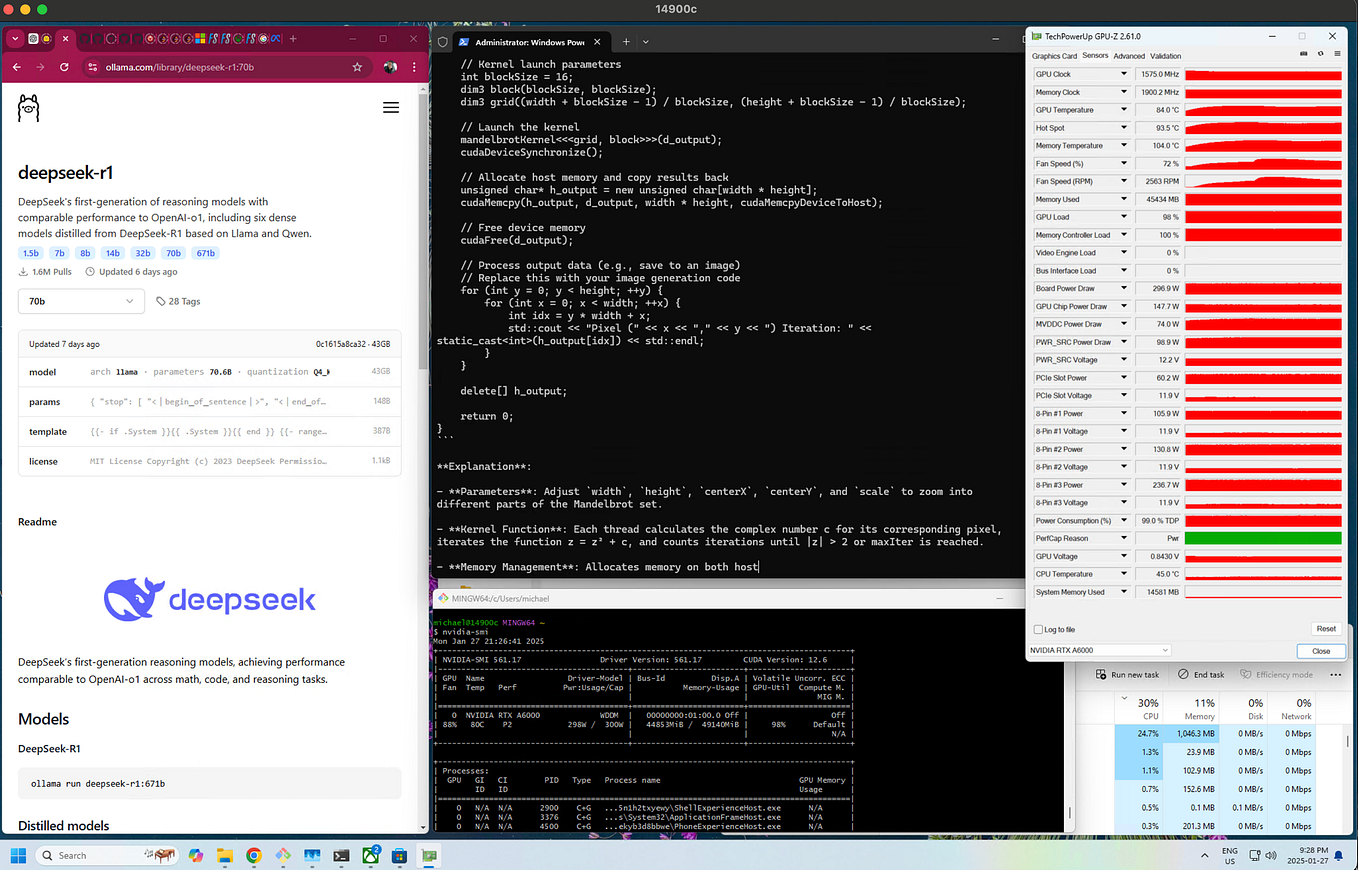
- Model Compatibility: Not all large models are optimized or easily quantized for Apple's Metal Performance Shaders (MPS) backend. Effort may be required to convert and run models efficiently.
gentic.news Analysis
This post is a tangible data point in the accelerating trend of AI democratization and cost compression. It follows a series of developments we've covered, including the rise of efficient model architectures like Mistral AI's Mixtral and the proliferation of quantization techniques (like GPTQ and GGUF) that make massive models viable on consumer hardware. The financial argument here is a direct challenge to the cloud-centric inference model that has dominated enterprise AI.
This aligns with the strategic pushes from other hardware players. Intel, with its Gaudi accelerators, and NVIDIA, with its RTX AI platform for PCs, are also betting on powerful local AI. Apple's integrated approach—tying high-bandwidth memory directly to performant neural cores—is proving to be a uniquely effective architecture for this workload. If this cost/performance dynamic holds, it could spur a new wave of edge AI applications and shift how startups architect their AI infrastructure, favoring a hybrid model where heavy, predictable inference is done on-premises with commodity Apple hardware, while bursty or training workloads remain in the cloud.
The implication for cloud providers (AWS, Google Cloud, Azure) is nuanced. While they may lose some pure inference revenue, this trend could increase demand for their specialized AI training instances and for cloud services that manage fleets of distributed edge devices. The real competition is for the AI developer's default workflow, and Apple just made a strong case for its hardware being at the center of it.
Frequently Asked Questions
What model was likely running on the Mac Studio?
While not specified, a 122B-parameter model is an uncommon size. It could be a quantized version of a model like Meta's Llama 3.1 405B (run in a heavily quantized state) or a custom model. More likely, it's a popular open-source model that has been quantized to 4-bit or 5-bit precision, such as a variant of Qwen 2.5 72B or Llama 3 70B with its embedding layers accounting for the larger parameter count, allowing it to fit within the Mac's unified memory.
Is the $5/hour AWS cost accurate?
It is plausible. To run a 122B-parameter model (likely in 16-bit precision) in the cloud, you would need an instance with multiple high-memory GPUs. An AWS g5.48xlarge (8 x A10G, 96GB VRAM) costs $5.07/hour on-demand. Other configurations with A100 or H100 GPUs would be significantly more expensive, making the $5/hour figure a reasonable, even conservative, estimate for a comparable inference setup.
Can any Mac run large AI models locally?
No. The ability to run models of this scale depends almost entirely on unified memory (RAM) capacity. A standard MacBook Pro with 16GB or 32GB of RAM can run 7B or 13B parameter models comfortably. The Mac Studio is unique in offering configurations up to 192GB of unified RAM, which is essential for loading quantized versions of 70B+ parameter models. The high memory bandwidth of Apple Silicon is the other critical factor for performance.
What software is used to run LLMs on a Mac?
The most common frameworks are llama.cpp and its derivatives (like Ollama), which are specifically designed for efficient inference on Apple Silicon and support a wide range of quantized model formats (GGUF). These tools leverage the CPU and GPU cores of the M-series chips via the Metal Performance Shaders (MPS) backend.