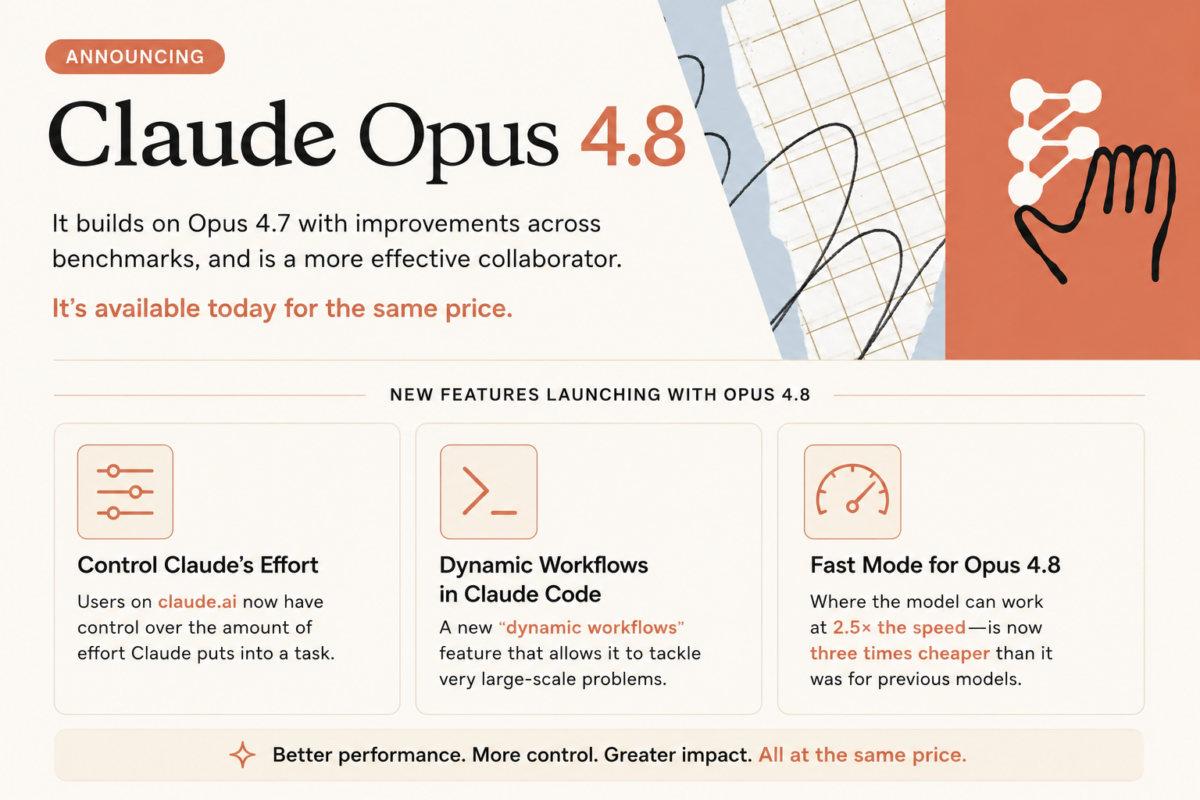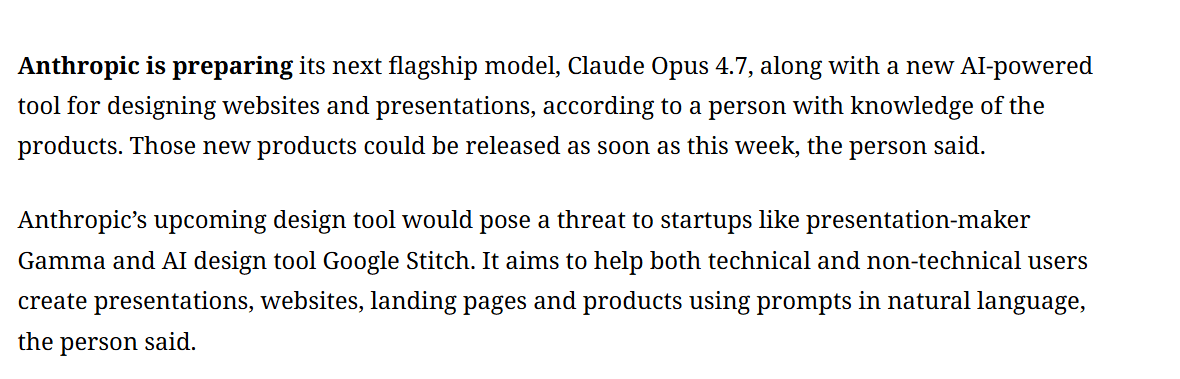
According to a report from The Information, Anthropic is preparing to launch two new products this week: an updated flagship model, Claude Opus 4.7, and a new prompt-based design tool for creating websites and presentations. The company is also reportedly testing a more advanced model, Claude Mythos, for cybersecurity use cases.
Key Takeaways
- Anthropic is launching Claude Opus 4.7 and a new AI design tool this week, according to a report.
- The company is also testing a more advanced model, Claude Mythos, for cybersecurity applications.
What Happened

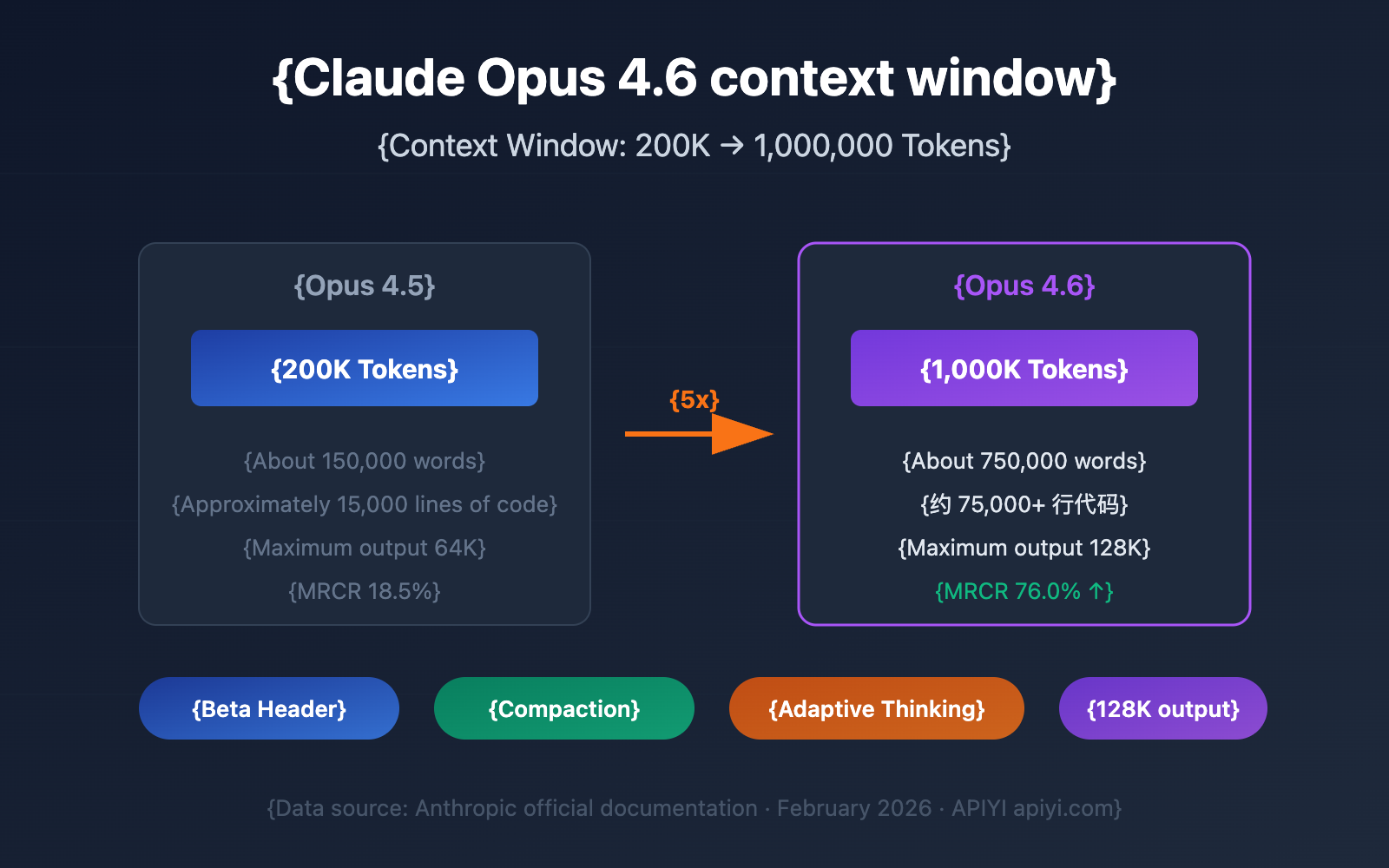
The report, shared via social media, indicates that the launch of Claude Opus 4.7 and the design tool is imminent, likely within the week. This follows Anthropic's established pattern of incremental model updates, though the specific improvements in Opus 4.7 over its predecessor, Opus 4.6, are not detailed in the brief announcement.
More notably, the launch includes a new application: a design tool. This suggests a move beyond pure text and code generation into the visual and UI/UX domain, allowing users to generate website layouts and presentation decks through natural language prompts.
Separately, the report mentions that Claude Mythos, a model name not previously seen in public releases, is already being tested for cybersecurity applications. This hints at a more specialized or powerful model pipeline under development.
Context
This launch continues the rapid iteration cycle among frontier AI labs. Anthropic's Claude 3.5 Sonnet, released in June 2024, was praised for its coding and reasoning capabilities. The Opus line represents Anthropic's largest and most capable general-purpose model tier.
The introduction of a design tool marks a strategic expansion. It places Anthropic in more direct competition with existing AI-powered design platforms like Canva (which integrates AI features) and Microsoft Designer, as well as multimodal models from competitors like OpenAI's GPT-4o and Google's Gemini, which can generate visual content.
The mention of Claude Mythos for cybersecurity testing aligns with a growing industry trend of applying large language models to security tasks like threat detection, code vulnerability analysis, and incident response summarization.
gentic.news Analysis

This planned launch is a clear two-pronged strategy: iterating on the core model and expanding the product surface area. The release of Claude Opus 4.7 so soon after the Claude 3.5 family suggests Anthropic is prioritizing frequent, smaller performance bumps over monolithic annual releases. This "continuous deployment" approach for frontier models is becoming the new norm, as seen with OpenAI's o1 previews and Google's Gemini updates.
The prompt-based design tool is the more significant strategic move. It represents a vertical application built on top of Claude's multimodal capabilities. By targeting a specific, high-value use case (design), Anthropic can demonstrate tangible utility beyond a chat interface and build a more dedicated user base. This follows the industry pattern of models becoming platforms for targeted applications, a trend we analyzed in our coverage of Cognition AI's Devin. The success of this tool will depend on the fidelity and usability of its outputs compared to dedicated design software.
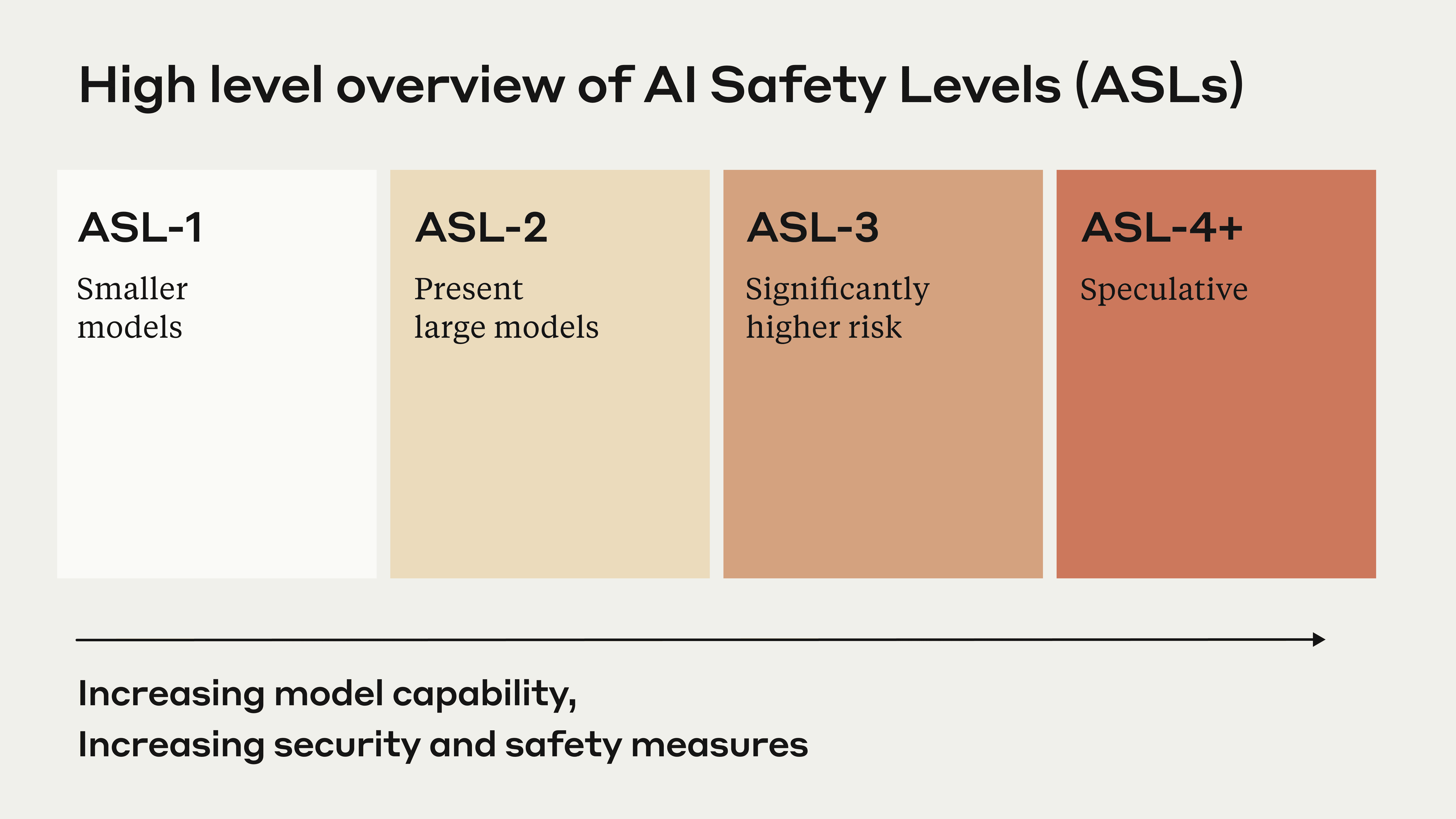
The mention of Claude Mythos is intriguing. The name implies a model distinct from the Opus/Sonnet/Haiku hierarchy. Its testing for cybersecurity could indicate it's a specialized model fine-tuned on security data or a more capable frontier model whose reasoning skills are being evaluated for high-stakes analysis. This aligns with increased enterprise and government focus on AI for national security, a sector where Anthropic has been actively engaging, as noted in our previous reporting on government AI procurement trends. If Mythos demonstrates superior capabilities, it could become Anthropic's answer to OpenAI's rumored "Strawberry" project or Google's ongoing search for superintelligent, reasoning-focused models.
Frequently Asked Questions
What is Claude Opus 4.7?
Claude Opus 4.7 is the upcoming incremental update to Anthropic's most powerful general-purpose AI model, Claude Opus. It is expected to offer improvements in reasoning, coding, and multimodal understanding over the previous Opus 4.6 version, though specific benchmark details are not yet public.
What is Anthropic's new AI design tool?
Based on the report, it is a new application that allows users to create website layouts and presentation decks using natural language prompts. It likely leverages Claude's vision and generation capabilities to produce visual designs and structured content, competing with tools like Canva and Microsoft Designer.
What is Claude Mythos?
Claude Mythos is an advanced Anthropic model currently being tested, specifically for cybersecurity use cases. It appears to be a separate lineage from the publicly available Opus, Sonnet, and Haiku models, potentially indicating a more specialized or powerful architecture focused on complex reasoning tasks.
When will Claude Opus 4.7 be available?
According to the report, the launch is expected "this week." It will likely be available via the Claude.ai web interface and the Anthropic API shortly after the official announcement.