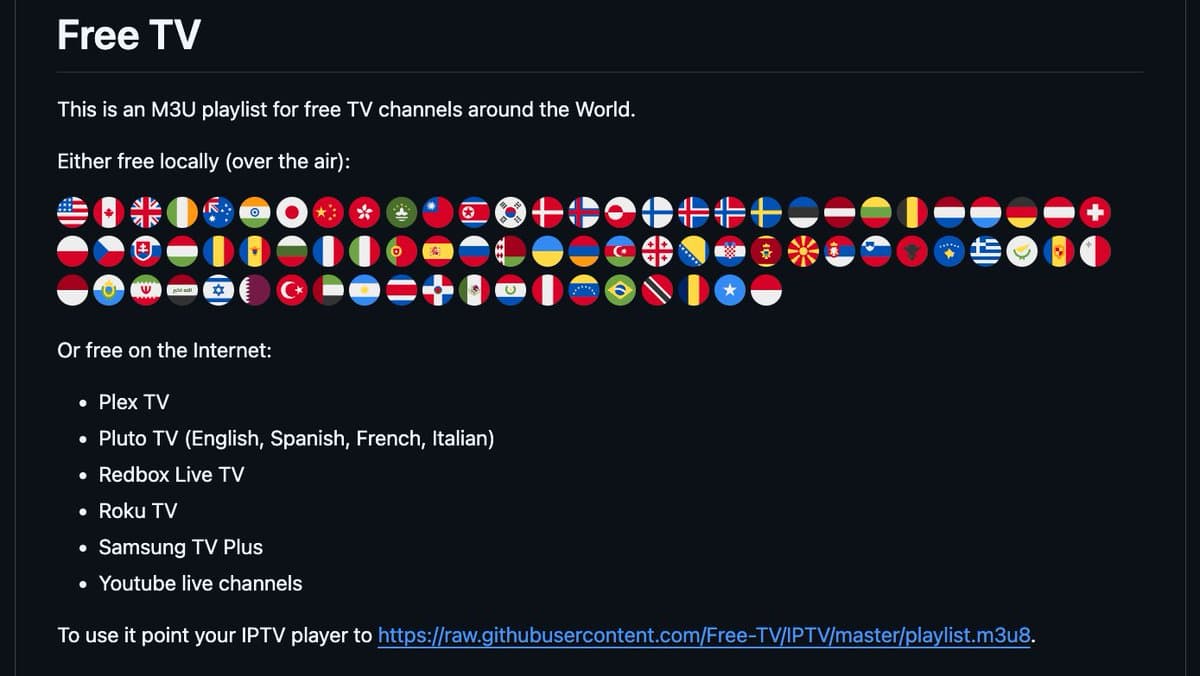
A remarkable open-source project is quietly revolutionizing how people access television content worldwide. Called Free-TV/IPTV, this GitHub repository has compiled free live TV channels from over 60 countries into a single M3U playlist that works with virtually any IPTV player. What began as a simple compilation has grown into a global collaboration with 88 contributors maintaining and updating the repository, which now boasts over 7,400 stars on GitHub.
What Makes This Project Different
Unlike traditional IPTV services that often operate in legal gray areas or require subscriptions, Free-TV/IPTV exclusively aggregates legally available free streams from legitimate sources. The project maintains a strict "HD-first" policy, filtering out low-quality SD streams to ensure viewers get the best possible experience. The playlist includes content from major platforms including:
- Pluto TV (ViacomCBS's free streaming service)
- Roku Channel (Roku's free content platform)
- Samsung TV Plus (Samsung's free ad-supported service)
- YouTube Live channels
- Plex free streaming content
- Official over-the-air broadcast streams from various countries
The Technical Architecture
The project operates on a simple yet powerful premise: provide a single URL that IPTV players can use to access all available free content. The M3U playlist format has become the industry standard for IPTV applications, compatible with popular players like VLC, Kodi, TiviMate, and IPTV Smarters.
What's particularly innovative is the automated update system maintained by contributors worldwide. As streaming services add or remove channels, the repository is updated to reflect these changes, ensuring users always have access to current content. The global contributor network means that when a streaming service in Japan adds new channels, someone in that region can quickly update the playlist.
Global Content Accessibility
The repository's most impressive feature is its truly international scope. While many streaming services are geographically restricted, this project provides access to:
- North America: Local news, sports, and entertainment channels from across the US and Canada
- Europe: Public broadcasters from the UK (BBC, ITV), Germany (ARD, ZDF), France (France 24), and more
- Asia: Content from Japan's NHK, India's Doordarshan, and various Southeast Asian broadcasters
- Oceania: Australian and New Zealand public broadcasting
- Latin America: Spanish and Portuguese language content from multiple countries
This creates an unprecedented level of access to international content without the need for multiple subscriptions or VPN services.
The Open Source Advantage
The project's open-source nature provides several key advantages over commercial alternatives:
- Transparency: Users can inspect exactly what sources are included and how the playlist is maintained
- Community-driven improvements: With 88 contributors, issues are identified and resolved quickly
- No monetization pressure: Unlike commercial services, there's no incentive to collect user data or push paid upgrades
- Educational value: The repository serves as a learning resource for developers interested in streaming technology
Legal and Ethical Considerations
It's crucial to understand what this project is—and isn't. Free-TV/IPTV doesn't host any content itself; it merely aggregates links to legally available free streams. This distinction is important because:
- All included streams are publicly accessible without authentication
- The project doesn't circumvent paywalls or subscription requirements
- No copyrighted material is being distributed without permission
- The repository complies with GitHub's terms of service
However, users should be aware that content availability may vary by region due to broadcasting rights, and some streams might be geographically restricted by the original providers.
Implications for the Streaming Industry
This project arrives at a pivotal moment in media consumption. As streaming services fragment and subscription costs rise, consumers are increasingly frustrated with having to manage multiple subscriptions. Free-TV/IPTV demonstrates that:
- There's significant demand for aggregated content access
- Open source collaboration can create viable alternatives to commercial services
- The line between "pirated" and "legitimate" content aggregation is becoming increasingly nuanced
Major streaming platforms should take note: when content becomes too fragmented and expensive, consumers will find alternative ways to access programming.
Practical Implementation
For users interested in trying the service, implementation is straightforward:
- Download any IPTV player application
- Enter the playlist URL from the GitHub repository
- Browse available channels by country or category
Because the project uses standard M3U format, it's compatible with hundreds of applications across all major platforms including Windows, macOS, Linux, Android, iOS, and smart TVs.
The Future of Open Source Media
Free-TV/IPTV represents more than just a convenient playlist—it's a proof concept for community-maintained media infrastructure. As the repository continues to grow, we may see:
- Specialized playlists for specific interests (news, sports, education)
- Integration with home media servers like Plex and Emby
- Development of dedicated applications built around the playlist
- Increased attention from mainstream media companies
What began as a simple GitHub repository has evolved into a significant experiment in decentralized media distribution. In an era of walled gardens and subscription fatigue, projects like Free-TV/IPTV remind us that the internet's original promise of open information access still resonates with users worldwide.
Source: @hasantoxr on X/Twitter