The Strategic Shift in AI-Powered Commerce
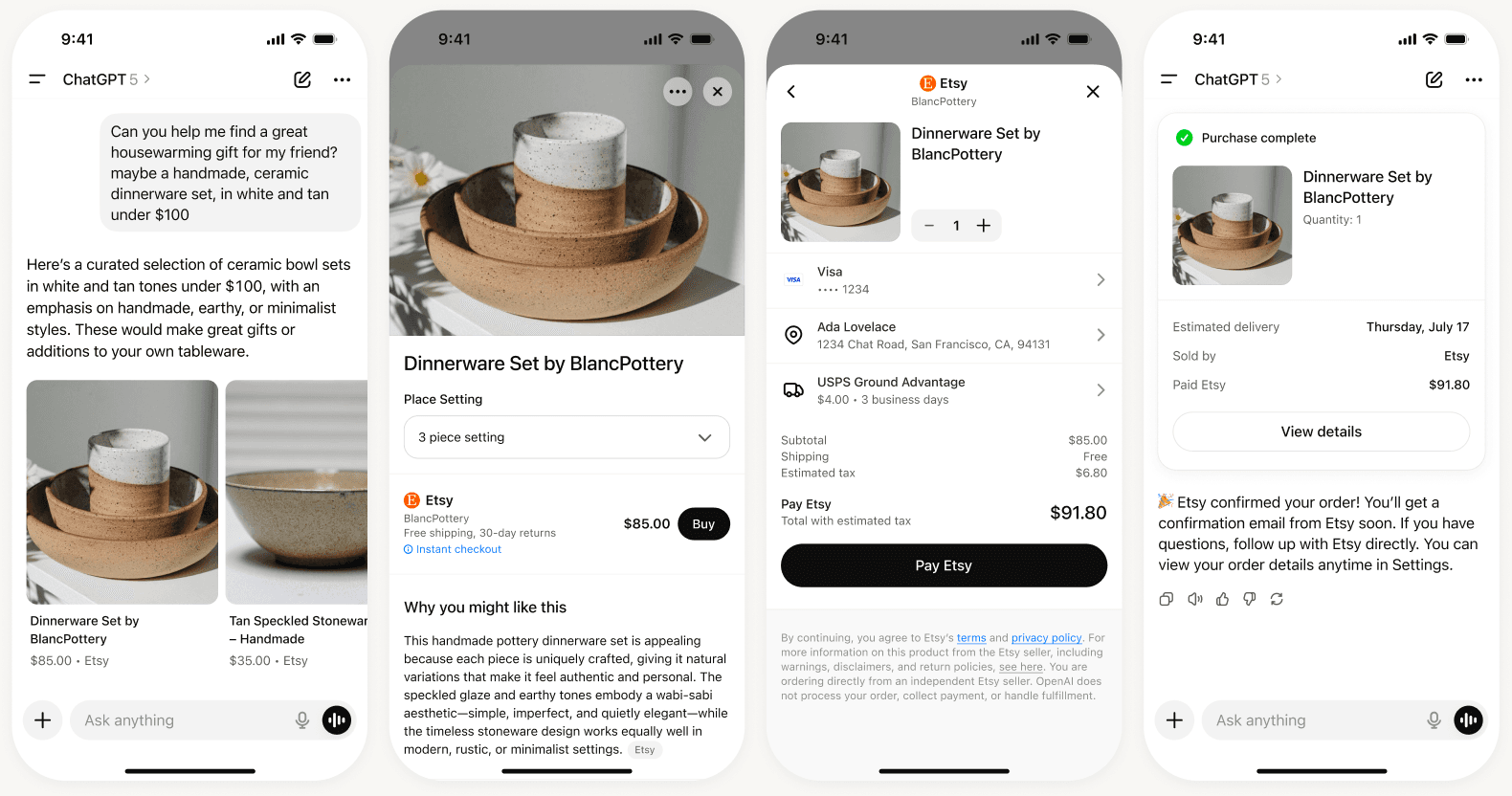
The competitive landscape for AI-powered shopping is undergoing a significant realignment. According to recent reporting, Google is doubling down on its infrastructure for "agentic commerce" by expanding the capabilities of its Universal Commerce Protocol (UCP). Simultaneously, OpenAI appears to be pulling back from its direct-to-checkout ambitions with ChatGPT Instant Checkout. This creates a pivotal moment where the major players are defining their roles: Google as an infrastructure provider and OpenAI potentially as a more focused AI model vendor.
Google's Universal Commerce Protocol: Building the Rails
Google's UCP is positioned as an open standard designed to enable AI agents to perform commercial transactions across different platforms and retailers. The latest updates to UCP represent a substantial technical advancement for automated shopping experiences:
Multi-Item Cart Creation: AI agents can now assemble complex shopping baskets containing multiple products from various retailers, moving beyond simple single-item purchases. This capability is fundamental for replicating genuine shopping behavior where consumers build carts over time.
Real-Time Catalog Integration: UCP now enables AI agents to access and update product information directly from retailer catalogs in real time. This addresses one of the most significant challenges in AI commerce—ensuring that pricing, availability, and product details are accurate at the moment of purchase consideration.
Identity Linking for Loyalty Programs: Perhaps most strategically important for luxury retail, UCP now supports identity linking that allows shoppers using AI agents to access their loyalty status, member benefits, and personalized pricing. This bridges the gap between automated convenience and the personalized relationships that define premium retail experiences.
OpenAI's Strategic Retreat
The reporting indicates OpenAI is "pulling back" on its ChatGPT Instant Checkout feature. While specific reasons aren't detailed, this suggests several possible strategic considerations:
- Complexity of Commerce: Building reliable checkout infrastructure involves payment processing, fraud detection, customer service, and regulatory compliance—areas outside OpenAI's core competency in model development.
- Partnership Strategy: OpenAI may be shifting toward enabling partners (like retailers or payment providers) to build commerce applications on top of their models rather than competing directly.
- Focus on Core AI: With intense competition in foundation models, OpenAI may be concentrating resources on maintaining its technological edge rather than expanding into complex vertical applications.
The Emerging Competitive Landscape
This development reveals three distinct approaches to AI in commerce:
Google's Infrastructure Play: By developing UCP as an open standard, Google is positioning itself as the underlying protocol layer that enables AI commerce across the web. This aligns with Google's historical strength in creating open standards (like HTTP, HTML) that become foundational to web infrastructure.
OpenAI's Model-First Approach: OpenAI appears to be retreating from building end-to-end commerce solutions, potentially focusing instead on providing the AI models that power others' commerce applications.
Amazon's Position: While not detailed in the specific update, Amazon's presence in the mix suggests the e-commerce giant is developing its own agentic commerce capabilities, likely tightly integrated with its marketplace ecosystem.
Why This Matters for Retail & Luxury
For luxury and premium retailers, these developments have immediate implications:
Infrastructure Decisions: Retailers must now evaluate whether to build agentic commerce capabilities on Google's UCP standard, develop proprietary solutions, or wait for other standards to emerge.
Customer Experience Strategy: The identity linking capability in UCP means luxury brands could potentially offer AI shopping assistants that recognize VIP clients and provide appropriate service levels, exclusive access, and personalized recommendations while maintaining brand standards.
Data Control Considerations: Real-time catalog integration requires careful consideration of data architecture. Luxury brands must determine how much product information, pricing, and inventory data they're willing to expose through standardized protocols versus keeping within controlled environments.
Partnership Evaluation: With OpenAI retreating from direct commerce applications, luxury retailers looking to implement AI shopping assistants must now evaluate whether to:
- Build their own using foundation models
- Partner with specialized commerce AI providers
- Wait for more mature solutions from platform providers
Business Impact Assessment
The immediate business impact is primarily strategic rather than operational:
Short-term (6-12 months): Limited direct impact on revenue. This period will involve experimentation, proof-of-concept development, and partnership evaluations by forward-thinking retailers.
Medium-term (12-24 months): Early adopters may begin implementing UCP-based shopping assistants for specific use cases (gift recommendations, replenishment, cross-selling).
Long-term (24+ months): If UCP gains adoption, it could fundamentally change how consumers discover and purchase luxury goods through AI intermediaries, potentially creating new customer acquisition channels while challenging traditional brand-controlled shopping experiences.
Implementation Approach for Luxury Retailers
Technical Requirements: Implementing UCP integration requires:
- API development to expose product catalog data
- Identity management systems that can securely link customer profiles
- Cart management systems that can handle multi-retailer baskets
- Robust testing environments to ensure brand standards are maintained
Complexity Assessment: Medium to high complexity. While UCP provides a standardized protocol, the implementation requires significant backend integration, security considerations for customer data, and careful design of the AI agent's behavior to reflect brand values.
Resource Allocation: Initial exploration should involve cross-functional teams including e-commerce, IT, customer experience, and legal/compliance to address the multifaceted implications of AI-driven commerce.
Governance & Risk Assessment
Privacy Considerations: Identity linking raises significant privacy questions. Luxury retailers must ensure explicit customer consent and transparent data usage policies when enabling AI agents to access loyalty status and purchase history.
Brand Control Risks: AI shopping agents making recommendations or completing purchases on behalf of customers could potentially violate brand guidelines around product presentation, pricing consistency, or customer service standards.
Maturity Level: UCP appears to be in early adoption phase. Luxury retailers should approach with appropriate caution—experimenting in controlled environments rather than full-scale deployment.
Competitive Dynamics: There's risk in standard lock-in. If UCP becomes dominant, Google gains significant influence over the AI commerce ecosystem. Luxury brands must balance the benefits of standardization against maintaining control over their customer relationships.
Strategic Recommendations
- Establish an AI Commerce Task Force: Create a cross-functional team to monitor these developments and develop a strategic position on agentic commerce.
- Begin Technical Exploration: Start small-scale experiments with UCP integration in non-critical areas to understand the technical requirements and limitations.
- Develop Governance Frameworks: Create policies for AI agent behavior, data sharing, and brand representation before implementing any agentic commerce features.
- Monitor Competitive Responses: Watch how other luxury brands and retailers approach this technology to inform your own strategy.
- Engage with Standards Development: Consider participating in UCP development or similar standards processes to ensure luxury retail requirements are represented.
The convergence of AI and commerce is entering a new phase where infrastructure matters as much as intelligence. For luxury retailers, the challenge is to harness the convenience of AI shopping assistants while preserving the exclusivity, personalization, and brand integrity that define the luxury experience.