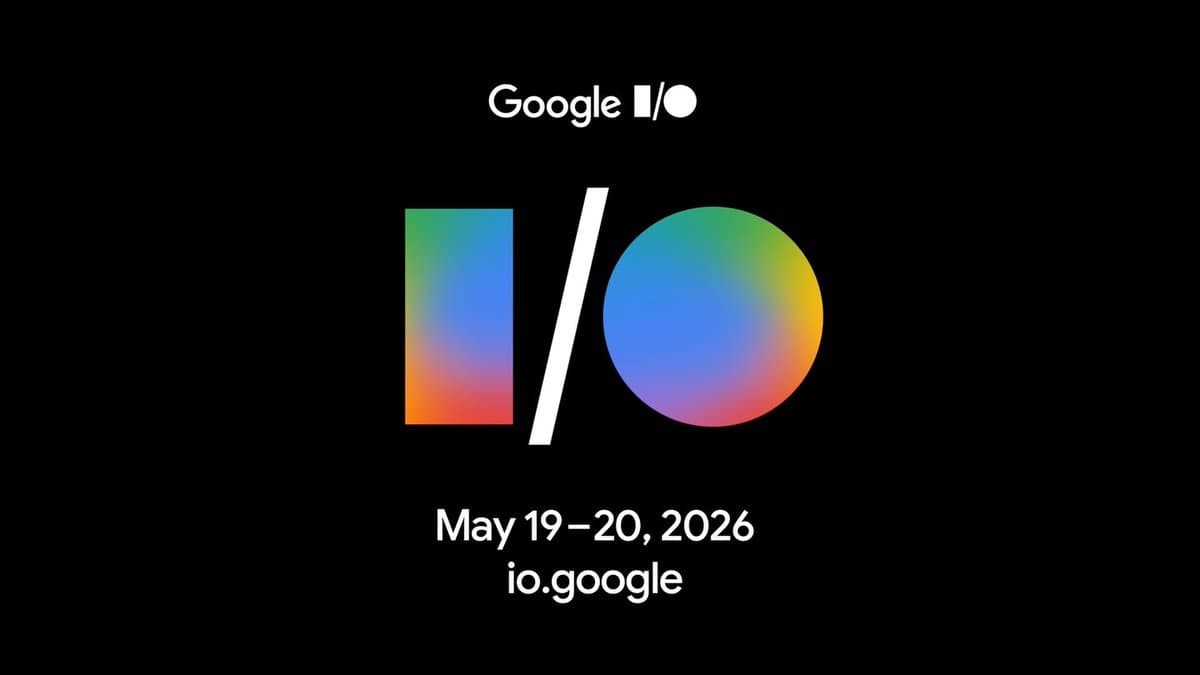
Ahead of Google's annual developer conference, Google I/O, scheduled for next month, industry speculation is mounting about the company's next major artificial intelligence release. The anticipation is fueled by Google's formidable combination of computational resources, research prowess, and financial stability.
What's Fueling the Speculation?
The speculation, voiced by an industry observer planning to attend the event, hinges on three core pillars of Google's AI advantage:
- Unmatched Compute Scale: Google is cited as possessing the "most computing power," with a capacity equivalent to 5 million H100 GPUs. This represents a staggering infrastructure investment for training and serving next-generation models.
- Elite Research Arm: The integration of DeepMind provides a world-leading research facility. Breakthroughs from teams like Gemini, DeepMind, and Google Research are the likely foundation for any major new release.
- Strong Financial Foundation: Google's robust revenue streams from Search, Cloud, and advertising provide the capital required to sustain massive, long-term AI R&D and infrastructure projects that would be prohibitive for most other entities.
Context: The AI Conference Calendar
Google I/O is one of the key annual events where the company has historically made significant AI announcements. In recent years, it has served as the launchpad for major model updates, developer tools, and integration showcases. The event typically focuses on software, services, and developer-facing platforms, making it a logical venue for announcing a new model API, a significant upgrade to the Gemini family, or a suite of new AI-powered developer tools.
What Could Be Announced?
While the source does not specify the nature of the "next big release," based on Google's trajectory and the I/O event's focus, potential announcements could include:
- Gemini 2.0 or "Gemini Ultra 2": A next-generation flagship multimodal model claiming new state-of-the-art benchmarks, potentially focusing on advanced reasoning, longer context, or significantly reduced latency.
- Major AI Infrastructure or Framework: A new tool or platform for developers, such as an enhanced Vertex AI, a new TPU generation announcement, or a framework to more easily build on Google's models.
- DeepMind Research Breakthrough Commercialization: The public release or API access to a previously research-only project from DeepMind, applying its work in areas like AlphaFold, robotics, or game theory to broader AI problems.
gentic.news Analysis
This speculation aligns with the intense, multi-front competition characterizing the AI landscape in 2026. Google's last major model family, Gemini, launched in late 2023 and has seen iterative updates throughout 2024 and 2025. A significant release at I/O 2026 would be a strategic counter to anticipated advances from competitors like OpenAI, which has a pattern of major releases, and Anthropic, which has steadily climbed benchmark leaderboards. The mention of "5 million cubic meters equivalent in H100"—while an unconventional metric—underscores the escalating infrastructure arms race. This is no longer just about model architecture; it's about who can marshal the most efficient, powerful compute to train and serve models at scale. Google's vertical integration, from custom TPU silicon through Cloud infrastructure to end-user products like Search and Workspace, gives it a unique deployment advantage that pure-play AI labs lack. The pressure is on for Google to translate its vast resources into a product that clearly regains perceived leadership, especially in the wake of OpenAI's consistent pace of innovation.
Frequently Asked Questions
When is Google I/O 2026?
Google I/O 2026 is scheduled for May. The exact dates and agenda are typically announced by Google a few weeks before the event.
What was announced at the last Google I/O?
At Google I/O 2025, announcements likely centered on the evolution of the Gemini ecosystem, deeper AI integrations across Android, Workspace, and Google Cloud, and updates to the TensorFlow and JAX frameworks. A major release at I/O 2026 would be the next step in that annual cadence.
How does Google's AI compute compare to competitors?
Google is considered a leader in AI compute infrastructure due to its early and sustained investment in custom Tensor Processing Units (TPUs) and its global data center network. The "5 million H100 equivalent" claim, while speculative, highlights the scale of investment required to compete at the frontier of AI, where companies like Microsoft (via Azure and its partnership with OpenAI) and Amazon (via AWS and its Anthropic partnership) are also making massive investments.
What is DeepMind's role in Google's AI releases?
DeepMind, acquired by Google (now Alphabet) in 2014, operates as its advanced AI research lab. It is responsible for fundamental breakthroughs like AlphaGo and AlphaFold. Its research increasingly feeds into Google's commercial AI products, with the Gemini model family being a prime example of this synergy between DeepMind's research and Google's product and infrastructure scale.