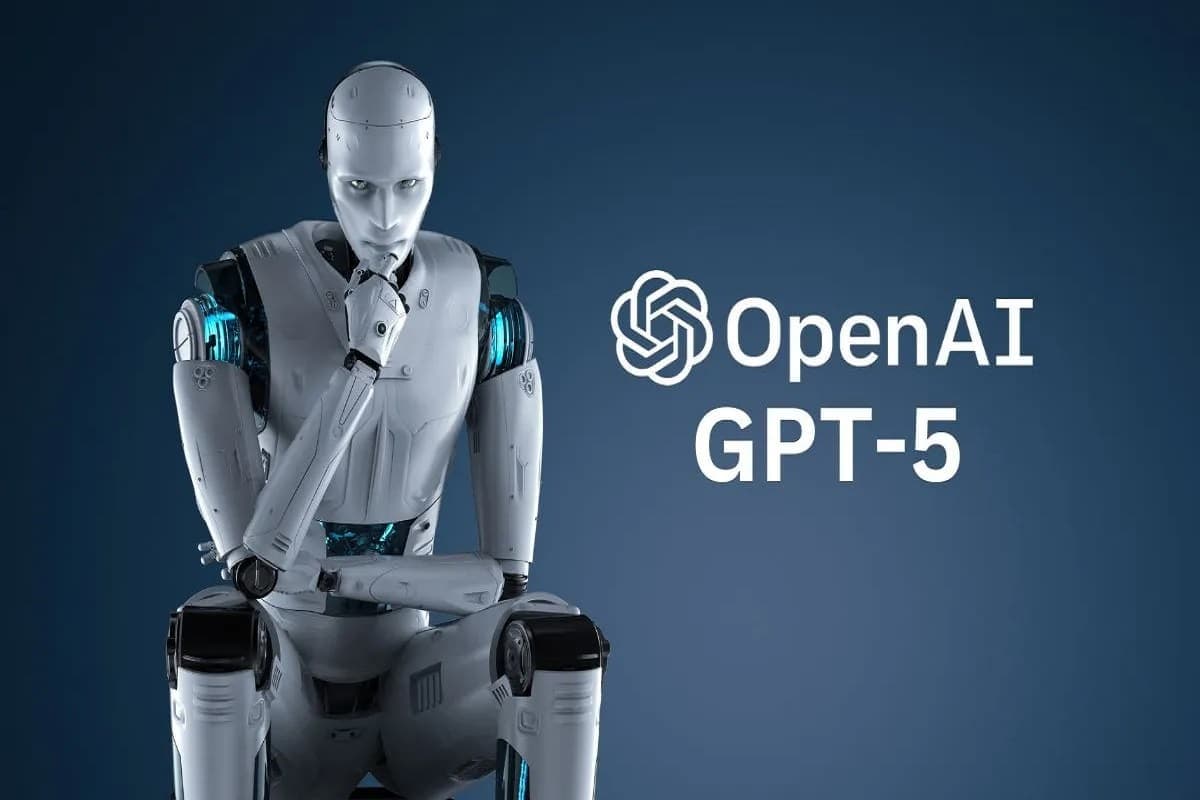
A cryptic social media post from an OpenAI employee has sparked intense speculation about the company's upcoming model roadmap, specifically a potential "GPT-5.5 Pro" release.
What Happened
On X (formerly Twitter), an OpenAI employee posted: "what the heck. GPT-5.5 pro will be a qualitative leap. Absolutely insane."
The brief, unprompted statement contains no technical details, benchmarks, or release timelines. It appears to be an informal, excited reaction to internal developments rather than an official announcement.
Context
This follows OpenAI's established pattern of releasing intermediate "point-five" upgrades between major numbered model generations. GPT-3.5 Turbo served as a widely deployed, cost-optimized version of GPT-3, while GPT-4 Turbo (released in November 2023) offered improved context windows and knowledge cutoffs over the original GPT-4.
The mention of "GPT-5.5 Pro" suggests OpenAI may be preparing a similar mid-cycle enhancement to GPT-5, which was released in 2025. The "Pro" designation could indicate a higher-performance tier compared to a standard "GPT-5.5" or "GPT-5.5 Turbo," potentially targeting different latency, throughput, or capability profiles.
What This Means in Practice
If the employee's characterization is accurate, a "qualitative leap" would imply improvements that go beyond typical incremental updates in speed or cost reduction. This could involve:
- Reasoning leaps: Significant improvements on benchmarks like GPQA or MATH that test deep reasoning.
- Multimodal integration: More seamless and capable handling of image, audio, and video within a single model.
- Agentic capabilities: Enhanced reliability for long-horizon tasks without human intervention.
- Efficiency breakthroughs: Major reductions in computational cost per token while maintaining or improving quality.
However, without official confirmation or benchmarks, these remain speculative interpretations of the vague "qualitative leap" description.
gentic.news Analysis
This rumor aligns with the competitive pressure OpenAI faces across multiple fronts. Google's Gemini Ultra 2.0, released in late 2025, closed the gap on several reasoning benchmarks, while Anthropic's Claude 4 series established leadership in certain safety and constitutional AI metrics. A substantial mid-generation upgrade from OpenAI would be a strategic move to reassert technical leadership before the expected GPT-6 timeline in 2027.
The "Pro" designation is particularly interesting. Following our coverage of OpenAI's evolving tiered API strategy, this suggests further market segmentation. We might see a "GPT-5.5" base model for general use, a "Turbo" variant optimized for latency and cost, and a "Pro" tier offering maximum capability for complex enterprise and research applications—potentially at a premium price.
Historically, OpenAI's "point-five" releases have focused on practical deployment improvements rather than pure capability jumps. If this represents a true "qualitative leap," it may indicate that research breakthroughs from the GPT-6 development pipeline have been successfully back-ported to the current architecture. This would be unusual but not unprecedented in fast-moving AI development cycles.
Frequently Asked Questions
When will GPT-5.5 Pro be released?
There is no official release date. Based on past patterns, OpenAI typically announces new models at developer conferences or through blog posts. The Spring 2026 OpenAI DevDay, if it follows the 2023 and 2025 schedule, could be a potential venue for announcement.
What does 'qualitative leap' mean for AI capabilities?
In context, it likely means noticeable improvements in complex reasoning, accuracy on difficult tasks, or multimodal understanding that users can perceive in real-world use, not just benchmark scores. However, without specific metrics, the exact nature of the improvement remains undefined.
How does GPT-5.5 Pro differ from GPT-5?
We don't have technical specifications, but historically, ".5" releases from OpenAI have offered better performance, updated knowledge, lower costs, or new features (like longer context windows) while maintaining API compatibility with the base model.
Should I wait for GPT-5.5 Pro before building applications?
No. Development should continue with current available models. When new models release, they typically offer backward-compatible APIs, allowing gradual migration. Building with today's GPT-5 or GPT-4o ensures you have a working system that can potentially benefit from upgraded models later with minimal changes.