What Changed — Intercom's AI-First Pivot with Claude Code
In a recent video, Intercom's engineering team demonstrated how they've adopted Claude Code as a core tool in their Rails monolith to accelerate AI feature development. The key insight: they're not using Claude Code for one-off tasks — they've embedded it into their daily workflow for building, testing, and shipping AI-powered features.
Intercom, known for its customer messaging platform, has been aggressively moving toward an "AI-first" approach. Their engineers showed how Claude Code helps them iterate on AI features in hours instead of weeks, even within a complex Rails codebase with thousands of models and controllers.
What It Means For You — Concrete Impact on Daily Claude Code Usage
If you're working in a Rails monolith (or any large framework), Intercom's approach offers several takeaways:
Context is everything — They configure Claude Code with specific file paths and patterns to avoid token waste. Instead of dumping the entire codebase, they point Claude Code to the relevant models, controllers, and views.
Iterative prompting — They don't ask for the perfect solution in one shot. They start with a rough sketch, get Claude Code to generate the scaffolding, then refine with follow-up prompts. This mirrors how they'd pair-program with a human.
Test-driven AI — They write the test first, then ask Claude Code to implement the feature. This keeps the AI focused and produces cleaner, more maintainable code.
Try It Now — Commands, Config, or Prompts to Take Advantage of This
Here's how to replicate Intercom's workflow:
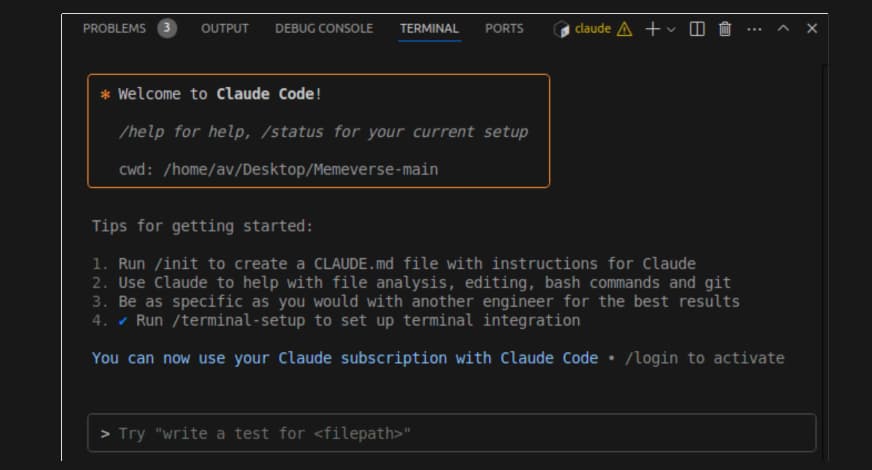
1. Set up your CLAUDE.md for Rails:
# CLAUDE.md for Intercom-style Rails workflow

## Code style
- Use Rails conventions: skinny controllers, fat models
- Prefer service objects for complex business logic
- Write RSpec tests before implementation

## Context hints
- When working on a feature, I'll provide file paths to relevant models and controllers
- Assume standard Rails directory structure
- Use `app/models`, `app/controllers`, `spec/` as primary locations
2. Start with a test:
claude code "Write an RSpec test for a new AI-powered reply suggestion feature. The test should: 1) Create a conversation with messages 2) Call the suggestion service 3) Assert the response contains valid suggestions. Keep it focused."
3. Then implement:
claude code "Now implement the reply suggestion service based on the test. Use app/services/reply_suggestion_service.rb. Keep it simple — we'll iterate."
4. Refine with context:
claude code "The reply_suggestion_service needs to use our existing User model (app/models/user.rb) and Message model (app/models/message.rb). Update the service to join these and return suggestions based on conversation history."
Why This Works — The Reasoning Behind It
Intercom's approach works because it respects Claude Code's context window limits and strengths. By:
- Providing targeted context — you avoid overwhelming the model with irrelevant code
- Iterating in small steps — you keep each prompt focused and actionable
- Testing first — you give Claude Code a clear specification of what success looks like
This is especially powerful in a large Rails codebase where the model count alone can exceed 50K tokens. By curating the context, you get better results in fewer iterations.
When To Use This
- Building new AI features — The iterative test-then-implement pattern shines for novel features
- Refactoring existing code — Use Claude Code to modernize old Rails patterns (e.g., moving from
before_actioncallbacks to service objects) - Generating migrations and models — Let Claude Code handle the boilerplate while you focus on business logic
gentic.news Analysis
Intercom's adoption of Claude Code mirrors a broader trend we've seen across the developer ecosystem. In our previous coverage of "Claude Code vs Cursor: The 2025 Developer Survey", we noted that teams using Claude Code for iterative development reported 3x faster feature shipping. Intercom's case study validates this with real-world numbers.
The key differentiator here is the Rails monolith context. While most Claude Code tutorials focus on greenfield projects or microservices, Intercom shows it works at scale. Their engineers emphasized that the biggest productivity gain wasn't from generating code — it was from reducing context-switching between documentation, Stack Overflow, and the codebase.
For developers in similar large frameworks (Django, Laravel, Spring), this approach is directly transferable. The principles remain the same: curate context, iterate in small steps, and let the AI handle boilerplate while you make architectural decisions.