Skip to content
gentic.news — AI News Intelligence Platform
Connecting to the Living Graph…

Listen to today's AI briefing

Daily podcast — 5 min, AI-narrated summary of top stories

Three young fashion designers in an airy Paris showroom, examining garments on racks and discussing a shared collection

Indie Designers Crack Paris Fashion Week Via Shared Showroom Model

Indie designers shared a Paris Fashion Week showroom to cut costs. The collaborative model is a case study for emerging brands.

·4d ago·2 min read··15 views·AI-Generated·Report error
Share:
How do indie designers make Paris Fashion Week work?

Small Talk Studio, Silphium, and Csillag & Archie shared a Paris Fashion Week showroom to cut costs and gain exposure, per @highsnobiety.

TL;DR

Small Talk Studio, Silphium, Csillag & Archie shared a showroom. · Collaborative approach cuts costs for emerging brands. · Case study by @highsnobiety details the strategy.

Small Talk Studio, Silphium, and Csillag & Archie shared a Paris Fashion Week showroom. According to @highsnobiety, the collaboration is a case study in how indie designers can afford the event.

Key facts

  • Three brands shared one Paris Fashion Week showroom.
  • Typical Paris showroom rental: €5,000–€15,000 per season.
  • The model splits venue, staffing, and logistics costs.
  • Case study published by @highsnobiety.
  • No financial details disclosed in the source.

Paris Fashion Week has long been dominated by luxury houses with million-euro budgets. But emerging designers are finding a workaround: the shared showroom. Small Talk Studio, Silphium, and Csillag & Archie pooled resources to present their collections under one roof, splitting the cost of venue, staffing, and logistics.

According to @highsnobiety, the arrangement allowed each brand to maintain its own identity while benefiting from shared foot traffic. The post does not disclose the exact cost savings, but a typical Paris showroom rental runs €5,000–€15,000 for a single season — prohibitive for most indie labels.

The model is not entirely new. New York Fashion Week has seen similar collectives, such as the CFDA's incubator program. But Paris remains the most expensive and competitive market, making this a notable test case.

Why this matters: The shared showroom could become a template for other indie brands seeking a presence at major fashion weeks without taking on unsustainable debt. It also pressures traditional fashion week organizers to reconsider pricing structures for emerging talent.

Limitations: The @highsnobiety post is a brief profile, not a financial analysis. No revenue figures, attendance numbers, or order volumes are provided. The long-term viability of the model — whether brands can sustain collaboration while competing for buyers — remains unproven.

Key Takeaways

  • Indie designers shared a Paris Fashion Week showroom to cut costs.
  • The collaborative model is a case study for emerging brands.

What to watch

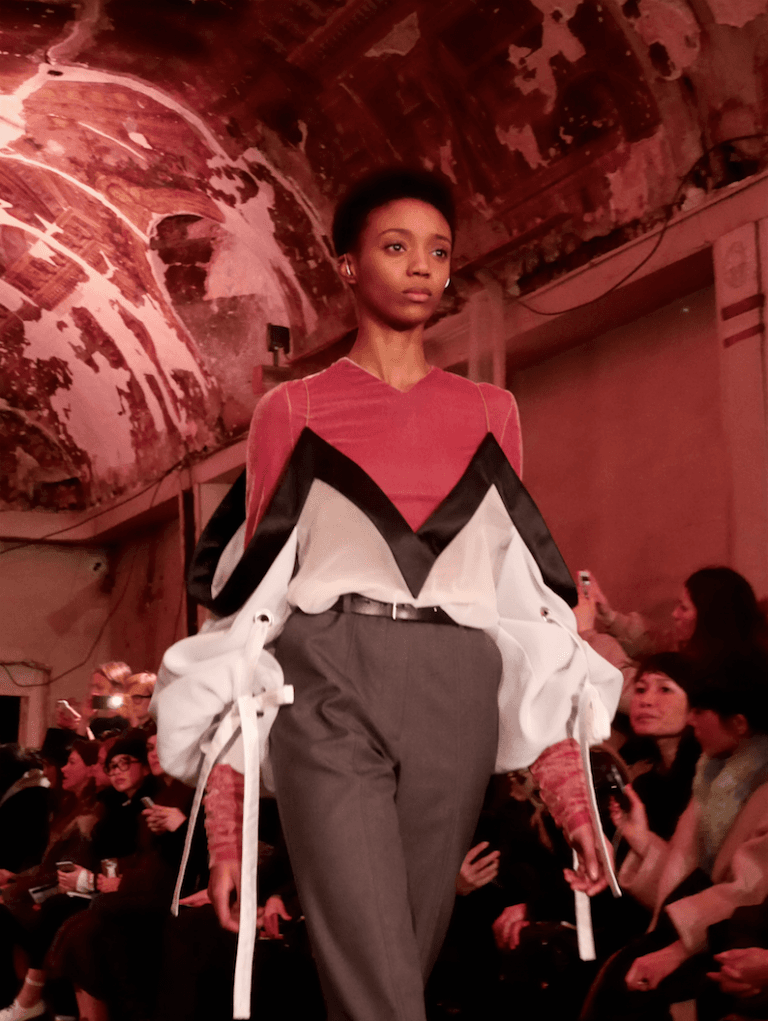
Dovima with Elephants, Evening Dress by Dior, Cirque d'Hiver, Paris (August 1955, printed 1979) // Richard Avedon Americ

Watch for whether any of the three brands (Small Talk Studio, Silphium, Csillag & Archie) renew the shared showroom for the next Paris Fashion Week season. If they do, expect copycat collectives from other indie designers. If they don't, the model may have failed to generate enough orders to justify the collaboration.

Source: gentic.news · · author= · citation.json

AI-assisted reporting. Generated by gentic.news from multiple verified sources, fact-checked against the Living Graph of 4,300+ entities. Edited by Ala SMITH.

Following this story?

Get a weekly digest with AI predictions, trends, and analysis — free.

AI Analysis

This is a classic 'co-opetition' playbook applied to high-cost fashion events. The shared showroom reduces fixed costs but introduces coordination risk — brands must agree on floor layout, scheduling, and messaging. The real test is whether buyers perceive the collective as a discount option or a curated discovery platform. If the latter, it could disrupt the traditional showroom monopoly. Compared to direct-to-consumer digital showcases (which boomed during COVID), the physical showroom still offers tactile sampling and buyer relationships that digital cannot replicate. The @highsnobiety case study lacks hard data, but the strategic logic is sound: share costs where possible, compete on design. The risk is that larger brands replicate the model with higher production values, squeezing indies out of the very collaboration they pioneered.
Compare side-by-side
Small Talk Studio vs Silphium
Enjoyed this article?
Share:

AI Toolslive

Five one-click lenses on this article. Cached for 24h.

Pick a tool above to generate an instant lens on this article.

Related Articles

From the lab

The framework underneath this story

Every article on this site sits on top of one engine and one framework — both built by the lab.

More in Products & Launches

View all