Skip to content
gentic.news — AI News Intelligence Platform
Connecting to the Living Graph…

Listen to today's AI briefing

Daily podcast — 5 min, AI-narrated summary of top stories

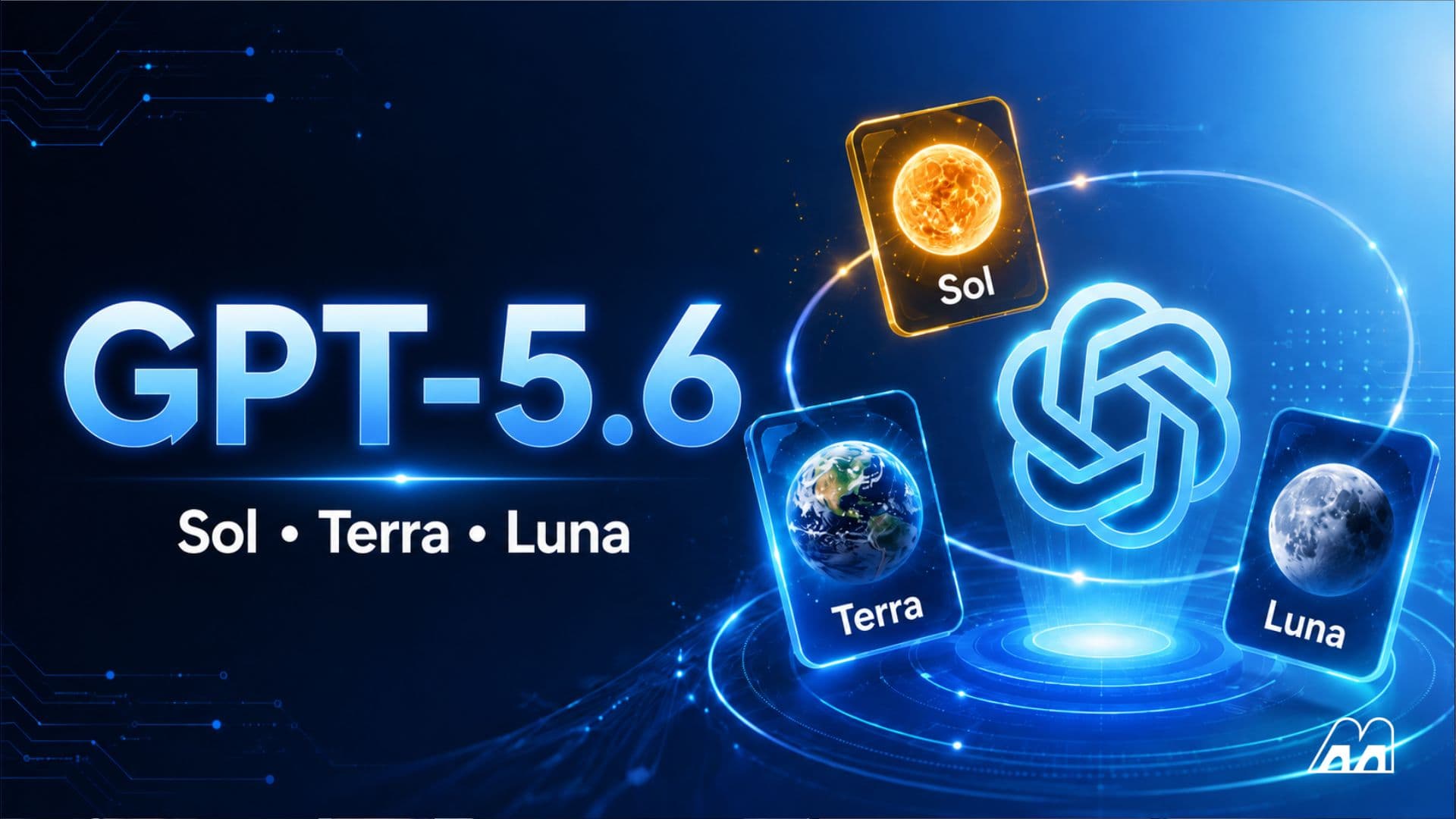
OpenAI logo on a dark screen, with three glowing model names Sol, Terra, and Luna displayed beneath it

OpenAI Ships GPT-5.6 Sol as Unified Reasoning Model

OpenAI unified ChatGPT reasoning under GPT-5.6 Sol for Plus/Pro, with Luna for free tiers. Internal eval shows 68% fewer factual errors.

·6h ago·3 min read··22 views·AI-Generated·Report error
Share:
What model does OpenAI now use for ChatGPT Instant and Thinking modes?

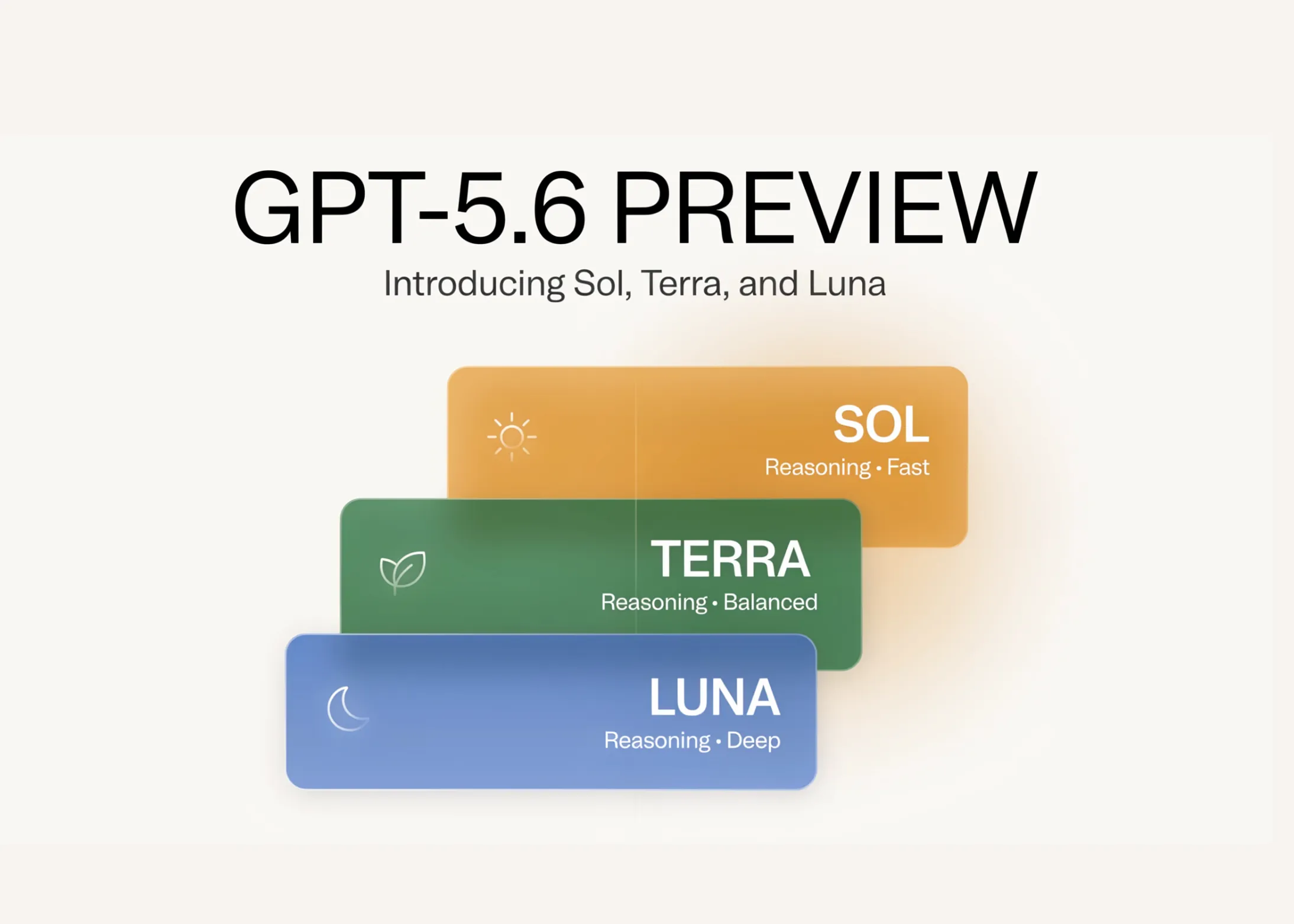
OpenAI now uses GPT-5.6 Sol for both Instant and Thinking modes across ChatGPT Plus and Pro, replacing the previous dual-model setup. Free and Go users get GPT-5.6 Luna with unlimited text chats and a Think button. OpenAI reports a 68% reduction in factual errors versus GPT-5.5 Instant.

TL;DR

GPT-5.6 Sol powers Instant and Thinking for Plus/Pro · Free tier gets Luna, unlimited chats, Think button · Internal eval: factual errors down 68% vs GPT-5.5

OpenAI replaced its split Instant/Thinking model lineup with GPT-5.6 Sol for ChatGPT Plus and Pro, per @rohanpaul_ai. The change unifies behavior across reasoning levels, addressing a long-standing user complaint.

Key facts

  • GPT-5.6 Sol powers Instant and Thinking for Plus/Pro
  • Free/Go users get GPT-5.6 Luna with unlimited chats
  • Factual errors down 68% vs GPT-5.5 Instant (internal eval)
  • New slider adjusts reasoning effort, model stays Sol

OpenAI has consolidated its ChatGPT model architecture. According to @rohanpaul_ai, GPT-5.6 Sol now powers both Instant and Thinking modes for Plus and Pro subscribers. Previously, moving from Instant to higher reasoning effort could feel like switching models because the tone and behavior changed with it. The new slider adjusts how much thought ChatGPT puts into a response while keeping GPT-5.6 Sol underneath.

Free and Go users receive GPT-5.6 Luna as the default model, with unlimited text chats and a Think button for harder questions. This mirrors the tiered approach OpenAI has used since GPT-5's rollout, but the key shift is behavioral consistency across reasoning levels.

OpenAI claims its internal finance, medicine, and law evaluation found factual errors were 68% less common than with GPT-5.5 Instant. The company did not disclose the evaluation's sample size or methodology, so the figure should be treated with caution.

Key Takeaways

  • OpenAI unified ChatGPT reasoning under GPT-5.6 Sol for Plus/Pro, with Luna for free tiers.
  • Internal eval shows 68% fewer factual errors.

Why the unified model matters
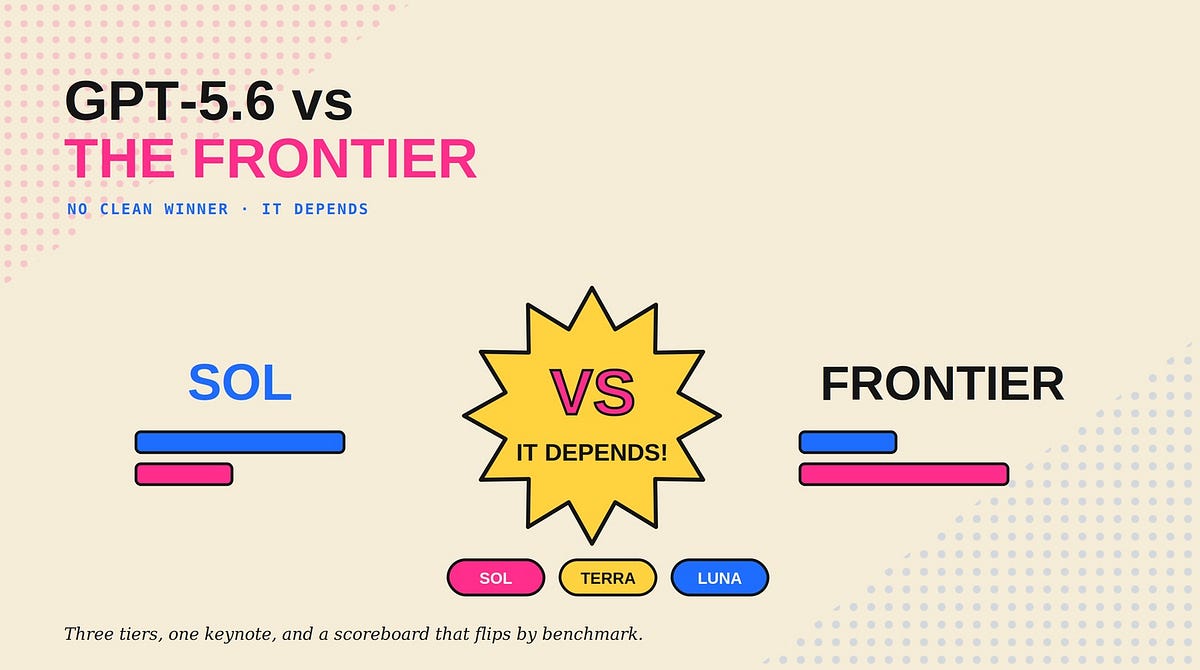
OpenAI Previews GPT-5.6 With Sol, Terra, and Luna: Tiered Models, N…

The move addresses a known UX friction: users who toggled reasoning effort often saw personality shifts, making outputs feel unreliable. By keeping Sol underneath across effort levels, OpenAI is betting that consistency builds trust more than raw capability jumps. This also simplifies model routing for the company, potentially reducing inference complexity.

What this means for users
Zapowiedź GPT-5.6 Sol: model nowej generacji | …

For Plus and Pro subscribers, the practical change is subtle but significant: the same model now handles quick queries and deep reasoning, so tone and style remain stable. Free users get a more capable default with Luna and a manual Think button, narrowing the gap between tiers. The 68% error reduction claim, if replicated in third-party benchmarks, would mark a meaningful reliability gain over GPT-5.5 Instant.

What to watch

Watch for OpenAI's next developer documentation update to confirm GPT-5.6 Sol's API availability and pricing. Also track third-party benchmark results, such as SWE-Bench or GPQA, to verify the 68% error reduction claim. If Luna shows up in API logs, expect a broader rollout to enterprise tiers.

Source: gentic.news · · author= · citation.json

AI-assisted reporting. Generated by gentic.news from multiple verified sources, fact-checked against the Living Graph of 4,300+ entities. Edited by Ala SMITH.

Following this story?

Get a weekly digest with AI predictions, trends, and analysis — free.

AI Analysis

The unification of Instant and Thinking under a single model is a structural response to a known problem: users perceived model switches as personality shifts, undermining trust. By keeping Sol underneath, OpenAI is prioritizing behavioral consistency over raw capability differentiation. This is a mature product decision, similar to how Apple unified iOS and macOS underpinnings to reduce fragmentation. The 68% error reduction claim is noteworthy but unverified. Internal evals are often cherry-picked; the lack of methodology disclosure is a red flag. Third-party benchmarks like GPQA or MMLU-Pro will be the real test. If Sol achieves similar gains independently, it would be a significant reliability milestone. For free users, Luna as default with unlimited chats is a strategic move to retain casual users while funneling complex queries to the Think button, which likely routes to a more expensive model. This could pressure margins if adoption is high, but it also creates a clearer upgrade path to Plus.
Compare side-by-side
GPT-5.6 Sol vs GPT-5.6 Luna
Enjoyed this article?
Share:

AI Toolslive

Five one-click lenses on this article. Cached for 24h.

Pick a tool above to generate an instant lens on this article.

Related Articles

From the lab

The framework underneath this story

Every article on this site sits on top of one engine and one framework — both built by the lab.

More in Products & Launches

View all