Key Takeaways
- OpenAI released GPT-5.6 as three tiers—Sol, Terra, Luna—on June 27, 2026.
- Sol tops Terminal-Bench 2.1 but trails competitors on other benchmarks.
- The release shifts focus to tiered pricing and efficiency, but access remains restricted.
What Happened
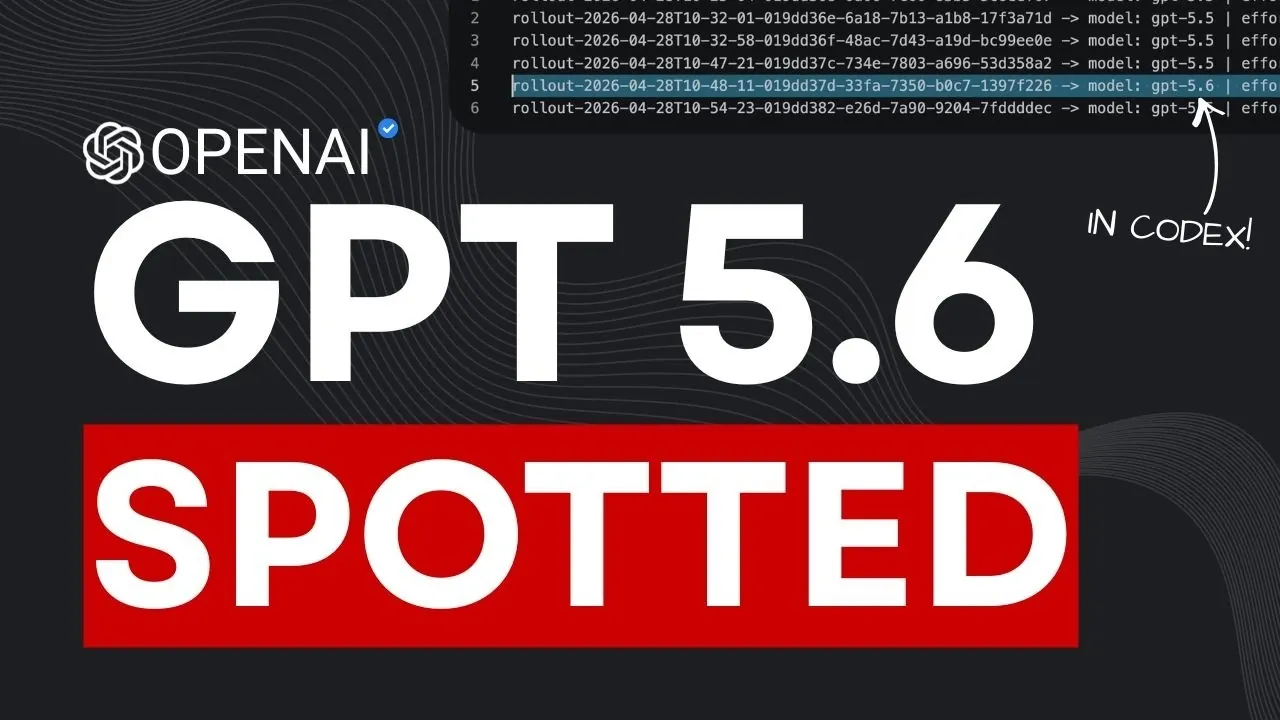
On June 27, 2026, OpenAI launched GPT-5.6, but not as a single model. Instead, it released three tiers under a new naming scheme: Sol, Terra, and Luna. Each is designed for a different use case and price point, marking a strategic shift away from one-size-fits-all models toward a family of specialized options.
- Sol: The flagship, priced at $5 per million input tokens and $30 per million output tokens. It targets complex reasoning, multi-step coding, and agent-driven workflows. It also introduces a new maximum reasoning setting and an "ultra mode" that uses subagents to tackle tasks.
- Terra: Priced at $2.50 input and $15 output—half of Sol—OpenAI positions it as competitive with GPT-5.5, the previous flagship, at roughly half the cost. It's intended as the sensible default for most serious work.
- Luna: At $1 input and $6 output, it's built for high-volume, low-cost tasks where speed and cost matter more than peak capability.
Technical Details
OpenAI's benchmark claims center on Terminal-Bench 2.1, a test for command-line coding work requiring planning and tool coordination. Sol scores 88.8% in standard mode and 91.9% in ultra mode, outperforming Anthropic's Claude Fable 5 (83.4%). Luna ties Anthropic's Mythos 5 on this benchmark.
However, on other benchmarks, the picture flips. Claude Fable 5 leads on:
- SWE-Bench Pro: ~80.3% (vs. unannounced Sol score)
- LiveCodeBench: ~89.8% (vs. unannounced Sol score)
- Humanity's Last Exam: 59% (vs. unannounced Sol score)
OpenAI also emphasizes token efficiency: on one cybersecurity benchmark, Sol matched Mythos Preview while using roughly a third of the output tokens. But these are vendor-reported results, not independent third-party tests.
Retail & Luxury Implications
For retail and luxury AI teams, the GPT-5.6 family offers a structured approach to model selection that could be useful for deployment planning. However, the direct relevance is limited:
- Tiered pricing matches well with retail workflows that vary in complexity: Luna for high-volume customer service queries (e.g., order status, return policies), Terra for product recommendations and personalized marketing copy, and Sol for complex supply chain optimization or multi-step agent tasks.
- The ultra mode with subagents could be applied to luxury personal shopping assistants that need to coordinate inventory checks, style recommendations, and scheduling in a single workflow.
- The token efficiency claim is important for cost-sensitive retail applications, where every API call adds up. If Sol uses fewer tokens for equivalent results, it could lower the total cost of running AI-powered personalization or customer support.
But the access restriction is a major caveat. GPT-5.6 is currently limited to approved partners and government-gated customers. For most retail and luxury companies, the model is not yet available for production use. As of mid-2026, the practical choice remains between Anthropic's Claude models, Google's Gemini, or earlier GPT versions.
Governance & Risk Assessment
- Privacy: Retail AI deployments handling customer data must ensure any model used complies with GDPR, CCPA, and other regulations. OpenAI's tiered access may introduce additional compliance complexity.
- Bias: Benchmark leadership doesn't guarantee fairness across diverse retail use cases (e.g., sizing recommendations for different body types, language support for global markets). Independent testing is essential.
- Maturity: GPT-5.6 is a preview release. Production readiness for retail is unproven; vendor benchmarks should not be taken as guarantees.
Business Impact
The tiered structure could reshape how retail AI teams budget for model usage. Instead of paying premium prices for every task, teams could route simpler queries to Luna and reserve Sol for high-value tasks. If Terra genuinely matches GPT-5.5's capability at half the cost, it could lower the barrier for mid-tier AI investments.
However, the competitive landscape remains fluid. Anthropic's Claude models lead on several benchmarks, and open models like GLM-5.2 offer lower costs. Retail AI leaders should validate against their own real-world tasks before committing to any vendor's claimed scores.
gentic.news Analysis
The GPT-5.6 launch is less about a definitive benchmark win and more about a strategic shift in how OpenAI packages its models. The tiered approach—Sol, Terra, Luna—mirrors what enterprise customers have been asking for: the ability to match model capability to task complexity without overpaying. For luxury retail, where margins are tight and customer experience is paramount, this structure could be a practical fit. A Luna-powered chatbot handles 80% of routine queries, Terra personalizes product recommendations, and Sol orchestrates complex multi-agent personal shopping experiences. The pricing transparency ($1–$30 per million output tokens) allows for clearer cost modeling, which is critical when scaling AI across thousands of SKUs or millions of customer interactions.
However, the benchmark story is messy. OpenAI cherry-picked Terminal-Bench 2.1, where Sol shines, while competitors lead on other evaluations. This is standard practice in the industry, but it means retail AI teams cannot rely on a single number to choose a model. The real test is how these models perform on retail-specific tasks: product catalog search, customer sentiment analysis, inventory optimization, or visual search. None of those are covered by the benchmarks discussed here. The token efficiency claim is promising—lower token use means lower costs—but it needs independent validation.
Finally, the access restriction is a significant barrier. GPT-5.6 is not available to most retail companies today. For luxury brands evaluating AI for fall 2026 campaigns, the practical choice remains between Anthropic's Claude models (which are available and benchmark-competitive) and OpenAI's previous GPT-5.5. The tiered structure is a smart evolution, but until access broadens, it's a preview, not a production option.
Source: pub.towardsai.net