The Investment — A Personal Bet on AI
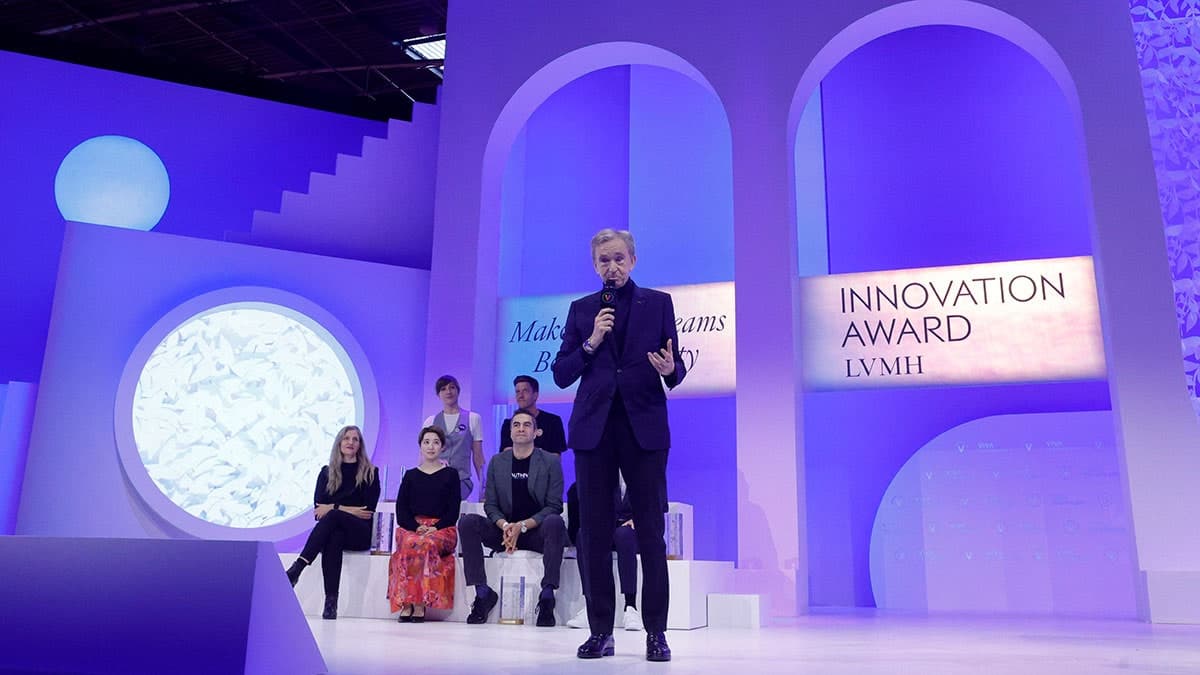
A senior executive from LVMH, the world's largest luxury conglomerate, has made a personal investment in a startup developing generative AI-enabled virtual try-on technology. While the specific executive and startup remain unnamed in the initial report, this move represents a significant signal from within the industry's highest echelons.
This is not a corporate venture capital play by LVMH's private equity arm, L Catterton, or a formal brand partnership. It is a personal financial commitment from an individual with deep insider knowledge of luxury retail's challenges and opportunities. Such investments often precede or run parallel to broader corporate strategic initiatives, indicating where influential leaders see genuine disruptive potential.
Why This Matters for Retail & Luxury
Virtual try-on (VTO) has been a frontier technology for retail for years, but traditional methods often struggled with realism, garment physics, and scalability. Generative AI, particularly diffusion models, promises a leap forward by synthesizing highly realistic images of a customer wearing an item, based on a single reference photo.
For luxury, the stakes and requirements are uniquely high:
- Preserving Brand Aesthetics: The generated imagery must flawlessly reflect the brand's visual identity—the drape of silk, the sheen of leather, the precise cut of a suit. Any uncanny valley effect or quality degradation is unacceptable.
- Reducing High-Stakes Returns: Luxury items have high average order values. A customer unsure about fit or style is less likely to purchase online. Convincing VTO can reduce purchase anxiety and, consequently, costly returns, which are a major pain point in e-commerce.
- Augmenting, Not Replacing, Experience: The goal is not to replace the in-store experience of touching fabric or receiving personal styling advice, but to bridge the gap between digital discovery and physical purchase, potentially driving more qualified traffic to boutiques.
An LVMH executive betting personal capital suggests a belief that this generation of AI has matured enough to meet the luxury sector's exacting standards.
Business Impact & Strategic Context
While no quantified ROI is provided in the source, the strategic impact can be inferred. Success in this domain could directly boost online conversion rates and average order value while decreasing return rates—a powerful combination for profitability.
This development does not occur in a vacuum. It aligns with a clear industry trend, as highlighted by the other sources aggregated in the report, such as Retail Asia noting "Luxury brands turn to AI to boost sales and customer engagement" and The Business of Fashion debating "Should Luxury Stop Worrying and Learn to Love AI Imagery?" The industry is actively grappling with AI's role.
Furthermore, the competitive and technological landscape is evolving rapidly. Tech giants are building the foundational infrastructure that could power such applications. For instance, Google recently launched an Agentic Sizing Protocol for retail AI, a tool designed to help AI agents handle the complex task of product sizing—a core challenge for any virtual try-on system. This follows a pattern of increased activity from Google in retail-adjacent AI, having appeared in 39 articles this week alone.
Implementation Approach & Technical Hurdles
Deploying generative AI for virtual try-on at scale presents several technical challenges:
- Data Requirements: Training requires massive, high-quality datasets of garments on diverse body types, with precise annotations. For luxury houses, this means capturing their unique collections in meticulous detail.
- Model Specificity: A one-size-fits-all model won't work. Effective systems likely need fine-tuning or adaptation for different product categories (eyewear vs. evening gowns) and material types.
- Infrastructure & Latency: Generating high-fidelity images in real-time (or near-real-time) for a seamless user experience demands significant GPU compute power, impacting cost and scalability.
- Integration: The technology must plug seamlessly into existing e-commerce platforms, CRM systems, and mobile apps.
The executive's investment likely targets a startup claiming to have novel solutions to these specific hurdles.
Governance & Risk Assessment
For luxury brands, the risks are as much about perception as technology.
- Brand Dilution: Poorly executed AI imagery that feels cheap or inauthentic can damage brand equity built over decades.
- Privacy: The process requires user-uploaded photos. Robust data governance, clear consent mechanisms, and guarantees that biometric data is not stored or misused are non-negotiable.
- Bias & Inclusivity: AI models can perpetuate biases present in training data. A virtual try-on system must work equally well across all skin tones, body sizes, ages, and ethnicities to be viable for a global luxury brand.
- Intellectual Property: The AI-generated output—a customer's likeness wearing a branded item—creates new questions about image rights and usage.
The personal nature of this investment suggests a calculated risk, taken by someone who understands these brand-centric sensitivities intimately.
gentic.news Analysis
This story is a concrete data point in the broader narrative of luxury's cautious but accelerating embrace of AI. It moves the discussion from theoretical "potential" and corporate press releases to tangible, individual conviction at the highest operational levels.
Cross-referencing our Knowledge Graph, the activity around enabling technologies is intense. Google's recent launch of an Agentic Sizing Protocol (covered by gentic.news on 2026-03-26) is directly relevant, as it aims to solve a foundational piece of the virtual try-on puzzle: accurate size mapping. This indicates major platform players are building the tools for the ecosystem, while luxury insiders are placing early bets on the application-layer startups that will use them.
The investment also reflects a strategic response to competitive pressures. With Anthropic and OpenAI (both noted as competitors to Google in the KG) pushing the boundaries of multimodal foundation models, the raw capability for image generation and understanding is rapidly becoming a commodity. The competitive edge will shift to who can best apply these capabilities to domain-specific problems—like the nuanced challenge of trying on a $5,000 jacket.
For AI practitioners at luxury houses, this news is a signal to closely monitor the virtual try-on startup space and to evaluate their own internal data readiness. The race is no longer about if AI will transform aspects of the digital customer journey, but which specific implementations will set the new standard for luxury online. The personal bet of an LVMH executive suggests that standard is being defined now.