In a significant development for the artificial intelligence hardware landscape, startup MatX has secured over $500 million in new funding to develop AI chips that will compete directly with industry giant Nvidia. Founded by two alumni of Google's semiconductor business, the company represents the latest and most substantial challenger to emerge in the increasingly competitive AI accelerator market.
The Funding and Its Significance
The $500+ million funding round represents one of the largest single investments in an AI hardware startup to date, signaling strong investor confidence in the potential for viable alternatives to Nvidia's dominant position. While specific investors weren't disclosed in the initial reports, the scale suggests participation from major venture capital firms, strategic corporate investors, or potentially sovereign wealth funds looking to diversify the AI hardware ecosystem.
This funding comes at a critical juncture in AI development, as companies worldwide scramble for computing resources to train and deploy increasingly sophisticated models. Nvidia currently controls an estimated 80-90% of the market for AI training chips, creating both supply constraints and pricing power that have frustrated many AI developers and cloud providers.
The Founders' Google Heritage
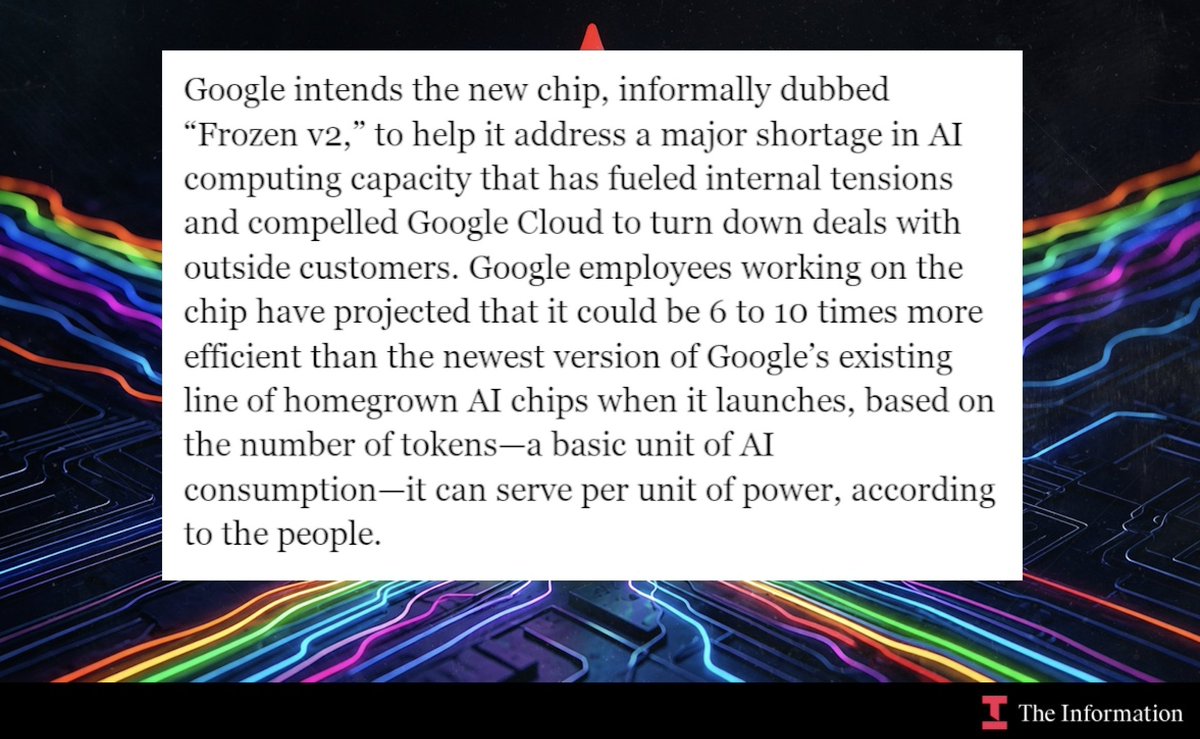
MatX's founders bring significant pedigree to their challenge, having previously worked in Google's semiconductor division. This background is particularly relevant given Google's own substantial investments in custom AI chips, including its Tensor Processing Units (TPUs) that power many of the company's AI services. The founders' experience likely includes insights into both the technical challenges of AI accelerator design and the commercial realities of competing in this space.
Google's semiconductor efforts have been among the most successful alternatives to Nvidia's offerings, with TPUs powering everything from Google Search to the company's Gemini AI models. This heritage suggests MatX may be pursuing architectural innovations similar to those that made Google's chips successful, potentially including specialized designs for particular AI workloads or more efficient data movement architectures.
The Competitive Landscape
MatX enters a market that has seen numerous challengers attempt to dethrone Nvidia, with varying degrees of success. AMD has made significant strides with its Instinct accelerators, while Intel continues to develop its Gaudi line. More specialized startups like Cerebras Systems, SambaNova, and Graphcore have also attracted substantial funding with novel architectural approaches.
What makes MatX particularly noteworthy is both the scale of its funding and the timing of its emergence. The AI hardware market is evolving rapidly, with Nvidia recently announcing its next-generation Blackwell architecture and already teasing its Rubin platform for 2026. Meanwhile, Google continues to advance its TPU technology, and AMD recently unveiled new Instinct accelerators.
Technical Challenges and Opportunities
Developing competitive AI accelerators requires overcoming significant technical hurdles. Modern AI models demand not just raw computational power but specialized capabilities for matrix multiplication, efficient memory hierarchies, and high-bandwidth interconnects for scaling across multiple chips. Nvidia's success stems not just from its GPU architecture but from its comprehensive software stack (CUDA) that has become the de facto standard for AI development.
MatX will need to address both hardware innovation and software ecosystem development. The most successful challengers have typically offered either significantly better price-performance ratios for specific workloads or architectural advantages that enable new capabilities. Given the founders' background, MatX may be focusing on optimizations for transformer-based models that dominate current AI applications or developing more energy-efficient designs as power consumption becomes an increasing concern.
Market Context and Timing
The funding announcement comes amidst several significant developments in the broader AI ecosystem:
- Nvidia's expanding influence: Recent reports suggest Nvidia is negotiating a potential $30 billion investment in OpenAI, which would further solidify its position at the center of the AI ecosystem.
- Google's continued innovation: Google recently announced its Deep-Thinking Ratio metric for evaluating AI reasoning efficiency and open-sourced TimesFM for time series forecasting, demonstrating ongoing investment in both AI hardware and software.
- Increasing specialization: As AI models become more sophisticated, they're creating demand for more specialized hardware rather than general-purpose accelerators.
Implications for the AI Industry
MatX's substantial funding has several important implications:
- Increased competition: More viable competitors could help alleviate the current supply constraints in AI hardware and potentially drive down prices.
- Architectural diversity: Different approaches to AI acceleration could enable new types of models or more efficient deployment of existing ones.
- Geopolitical considerations: As nations seek to build sovereign AI capabilities, alternatives to dominant U.S. companies like Nvidia become strategically important.
- Vertical integration: Large AI developers may increasingly invest in or develop their own hardware, following the path of Google, Amazon (with Trainium and Inferentia), and potentially others.
The Road Ahead for MatX
With $500 million in funding, MatX now has the resources to recruit top engineering talent, build sophisticated prototypes, and potentially begin production. However, the company faces a formidable challenge in convincing developers to adopt a new platform when Nvidia's ecosystem offers such comprehensive tools and widespread compatibility.
The most likely path to success involves targeting specific market segments where MatX's architecture offers clear advantages, potentially including edge AI deployment, specialized model types, or particular industry applications. Alternatively, the company might pursue partnerships with major cloud providers or AI developers looking for alternatives to Nvidia's pricing power.
Conclusion
The emergence of MatX with substantial funding represents another significant attempt to diversify the AI hardware ecosystem beyond Nvidia's dominance. While previous challengers have made only limited inroads, the scale of this investment and the founders' pedigree suggest this may be one of the most serious attempts yet.
Success will depend not just on technical innovation but on building a compelling software ecosystem and convincing risk-averse enterprises to adopt new technology. Regardless of MatX's specific fate, the continued flow of billions of dollars into AI hardware alternatives signals that investors believe the market has room for multiple winners as artificial intelligence transforms virtually every sector of the global economy.
The coming years will reveal whether MatX can translate its substantial funding and technical expertise into a viable competitor to one of technology's most dominant companies, or whether it will join the growing list of well-funded challengers that have struggled to make significant market share gains against the Nvidia juggernaut.