Key Takeaways
- A technical breakdown of two emerging protocols: Anthropic's Model Context Protocol (MCP) for general tool integration and the Google-Shopify Universal Commerce Protocol (UCP) for standardized shopping.
- UCP, backed by major retailers and payment processors, introduces persistent checkout sessions and secure payment tokens, creating a foundational layer for autonomous commerce agents.
What Happened: The Quiet Infrastructure Revolution for AI Agents
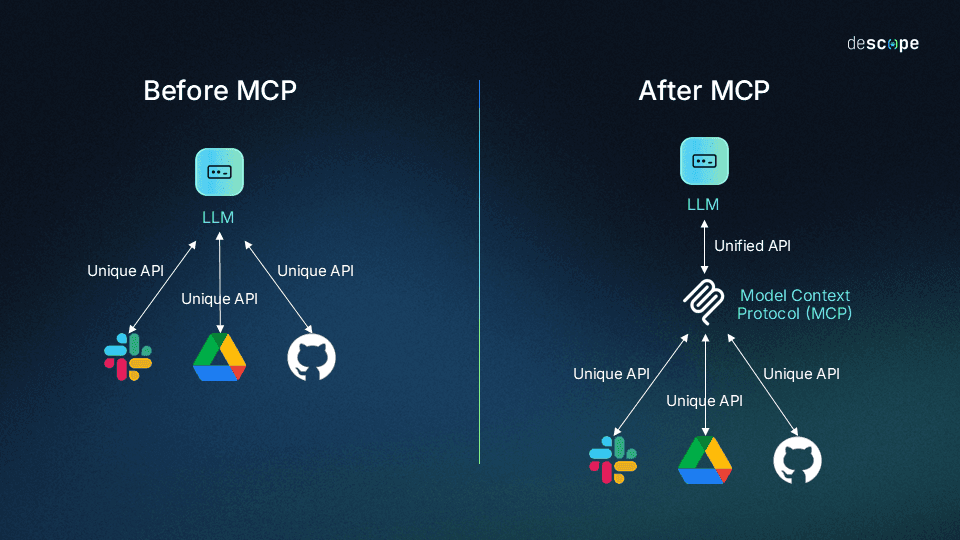
Beneath the hype of conversational AI agents, a critical infrastructure layer is being built to solve a fundamental problem: how can an AI agent reliably and safely interact with the external world, and specifically, how can it spend money? Two distinct but complementary protocols are emerging to address different layers of this challenge.
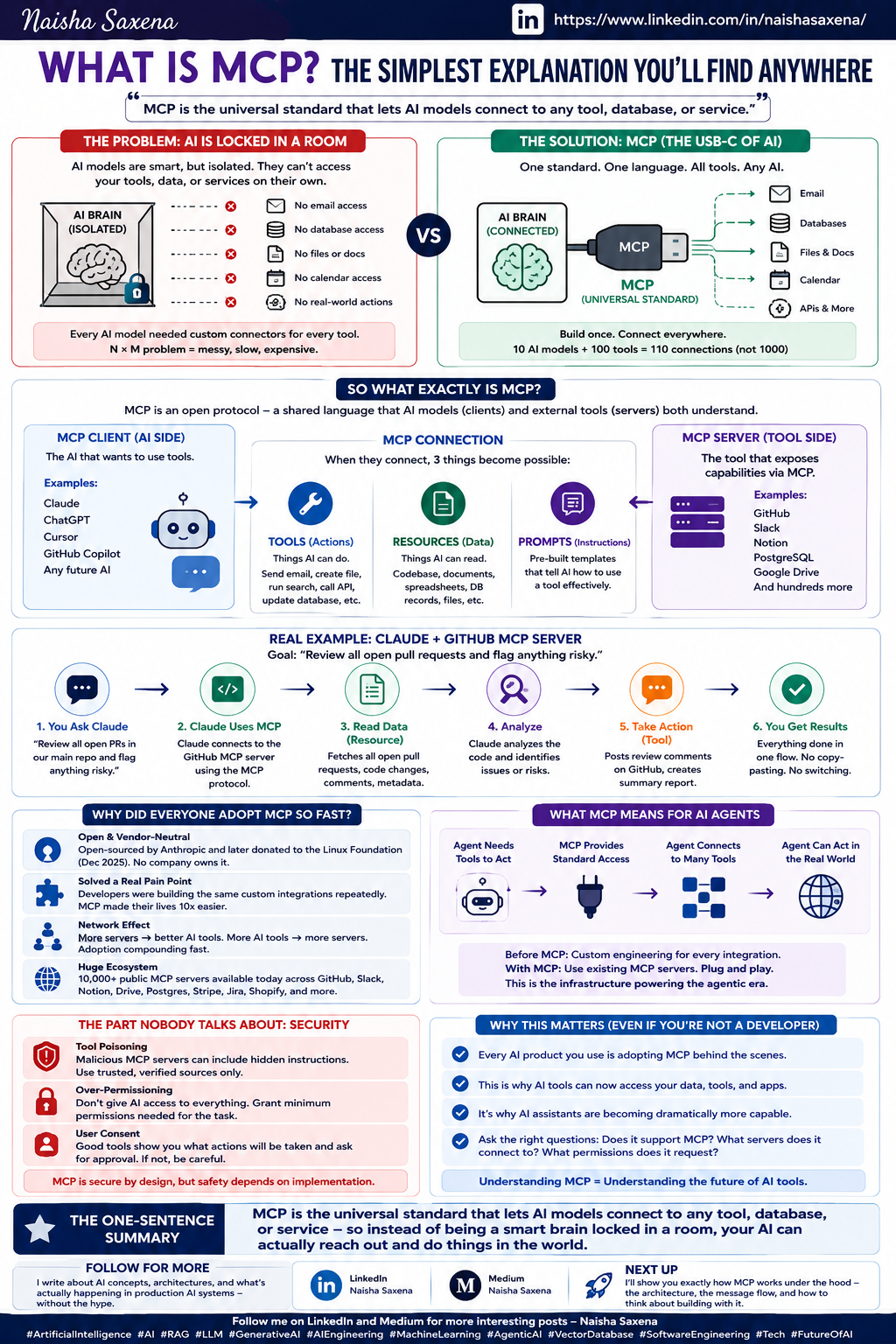
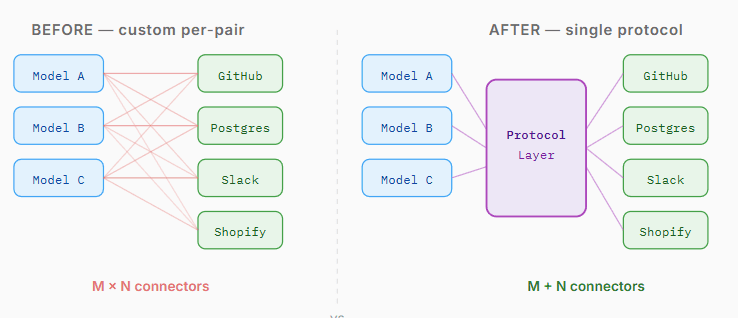
Model Context Protocol (MCP), introduced by Anthropic, is an open standard designed to solve the M×N integration problem. Before MCP, connecting an LLM to M different external services (like GitHub, Slack, or a database) required M custom integrations. MCP provides a single protocol interface. It structures interactions around three core abstractions:
- Tools: Stateless, callable functions that allow the model to take action.
- Resources: Read-only context (like file contents or API responses) for situational awareness.
- Prompts: Templated instruction sets to shape model behavior within a specific domain.
An LLM application acts as an MCP Host, connecting via an MCP Client to various MCP Servers (each representing a service like Postgres or Slack). The protocol is stateless by design—each tool call is independent, which is ideal for general-purpose connectivity but a limitation for processes requiring persistent state, like shopping.
Universal Commerce Protocol (UCP), co-developed by Google and Shopify, attacks the same M×N problem but at the commerce-specific layer. Its goal is to standardize the entire shopping journey—from product discovery to post-purchase—across any merchant. Crucially, it has secured pre-launch endorsement from a coalition including Walmart, Target, Etsy, Wayfair, Stripe, Mastercard, Visa, and Adyen.
UCP's architecture is layered, akin to TCP/IP:
- Shopping Service Layer: Core transaction primitives (sessions, line items, totals).
- Capability Modules: Independently versioned modules for Checkout, Orders, and Catalog.
- Extension Schemas: Add-ons for fulfillment, subscriptions, returns, and loyalty.
The key architectural difference is UCP's treatment of the checkout session as a first-class, persistent object. When an agent adds an item or applies a discount, it's operating on a session object held in synchrony across the merchant, payment provider, and credential provider. Commerce requires this persistent state.
At the heart of UCP's security is the Agent Payments Protocol (AP2), which issues a scoped, single-use token per transaction. An agent requests authorization for a specific purchase; the user approves that specific scope. The token is created, consumed, and expires, preventing a compromised agent from draining a payment method.
Technical Details: How They Differ and Complement
The source provides a precise comparison across eleven dimensions. The critical distinctions are:
- Scope: MCP is a general-purpose tool connectivity protocol. UCP is a domain-specific commerce transaction protocol.
- State Management: MCP is stateless (request-response). UCP is stateful, with managed, synchronized session state.
- Payment Semantics: MCP has none. UCP has payment semantics built-in via AP2.
- Identity & Trust: MCP delegates to OAuth 2.0 at the host level. UCP builds in merchant accountability and buyer identity verification into the payment chain.
- Coordination: MCP has no multi-agent coordination. UCP supports session locking and conflict resolution for multiple agents acting on behalf of the same user.
In essence, MCP is the "how to call a tool" layer. UCP is the "how to conduct a commerce transaction" layer. An AI shopping agent would use MCP to connect to general services (like a calendar to check availability) and UCP to actually browse, cart, and pay.
Retail & Luxury Implications: The Infrastructure for Autonomous Commerce
This is not about chatbots with a "buy now" button. MCP and UCP represent the foundational plumbing for a future where AI agents act as persistent, autonomous representatives of consumers. For retail and luxury, the implications are profound, but the path is infrastructural first.
1. The Emergence of a New Channel: The Agent Channel.
UCP, backed by a who's-who of retail and payments, is effectively standardizing an API for a new sales channel. This isn't a website or an app; it's a protocol that any AI agent can speak to transact with any participating merchant. Luxury brands will need to decide if and how they expose their inventory, pricing, and brand experience through this standardized agent interface.
2. Redefining Personal Shopping & Concierge.
A persistent AI agent, equipped with a user's style preferences, size, budget, and calendar (via MCP), could autonomously execute complex tasks. Imagine an agent that: monitors multiple brand sites (via UCP) for a restocked handbag; checks the user's calendar (via MCP) to schedule delivery when they're home; uses a stored gift card and loyalty points (via UCP extensions); and completes the purchase—all without a human clicking "checkout." UCP's secure AP2 tokens make delegating this level of financial agency plausible.
3. Strategic Decisions on Control vs. Distribution.
Participating in UCP means ceding some control over the checkout flow and customer data to a standardized protocol. The benefit is distribution across every AI agent that uses UCP. Luxury brands, which meticulously control their client experience, will face a tension: maintain full control within owned channels (website, app, in-store) or enable broader, agent-driven discovery and purchase at the cost of a standardized interaction.
4. The Primacy of Structured Data.
For an agent to effectively shop via UCP, product data must be impeccably structured and rich with attributes (materials, dimensions, color hex codes, style tags). The era of relying on beautiful imagery and marketing copy alone is challenged; machine-readable data becomes a critical asset for agentic discovery.
Current Status & Path Forward:
MCP is in production, with native support in Claude and growing server ecosystems. UCP is in its early rollout phase, buoyed by its heavyweight coalition. For retail AI leaders, the immediate action is monitoring and evaluation. This involves:
- Engaging with platform partners (like Shopify) on UCP rollout roadmaps.
- Auditing product data systems for agent-readiness.
- Scenario-planning for what commerce looks like when the customer is not a human on a page, but an AI agent using a protocol.