What Happened
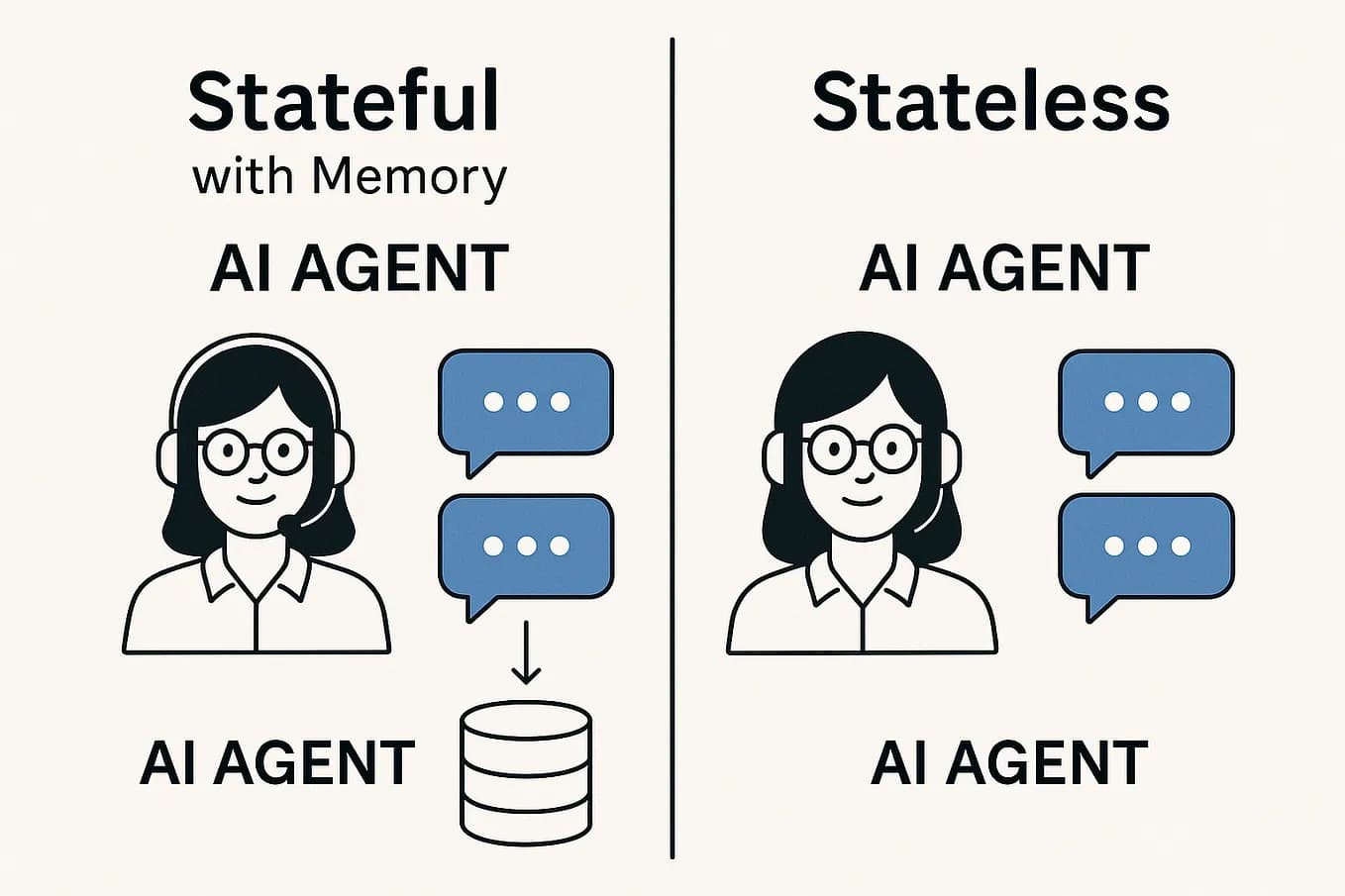
A new research paper, "MemoryCD: Benchmarking Long-Context User Memory of LLM Agents for Lifelong Cross-Domain Personalization," has been posted to the arXiv preprint server. The work addresses a critical gap in AI evaluation: while Large Language Models (LLMs) now boast million-token context windows, there's a lack of rigorous benchmarks to test their ability to remember and utilize long-term, real-world user behavior for personalization.
The researchers argue that existing memory benchmarks rely on short, synthetic dialogues created by scripted personas. In contrast, MemoryCD is built from the Amazon Review dataset, tracking authentic, longitudinal user interactions across years and multiple product domains (e.g., Books, Electronics, Clothing). This creates a "lifelong" behavioral trail for thousands of real users.
Technical Details
The MemoryCD benchmark is constructed as a multi-faceted evaluation pipeline. It tests 14 state-of-the-art base LLM models and 6 established memory-augmentation method baselines (like various retrieval-augmented generation or memory network approaches) on four distinct personalization tasks:
- Next-Item Prediction: What will the user buy/review next?
- Review Generation: Can the agent generate a plausible review for a user, given their history?
- Rating Prediction: Can the agent predict how a user would rate a specific item?
- User Simulation: Can the agent accurately simulate the user's future behavior sequence?
These tasks are evaluated across 12 diverse domains from the Amazon data, both in single-domain settings (e.g., predicting a user's next book) and, crucially, in cross-domain settings (e.g., using a user's history in Electronics and Movies to predict their behavior in Clothing). This cross-domain evaluation is key to simulating real-life user journeys that span multiple interests.
The core challenge MemoryCD presents is the scale and authenticity of the memory required. An LLM agent must process and reason over a user's entire review history—potentially hundreds of interactions spanning years—to perform the tasks accurately.
Retail & Luxury Implications
The findings of the MemoryCD benchmark are sobering for anyone building personalized retail experiences: existing memory methods for LLM agents are "far from user satisfaction in various domains." This has direct implications for the vision of AI-powered, lifelong personal shopping assistants or hyper-personalized marketing agents.

The Promise: A truly effective LLM agent with robust long-term memory could revolutionize customer relationships in luxury and retail. Imagine a digital concierge that remembers your client's purchase of a handbag five years ago, their subsequent search for matching shoes, their expressed preference for sustainable materials in a review, and their recent browsing of resort wear. This agent could provide deeply contextual, cross-category recommendations and service that feels genuinely understanding and exclusive.
The Current Reality Gap: MemoryCD suggests we are not there yet. The benchmark exposes weaknesses in how current LLMs and their memory-augmentation techniques handle noisy, longitudinal, real-world data. For luxury brands, where the nuance of taste, evolving style, and the relationship narrative are paramount, an agent that fails to accurately recall and synthesize a client's history could be worse than useless—it could feel impersonal and generic, damaging brand equity.
The research also highlights the importance of cross-domain personalization. A luxury conglomerate's AI shouldn't treat a client's history with its fashion house in isolation from their history with its wine & spirits or jewelry maisons. MemoryCD provides the first standardized testbed to evaluate whether an AI system can achieve this holistic, conglomerate-wide view of a customer, a capability that is a holy grail for groups like LVMH, Kering, and Richemont.
Implementation Considerations
For technical leaders, this paper is a call to rigorously evaluate any "personalization agent" prototype against benchmarks grounded in real user data, not synthetic tests. It suggests that simply plugging a customer's transaction history into a long-context LLM is insufficient. Advanced memory architectures—potentially combining retrieval, summarization, and knowledge graph integration—will be necessary.

Furthermore, the use of the Amazon Review dataset, while publicly available for research, underscores the data privacy and governance challenges. Deploying similar systems at scale would require handling first-party customer data with the highest standards of security and consent, a non-negotiable in the luxury sector.