A new research paper from Meta AI highlights a critical, underreported weakness in modern large language models with extended context windows: they systematically fail to retrieve facts buried in the middle of long documents. The team proposes a novel, lightweight solution called Query-only Test-Time Training (QTT) that adapts a model during inference, significantly improving its ability to find "needles in a haystack" without full fine-tuning.
What Happened
Meta's research team conducted systematic evaluations of long-context LLMs—including their own Llama models and others—on tasks requiring precise retrieval of information from documents spanning 128,000 tokens or more. They discovered a pronounced "lost-in-the-middle" phenomenon: while models perform reasonably well when relevant information is at the very beginning or end of a context, their accuracy plummets when key facts are positioned in the middle third of the input sequence.
This failure mode persists even in models specifically optimized for long-context understanding, revealing a fundamental architectural or attention-based limitation. The problem is particularly acute for real-world applications like legal document review, long codebase analysis, or scientific literature synthesis, where critical details can appear anywhere within a lengthy text.
The Fix: Query-only Test-Time Training (QTT)
Instead of retraining the entire model—a computationally expensive process—the researchers developed Query-only Test-Time Training. Here’s how it works:
- At Inference Time: When a user submits a query, the system takes the query itself and generates a set of synthetic, query-relevant training examples.
- Lightweight Adaptation: The model then performs a few steps of gradient descent only on its attention layers, using these synthetic examples. This process is extremely fast, typically adding only seconds to the inference latency.
- Task-Specialized Retrieval: This brief adaptation "steers" the model’s attention mechanism to become more sensitive to the specific type of information sought by the query, dramatically improving its ability to locate relevant passages anywhere in the long context.
The key innovation is that QTT requires only the query, not additional labeled data or access to the full document beforehand. It’s a form of few-shot learning that happens dynamically during the user's interaction.
Why It Matters
Long-context windows (e.g., 128K, 1M tokens) have been a major selling point for recent LLMs from Anthropic, Google, and OpenAI. However, this research confirms practitioner suspicions that raw context length doesn't guarantee usable comprehension. A model that can ingest a 300-page document but can't reliably find information within it has limited practical utility for deep analysis tasks.
QTT offers a pragmatic, efficient path to unlocking the true potential of these long contexts. By turning every query into a brief training session, it allows a single general-purpose model to adapt on-the-fly to specialized retrieval tasks without the cost and complexity of maintaining dozens of fine-tuned variants.
gentic.news Analysis
This research from Meta directly addresses a growing pain point in the industry's push toward million-token contexts. It follows a pattern of incremental but crucial improvements in LLM reliability rather than pure scale. As we covered in our analysis of Anthropic's Constitutional AI, there's a clear trend toward making existing models more robust and trustworthy, not just larger.
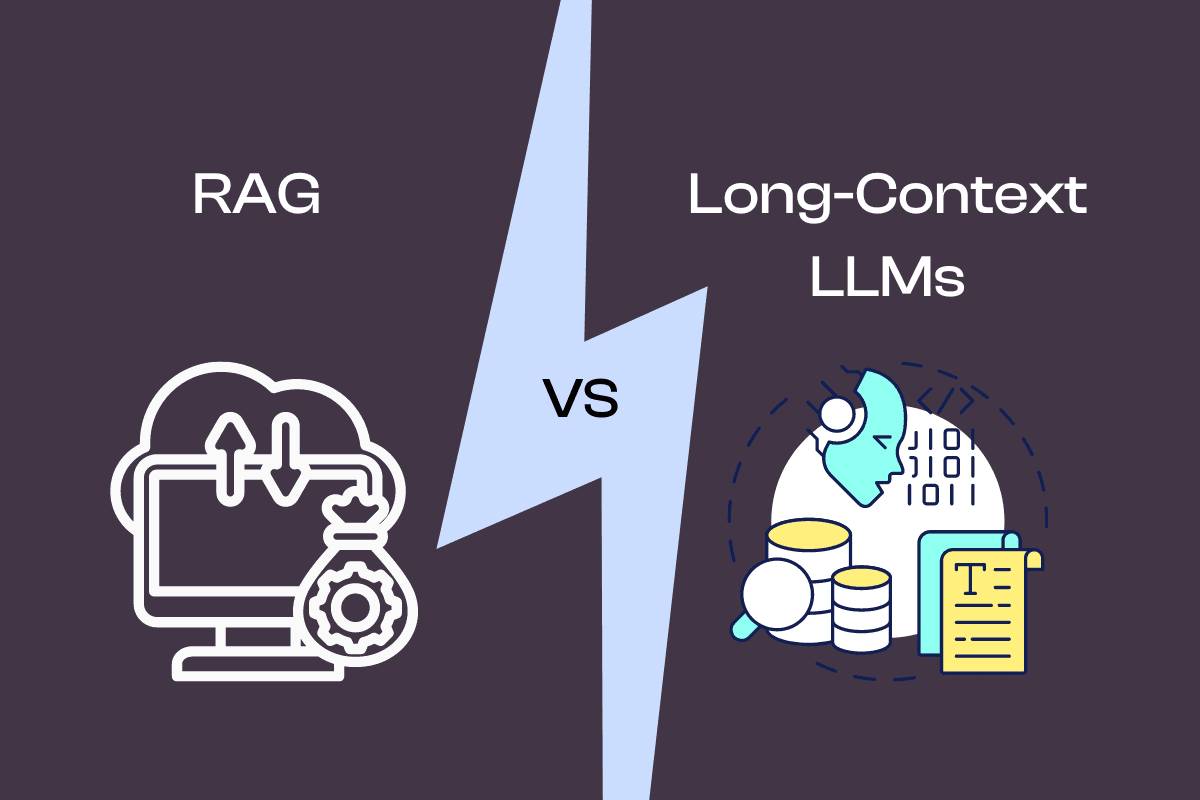
The "lost-in-the-middle" phenomenon also provides technical context for the performance variations observed in benchmark tests like NeedleInAHaystack. This Meta paper gives a formal explanation for why scores on such benchmarks can be inconsistent and highly dependent on fact placement. It aligns with our previous reporting on retrieval-augmented generation (RAG) challenges, suggesting that native long-context understanding and external retrieval systems will remain complementary technologies for the foreseeable future.
From a competitive landscape view, Meta's focus on efficient adaptation mechanisms like QTT is consistent with its broader open-source strategy. Providing tools to make base models more effective without retraining lowers the barrier to entry and increases the utility of models like Llama 3. This contrasts with the closed-model approach of competitors, where such adaptations would be internal and opaque to users.
Frequently Asked Questions
What is the "lost-in-the-middle" problem in LLMs?
It's a failure mode where large language models with long context windows (e.g., 128,000 tokens) perform poorly at retrieving or answering questions about information located in the middle third of the input text. Accuracy is typically higher for facts at the very beginning or end of the context.
How does Query-only Test-Time Training (QTT) work?
QTT is a lightweight adaptation technique performed during inference. When a query is received, the system uses the query text to generate synthetic training examples. The model then updates only its attention layers through a few steps of gradient descent using these examples, specializing its retrieval ability for that specific query in seconds.
Do I need extra training data to use QTT?
No. A core advantage of QTT is that it requires only the user's query to function. It generates its own synthetic training data from the query, eliminating the need for any pre-existing labeled datasets or document-specific preparation.
Will QTT significantly slow down my LLM responses?
The researchers report that the adaptation adds only a small overhead—typically on the order of seconds—to the total inference time. This is considered a reasonable trade-off for the substantial gains in retrieval accuracy for long-document analysis, where queries are complex and latency tolerance is higher.