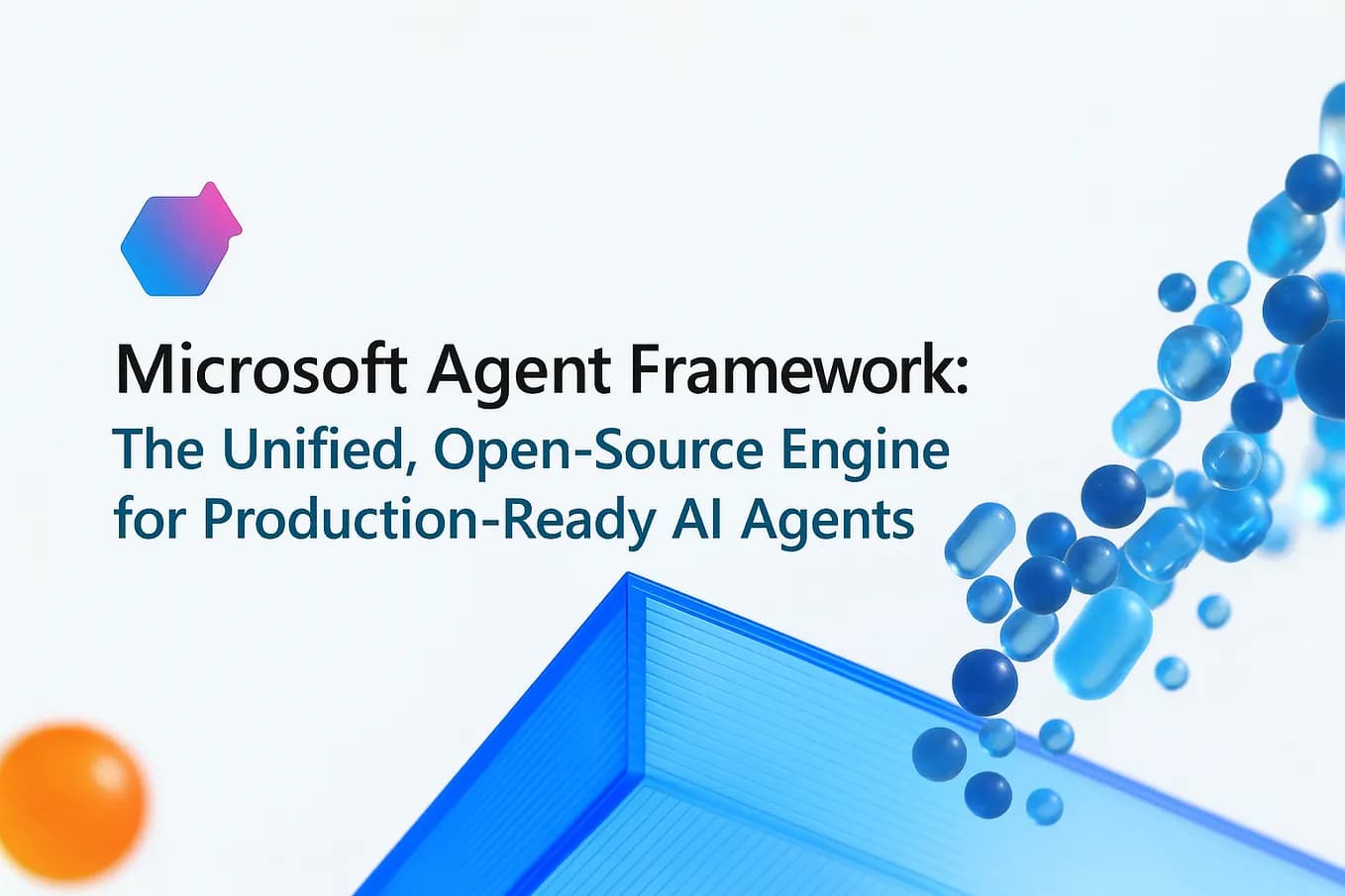
Microsoft open-sourced AgentEngine, a multi-agent orchestration framework, on April 14, 2026. Engineer @pauliusztin_ called it "one of the most interesting agent engineering projects I've seen this year."
Key facts
- Released April 14, 2026 under MIT license.
- Supports Python 3.10+ and major LLM providers.
- Plugin-based architecture with sandboxed execution.
- Publish-subscribe inter-agent communication model.
- Includes shared memory system for context persistence.
Microsoft has released AgentEngine, a new open-source framework for building and coordinating multi-agent AI systems. The project, now available on GitHub under an MIT license, focuses on orchestrating multiple agents with specialized roles and tool-use capabilities. According to @pauliusztin_, the framework represents a significant contribution to the agent engineering ecosystem.
The framework allows developers to define agents with distinct personas, tool sets, and communication protocols. AgentEngine supports dynamic task delegation, where a central orchestrator agent breaks down complex requests and assigns sub-tasks to specialized agents. It also includes built-in inter-agent messaging and a shared memory system for maintaining context across interactions.
Key Takeaways
- Microsoft open-sourced AgentEngine, a multi-agent orchestration framework, on April 14, 2026.
- Engineer @pauliusztin_ called it a standout project in agent engineering this year.
Technical Architecture
AgentEngine is built on a plugin-based architecture, enabling developers to extend agent capabilities with custom tools and data sources. Each agent operates within a sandboxed environment, with explicit permissions for tool access. The framework uses a publish-subscribe model for agent-to-agent communication, allowing asynchronous message passing without tight coupling.
Microsoft has not disclosed specific performance benchmarks or comparisons to existing frameworks like AutoGen or CrewAI. The repository includes example implementations for code generation, data analysis, and customer support scenarios. AgentEngine requires Python 3.10+ and integrates with popular LLM providers including OpenAI, Anthropic, and local models via Ollama.
Implications for Agent Engineering
AgentEngine enters a crowded open-source agent framework space. Its differentiating features include the sandboxed execution model and the pub-sub communication layer, which could enable more robust and scalable multi-agent deployments. The MIT license allows commercial use without restrictions, potentially accelerating adoption in enterprise environments.
The project's release timing coincides with growing industry interest in agentic workflows, as companies explore multi-agent systems for complex automation tasks. Microsoft's open-source approach contrasts with its earlier closed-source agent frameworks, suggesting a strategic shift toward community-driven development.
What to watch
Watch for community adoption metrics on GitHub (stars, forks, issues) over the next 30 days. Also track whether Microsoft integrates AgentEngine into its Azure AI platform or Copilot ecosystem, which would signal enterprise commitment.