What Happened
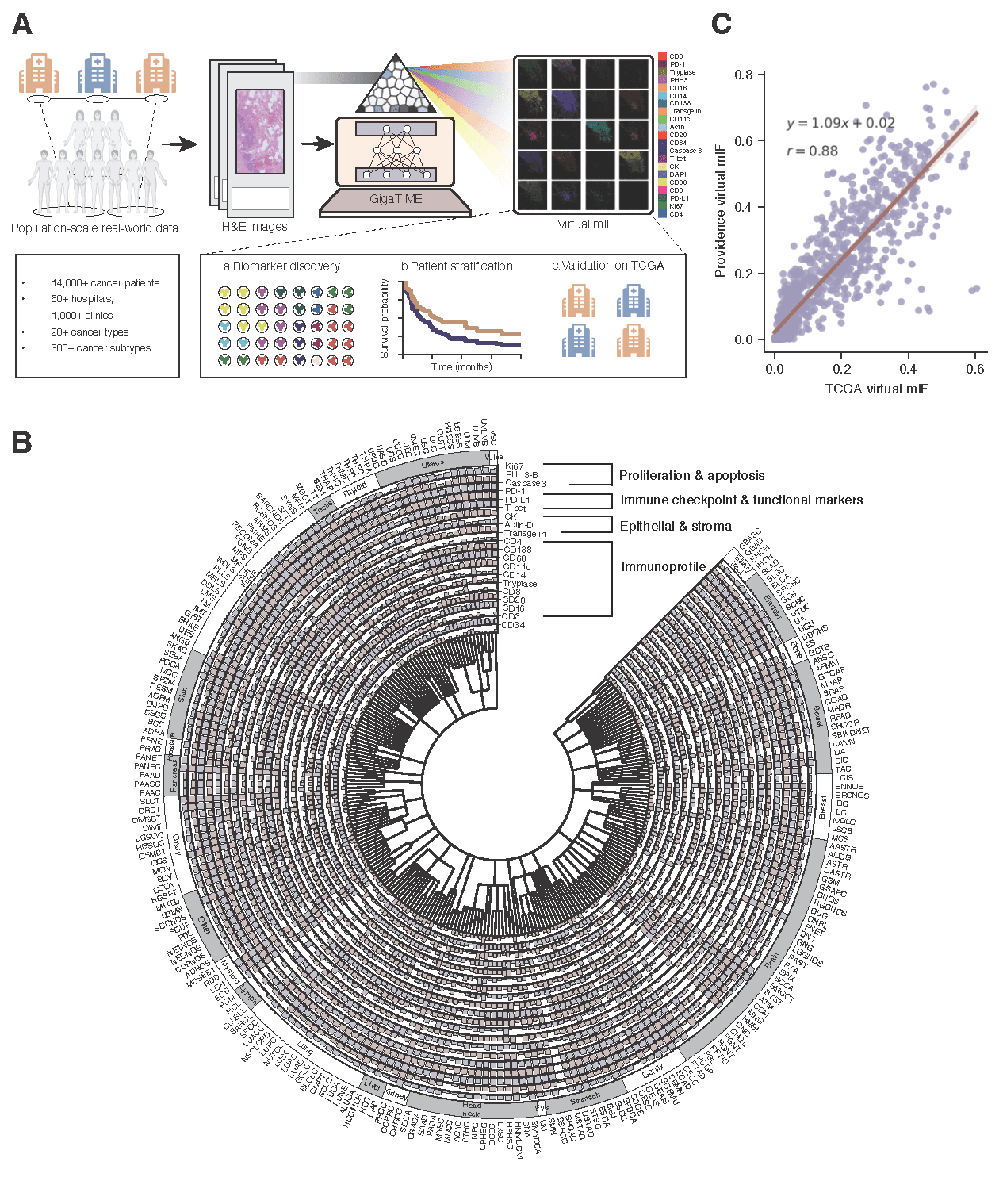
Microsoft has released a new AI model called GigaTIME (Gigapixel Tissue Imaging with Multi-omics Enhancement). According to the announcement, the model is designed to transform widely available, inexpensive medical images—such as Hematoxylin and Eosin (H&E) stained tissue slides—into highly detailed, spatially resolved protein maps of cancer cells.
This process, known as spatial proteomics, typically requires expensive, specialized equipment and complex, time-consuming laboratory procedures. GigaTIME aims to provide a computational alternative.
Context & Potential Impact
In oncology research and diagnostics, understanding the protein expression and spatial organization within a tumor is critical for characterizing its biology, predicting patient outcomes, and selecting targeted therapies. Current gold-standard methods for creating these protein maps, like imaging mass cytometry (IMC) or multiplexed immunofluorescence, are resource-intensive, limiting their widespread clinical use.
GigaTIME appears to be a deep learning model trained to learn the mapping between routine H&E histology images (which show tissue structure and cell morphology) and corresponding high-plex protein expression data. If successful, it could democratize access to proteomic-level analysis by leveraging existing, standard-of-care image data already generated in pathology labs worldwide.
The primary value proposition is cost and scalability. Generating a protein map computationally from an existing H&E slide could be orders of magnitude faster and cheaper than running a new, physical multiplexed assay.
What We Don't Know Yet
The source announcement is brief and does not include critical technical details or validation data. Key unanswered questions include:
- Architecture & Training: The specific model architecture (e.g., vision transformer, CNN), training dataset size, and source are not disclosed.
- Performance & Validation: There are no published benchmarks on accuracy, such as correlation coefficients between predicted and ground-truth protein expression levels, or clinical validation studies.
- Scope: The specific cancer types and proteins the model can predict are not listed.
- Availability: It is unclear if GigaTIME is released as open-source code, a research preview, or an Azure AI service.
Until a formal research paper or technical report is published, GigaTIME should be considered an announced research direction with significant potential, rather than a fully validated tool.