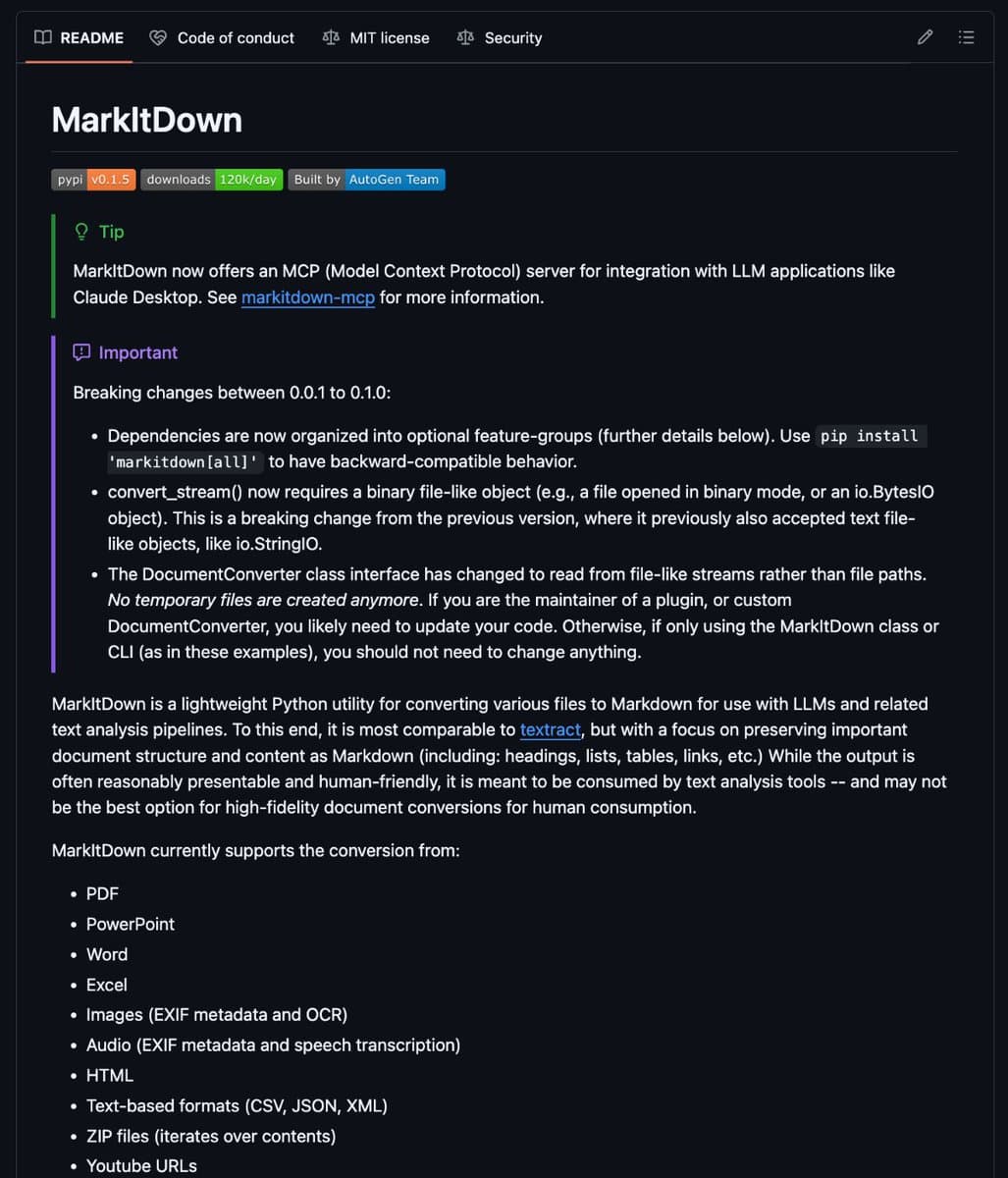
In a significant development for AI developers and enterprises, Microsoft's AutoGen team has quietly released MarkItDown, a lightweight Python library that promises to revolutionize how documents are prepared for large language models. This open-source tool converts virtually any document format—PDFs, Word documents, Excel spreadsheets, PowerPoint presentations, images, audio files, and even YouTube URLs—into clean, LLM-ready Markdown in seconds.
The Document Processing Challenge
For developers building AI applications, particularly those implementing Retrieval-Augmented Generation (RAG) pipelines, document preprocessing has long been a bottleneck. Traditional approaches require custom parsers for different file formats, brittle preprocessing pipelines, and significant engineering effort to handle edge cases. The result has been what developers often call "preprocessing hell"—complex, maintenance-heavy code that distracts from core AI development.
Microsoft's solution arrives at a critical moment when enterprises are increasingly looking to leverage their proprietary documents with AI systems. According to industry estimates, up to 80% of enterprise data exists in unstructured formats that are difficult for AI systems to process effectively.
How MarkItDown Works
MarkItDown simplifies this entire process through a unified interface that handles multiple document types with minimal configuration. The library leverages Microsoft's extensive experience in document processing, including integration with Azure Document Intelligence for enterprise-grade optical character recognition (OCR) when needed.
Key features include:
- Support for 10+ file formats out of the box
- Command-line interface for quick conversions
- Python API requiring just 3 lines of code
- Docker containerization for consistent deployment
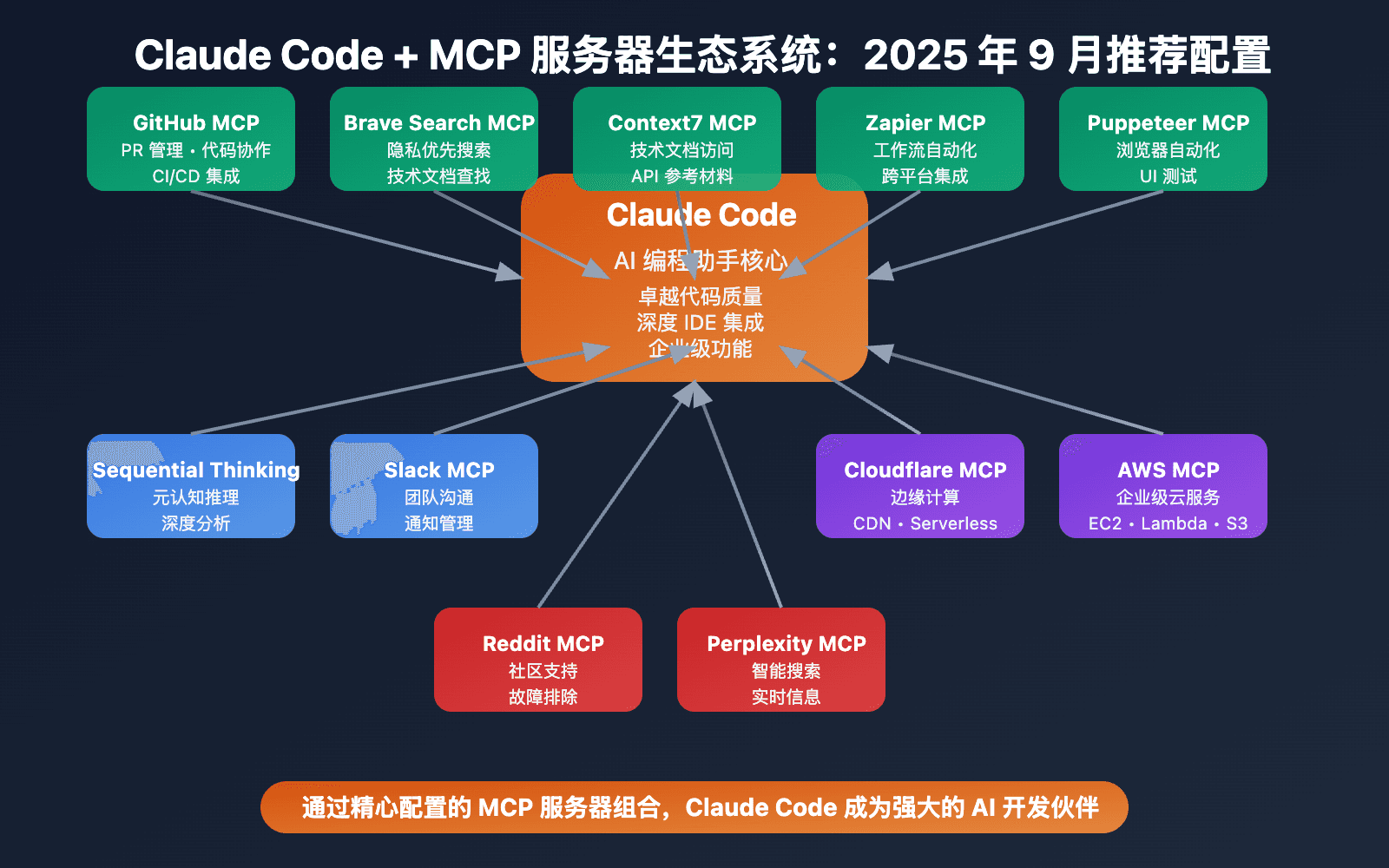
- Native Model Context Protocol (MCP) server integration for direct use with Claude Desktop
- MIT license ensuring full open-source accessibility
Technical Implementation and Performance
Built by the team behind AutoGen (which boasts 87,000 GitHub stars), MarkItDown has been battle-tested at scale. The library's architecture abstracts away format-specific complexities, allowing developers to focus on their AI applications rather than document parsing.
Installation is straightforward: pip install markitdown gets developers converting files in under 60 seconds. The command-line interface enables simple conversions like markitdown file.pdf > doc.md, while the Python API provides programmatic control for integration into larger systems.
For enterprise applications, the Azure Document Intelligence integration offers advanced capabilities including handwriting recognition, document structure analysis, and language detection—features particularly valuable for organizations with diverse document archives.
Implications for AI Development
MarkItDown addresses several critical challenges in the AI development ecosystem:
1. Accelerated RAG Pipeline Development
Retrieval-Augmented Generation systems, which combine document retrieval with LLM generation, depend heavily on clean document preprocessing. MarkItDown's standardized Markdown output eliminates format inconsistencies that can degrade RAG performance.
2. Reduced Development Overhead
By eliminating the need for custom parsers and brittle preprocessing pipelines, MarkItDown allows AI teams to focus on core model development and application logic rather than document engineering.
3. Enterprise Adoption Lowering
The tool's support for diverse formats and enterprise-grade features through Azure integration makes it particularly valuable for organizations looking to leverage existing document repositories with AI systems.
4. Ecosystem Integration
The native MCP server support enables seamless integration with Anthropic's Claude Desktop, demonstrating Microsoft's commitment to cross-platform AI tooling despite competitive dynamics in the AI space.
The Broader Context
Microsoft's release of MarkItDown comes amid increasing competition in the AI infrastructure space. While companies like OpenAI, Google, and Anthropic focus on model development, Microsoft continues to strengthen its position in the AI tooling and infrastructure layer—an area where it has historical strength through products like Azure and developer tools.
The open-source nature of MarkItDown (MIT licensed) suggests a strategic approach to ecosystem building rather than pure product monetization. By providing high-quality tools to developers, Microsoft strengthens its position as a platform for AI development, potentially driving adoption of complementary services like Azure AI.
Looking Forward
As AI applications move from prototypes to production systems, tools like MarkItDown that address practical implementation challenges become increasingly valuable. The library's focus on simplicity and standardization reflects a maturation in the AI development ecosystem, where reusable components replace custom implementations.
Future developments to watch include potential expansions of supported formats, enhanced metadata extraction capabilities, and deeper integrations with Microsoft's broader AI ecosystem. The tool's architecture also positions it well for handling emerging document types as AI applications continue to evolve.
For developers and enterprises alike, MarkItDown represents a significant step toward making AI more accessible and practical for real-world applications involving document intelligence.
Source: Microsoft AutoGen team via GitHub and related documentation.