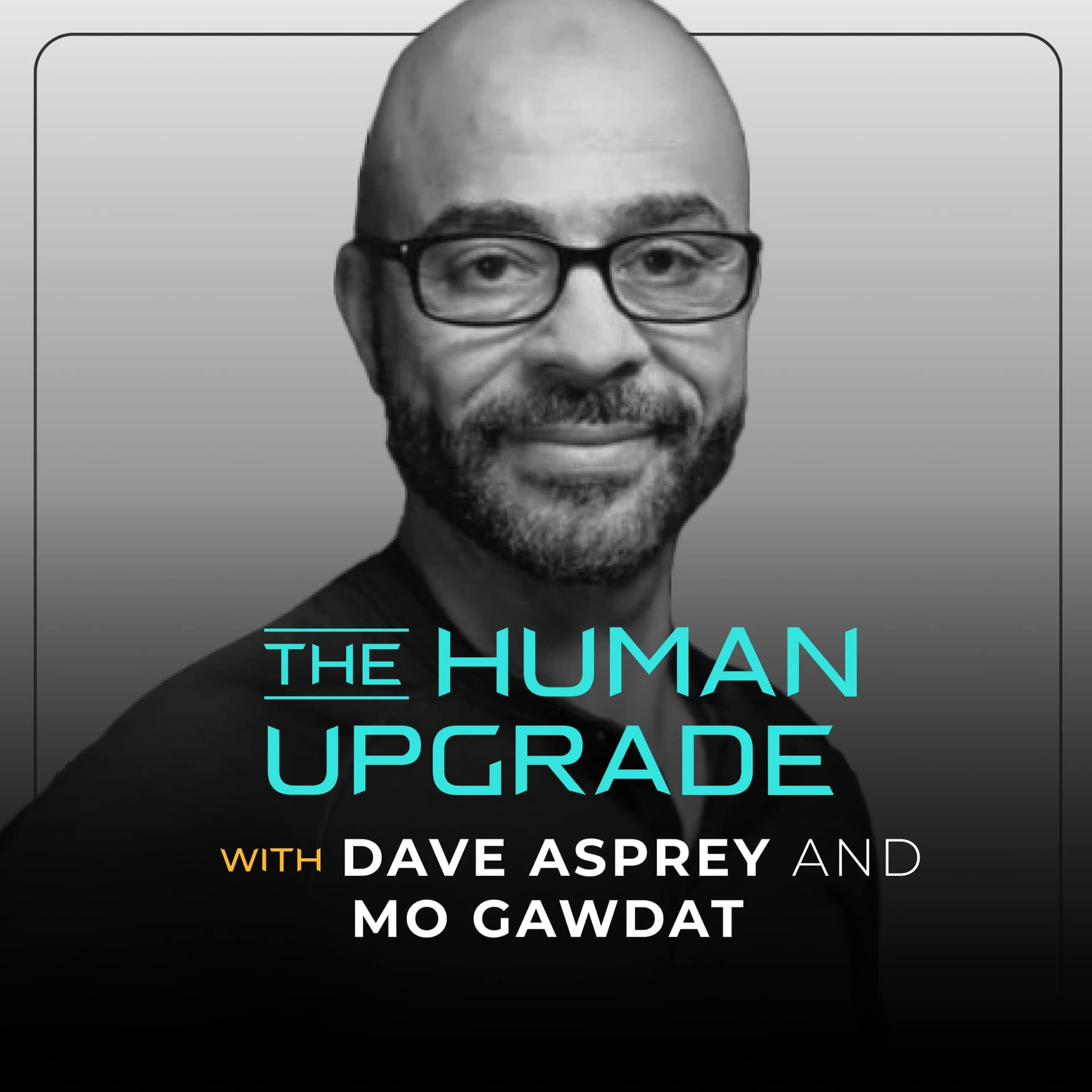
Former Google X executive and author Mo Gawdat has issued a stark economic warning, predicting that artificial intelligence will lead to unemployment rates of 20%, 30%, or even over 50% in specific sectors. In comments shared on social media, Gawdat argues that this displacement challenges the fundamental viability of the current capitalist system, which relies on widespread employment to drive consumption.
The Warning: Structural Unemployment on an Unprecedented Scale

Gawdat's central thesis is that AI-driven productivity gains will systematically eliminate jobs faster than new ones can be created, leading to a level of structural unemployment "most of us are going to witness something we’ve never seen before." He frames this not as a distant sci-fi scenario but as an imminent reality within our lifetimes: "Your life and mine will witness times where there will be 20%, 30%, or 50% unemployment in certain sectors, maybe even more."
He posits that "jobs are an invention that serve a capitalist system" that has historically sustained humanity. The existential question he raises is: "is the capitalist system going to survive artificial intelligence?"
The Economic Contradiction: Productivity Without Consumption
Gawdat identifies a critical flaw in the current celebration of AI-powered productivity. He argues that capitalists "are not realizing that, one, without consumption, there is no economy." The mechanism is straightforward: if companies consistently fire workers to boost margins through automation, they simultaneously destroy the consumer base needed to purchase their goods and services.
"So even if you can have all of the productivity gains in the world, by firing people consistently, nobody is able to buy what you’re making," he states. This leads to his conclusion that "we’re going to have to find an economic model that works with that."
Context: Gawdat's Platform and Previous Warnings

Mo Gawdat is the former Chief Business Officer of Google X (now simply X), the company's moonshot factory. Since leaving Google, he has become a prominent author and speaker on happiness and technology. His warnings about AI are not new; they form a core part of his public commentary, where he frequently discusses AI as an existential challenge requiring careful governance.
His perspective adds weight to a growing chorus of technologists and economists who argue that AI disruption requires proactive socioeconomic planning, not just technical innovation.
gentic.news Analysis
Gawdat's warning crystallizes a debate that has moved from academic circles to mainstream boardrooms and policy discussions. His argument directly challenges the dominant Silicon Valley narrative that AI will be a net job creator through new industries and roles. Instead, he aligns with economists like Daron Acemoglu who have argued that automation can lead to significant labor displacement and inequality if not managed.
This commentary arrives amid tangible signs of AI-driven efficiency gains impacting white-collar jobs. Recent earnings calls from major tech firms consistently highlight AI's role in improving operational efficiency, often a precursor to workforce optimization. Furthermore, the rapid adoption of agentic AI systems capable of executing multi-step tasks—from code generation to customer service workflows—suggests the displacement may affect knowledge workers sooner than anticipated.
The call for a new economic model echoes discussions around Universal Basic Income (UBI), adjusted corporate taxation for automated processes, and the concept of a post-scarcity economy. However, Gawdat stops short of endorsing a specific solution, highlighting the scale of the problem rather than prescribing a fix. The critical takeaway for technical leaders is that building the technology is only half the challenge; understanding and mitigating its second-order effects on the economic system that funds its development is the other.
Frequently Asked Questions
Who is Mo Gawdat?
Mo Gawdat is the former Chief Business Officer of Google X (the company's "moonshot" division) and the author of "Solve for Happy." He is now a prominent speaker and commentator on technology, happiness, and the societal impact of AI.
What does he mean by capitalism not surviving AI?
Gawdat argues that capitalism relies on a cycle of production and consumption fueled by employed workers earning wages. If AI eliminates a large portion of jobs, it also eliminates the consumers needed to buy automated production's output, creating a fundamental economic contradiction that could break the current system.
Is 50% unemployment from AI a realistic prediction?
Predictions vary widely among experts. Some, like Gawdat, foresee massive displacement, especially in sectors like administrative support, customer service, and even aspects of software development and analysis. Others believe new job categories will emerge, as they have in past technological revolutions, though potentially after a painful transition period. The consensus is that significant disruption is inevitable, but its magnitude and net effect on total employment are hotly debated.
What economic models could work with widespread AI automation?
Discussed alternatives include models that decouple basic sustenance from employment, such as Universal Basic Income (UBI) or a social dividend funded by taxes on automation and capital. Other concepts include a shorter workweek, a focus on the "care economy," or a shift toward a resource-based economy. All remain largely theoretical and untested at the scale Gawdat describes.