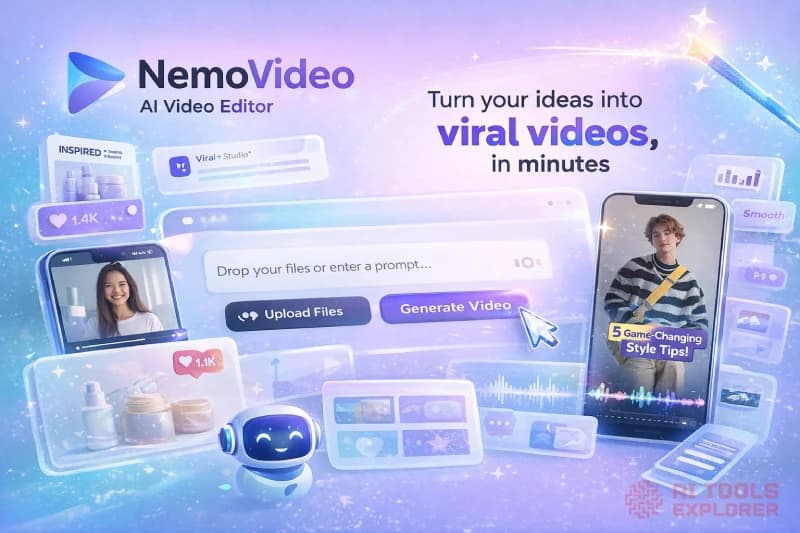
A social media post from a video creator highlights a significant shift in post-production workflows, attributing it to the AI platform NemoVideo. The user reports that a video editing task that previously consumed five hours of manual work can now be initiated by simply telling the AI "what I want."
What Happened
In a post on X (formerly Twitter), creator @hasantoxr stated: "I used to spend 5 hours editing one video. Now I just tell NemoVideo what I want and it handles everything like cuts, trans…" The post suggests NemoVideo's AI interprets a creator's intent through a text or voice prompt and automatically executes technical editing tasks such as cutting clips and applying transitions.
This represents a move from a manual, timeline-based editing process (common in tools like Adobe Premiere Pro or DaVinci Resolve) to a declarative, intent-based system. The creator's claim points to a drastic reduction in time and technical skill required for basic to intermediate video assembly.
Context & The Competitive Landscape
The automation of video editing through AI has been a growing frontier. Several companies are exploring this space:
- Runway ML: A leader in generative AI for video, known for its Gen-2 model for generating and modifying video clips, though its focus has been more on generation and effects rather than full editorial assembly from existing footage.
- Descript: Heavily AI-powered, it pioneered editing video by editing text transcripts (a workflow akin to editing a document), automating cuts and filler word removal.
- Adobe Premiere Pro (with Sensei AI): Integrates AI features for auto-reframing, color matching, and audio cleanup, but remains a traditional professional editor requiring manual timeline work.
NemoVideo's approach, as described, appears to target a higher level of abstraction—translating a holistic creative goal ("what I want") into a finished sequence, potentially positioning it as a more accessible tool for creators versus professionals.
Technical Implications & Open Questions
The user testimony, while anecdotal, points to several technical challenges the NemoVideo system must solve:
- Intent Understanding: The AI must parse vague creative directives (e.g., "make an exciting highlight reel" or "create a calm tutorial") into specific editing rules regarding pacing, rhythm, and transition style.
- Media Analysis: It requires robust computer vision to analyze raw footage, identifying key moments, faces, scenes, and objects to select appropriate clips for cuts.
- Aesthetic Judgment: The system must apply transitions, effects, and possibly color grading that align with the prompt's intent and maintain visual coherence.
Critical details absent from the social post include: the type of source footage used (talking head, gameplay, vlog), the fidelity of the output, the level of user control post-generation, and whether the AI suggests music or graphics. The claim also doesn't specify if the "5-hour" task is now fully automated or if it requires iterative refinement with the AI.
gentic.news Analysis
This user report on NemoVideo fits squarely into the accelerating trend of democratizing complex media creation through natural language interfaces. For years, the holy grail has been to separate creative intent from technical execution. We saw this first in image generation (DALL-E, Midjourney), then in code generation (GitHub Copilot), and it is now maturing in the more temporally complex domain of video.
The post highlights a key market shift: AI is moving beyond being a feature inside professional tools (like Adobe's Sensei) to being the core interface of standalone applications targeting the massive creator economy. This aligns with our previous coverage on LTX Studio and Pika Labs, which also aim to make video production accessible through prompts. The competition is no longer just about which AI generates the most realistic 4-second clip, but which can most reliably orchestrate a multi-minute narrative from existing assets.
However, a significant gap remains between a creator's internal vision and an AI's interpretation. The next phase of competition will hinge on editability and collaboration. The winning tool won't just make a first draft; it will allow seamless, intuitive human refinement—perhaps through follow-up prompts or direct timeline manipulation—blending AI speed with human creative direction. If NemoVideo has cracked this workflow, as the user suggests, it could capture a significant segment of creators who are currently underserved by both professional suites and simple mobile apps.
Frequently Asked Questions
What is NemoVideo?
Based on the user report, NemoVideo appears to be an AI-powered video editing platform that automates technical tasks like cutting clips and adding transitions based on a user's text or voice description of their desired final video.
How does AI video editing from a prompt work?
The AI likely uses a combination of natural language processing to understand the creative intent (e.g., "fast-paced," "emotional"), computer vision to analyze the content of the raw video footage, and a set of learned editing rules to select clips, sequence them, and apply appropriate transitions and effects to match the prompt.
Is AI video editing good enough for professional work?
Current AI video editing tools, including the one described here, are primarily aimed at streamlining workflows for content creators, social media managers, and marketers. For highly specific, client-driven professional edits (e.g., feature films, high-end commercials), manual control and precision in traditional editors like DaVinci Resolve or Premiere Pro are still essential. AI is acting as a powerful assistant or first-draft generator rather than a full replacement.
What are the limitations of AI video editing?
Limitations include potential misinterpreting of creative intent, lack of nuanced artistic judgment, limited control over fine details, and possible reliance on specific types of structured footage. The output may require human review and tweaking, especially for projects with a strong, specific directorial vision.