The Innovation — What the Source Reports
A new research paper, "The Value of Personalized Recommendations: Evidence from Netflix," provides a rare, large-scale empirical analysis of the business impact of a modern recommendation system. Published on arXiv, the study by researchers including Guy Aridor tackles a fundamental challenge in economics and platform strategy: separating the intrinsic value of a product from the value added by its algorithmic promotion.
The authors built a sophisticated discrete choice model that incorporates three key elements: recommendation-induced utility (the extra value a user gets from being recommended something), low-rank heterogeneity (capturing diverse user preferences efficiently), and flexible state dependence (how past choices influence future ones). They applied this model to real Netflix viewership data.
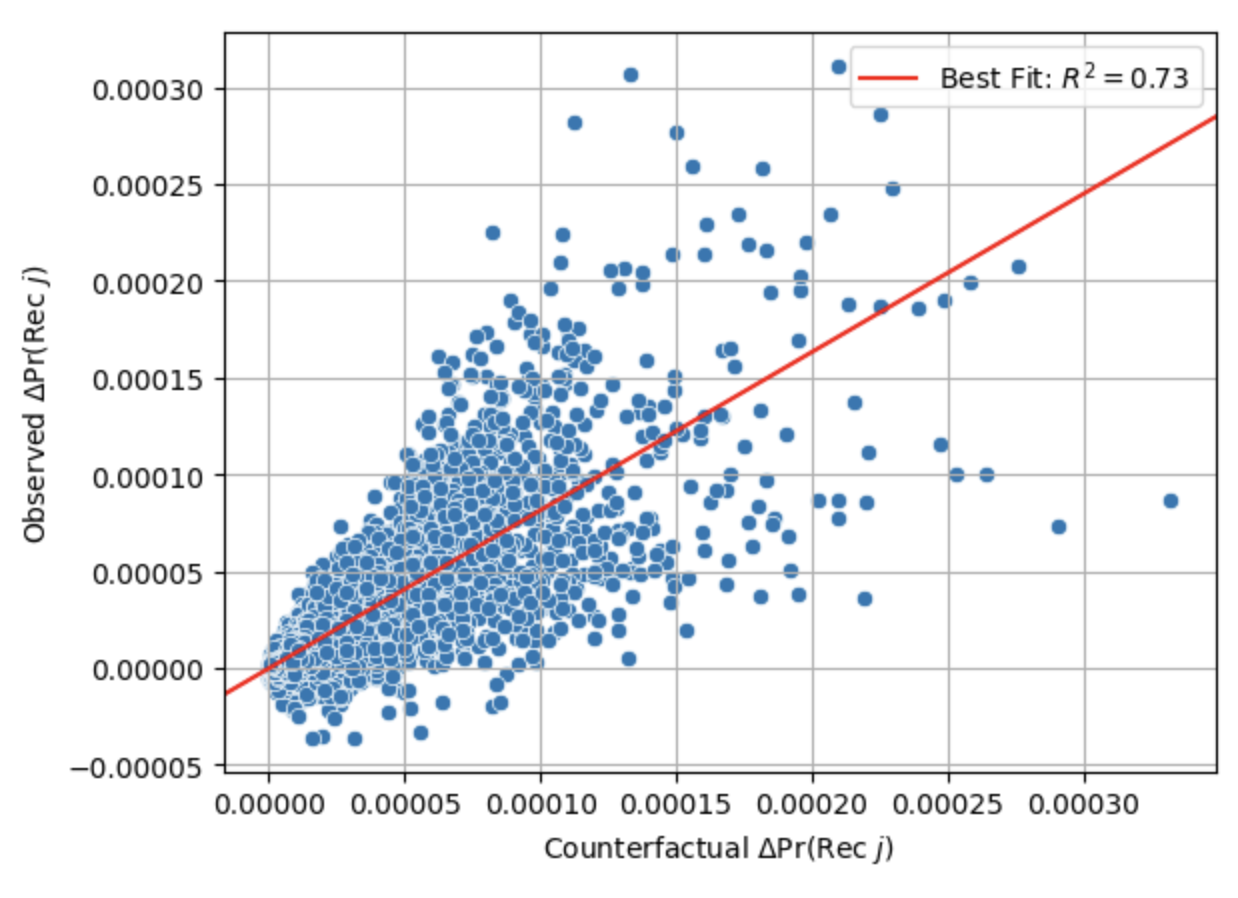
Critically, the researchers exploited "idiosyncratic variation" introduced by Netflix's algorithm itself. This means they used the natural, random-seeming differences in what the system shows to similar users as a kind of natural experiment to isolate the causal effect of the recommendation.
The core findings are twofold:
- Quantified Engagement Lift: Replacing Netflix's current system with a simpler matrix factorization model would lead to a 4% reduction in overall user engagement. Switching to a basic popularity-based algorithm (showing everyone the same top titles) would cause a 12% reduction. Both alternatives also decreased consumption diversity.
- Source of Value: Most of the consumption increase generated by recommendations comes from effective targeting, not merely from the mechanical act of putting an item in front of a user (exposure). The largest gains from personalization accrue to mid-popularity goods—content that is not broadly appealing to all nor extremely niche.
Why This Matters for Retail & Luxury
While the study uses streaming video as its dataset, its methodology and conclusions are directly transferable to retail and luxury e-commerce. Recommendation engines are the digital sales associates for brands like Louis Vuitton, Gucci, and Burberry, guiding customers through vast catalogs. This research provides a blueprint for moving beyond vanity metrics like click-through rate to understanding the true economic value of these systems.
Concrete Scenarios:
- Product Discovery & Long-Tail Sales: The finding that mid-popularity items benefit most from personalization is crucial. For a luxury retailer, this could translate to personalized promotion of ready-to-wear items from a new designer collaboration or seasonal accessories that aren't headline runway pieces. The algorithm's job is to match these "mid-tail" products with the customers most likely to appreciate them, driving sales that a generic homepage would not.
- Inventory & Assortment Planning: By understanding the "diversion ratios" recovered in the model (how recommending Product A affects demand for Product B), merchandisers can better plan inventory. If the system shows that recommending a specific handbag cannibalizes sales of a similar model but boosts sales of complementary scarves, this informs buying and marketing strategy.
- Valuing Tech Investment: A 4-12% engagement lift is a powerful ROI justification for investing in advanced, proprietary recommendation systems over off-the-shelf or simplistic solutions. For a multi-brand group like LVMH or Kering, this could inform decisions on building a group-wide AI platform versus brand-specific solutions.
Business Impact
The study provides a rare, quantified business impact: personalized recommendations at Netflix drive a 4-12% incremental engagement lift. For retail, translating "engagement" to revenue requires domain-specific modeling, but the directional impact is clear. A high-performing recommender directly increases average order value, conversion rate, and customer lifetime value by reducing decision fatigue and surfacing relevant products.
The decreased consumption diversity under simpler models is a critical warning. In retail, a popularity-based algorithm would create a vicious cycle where only bestsellers are promoted, starving newer collections or niche categories of visibility and ultimately homogenizing the brand's perceived offering.
Implementation Approach
Implementing a similarly rigorous evaluation framework within a luxury retail context involves significant technical and data science lift:
- Data Foundation: Requires a robust data pipeline capturing detailed user interactions (views, clicks, adds-to-bag, purchases), item attributes, and the logic behind recommendation placements. GDPR-compliant first-party data is paramount.
- Modeling Expertise: Building a structural economic model like the one in the paper requires specialized econometrics or causal machine learning skills. A more accessible first step for many retailers would be to design A/B tests that deliberately introduce controlled variation in recommendations to measure causal effects.
- Counterfactual Simulation: The key is developing the ability to simulate "what-if" scenarios: What if we used a different algorithm? This requires a reliable offline evaluation framework that can predict online performance.
Governance & Risk Assessment
- Privacy: The methodology relies on deep user behavioral data. Any implementation must be architected with privacy-by-design, leveraging anonymization and on-device processing where possible, and must fully comply with regulations like GDPR and CCPA.
- Bias & Fairness: The paper focuses on aggregate engagement, but a commercial system must also be audited for fairness—ensuring it doesn't systematically underserve certain customer demographics or product categories. This aligns with recent arXiv research, such as the March 25th study challenging the assumption that fair model representations guarantee fair recommendations.
- Maturity Level: The core recommendation techniques (collaborative filtering, matrix factorization) are mature. The advanced contribution here is the evaluation framework to measure value causally. This represents a more sophisticated, second-order layer of AI maturity that leading retailers should aspire to.

gentic.news Analysis
This Netflix study arrives amidst a significant week of activity on arXiv focused on the mechanics and ethics of recommender systems, with the topic appearing in three articles this week alone. It provides a crucial, empirical anchor to theoretical discussions. For instance, our recent coverage in "Rethinking Recommendation Paradigms: From Pipelines to Agentic Recommender Systems" explored the architectural future of recommenders. This Netflix paper provides the hard economic justification for why that evolution matters: because advanced, adaptive systems demonstrably create more value than static ones.
The finding that targeting beats mere exposure is a powerful rebuttal to a simplistic "more recommendations are better" strategy. It argues for sophistication in understanding user intent, a theme connecting to other arXiv research we've covered, such as the causal framework for LLM personalization in "NextQuill."
For luxury retail, the implications are profound. In an industry where brand equity and curated discovery are paramount, surrendering to a popularity-based algorithm is brand-diluting. This research provides the economic language to advocate for investment in sophisticated, brand-aligned AI that can identify and promote the "mid-popularity" items—often the high-margin, signature pieces that define a brand's season—to the customers who will value them most. It moves the conversation from "do we need a recommender?" to "how do we build and measure the value of a truly great one?"