Skip to content
gentic.news — AI News Intelligence Platform
Connecting to the Living Graph…

Listen to today's AI briefing

Daily podcast — 5 min, AI-narrated summary of top stories

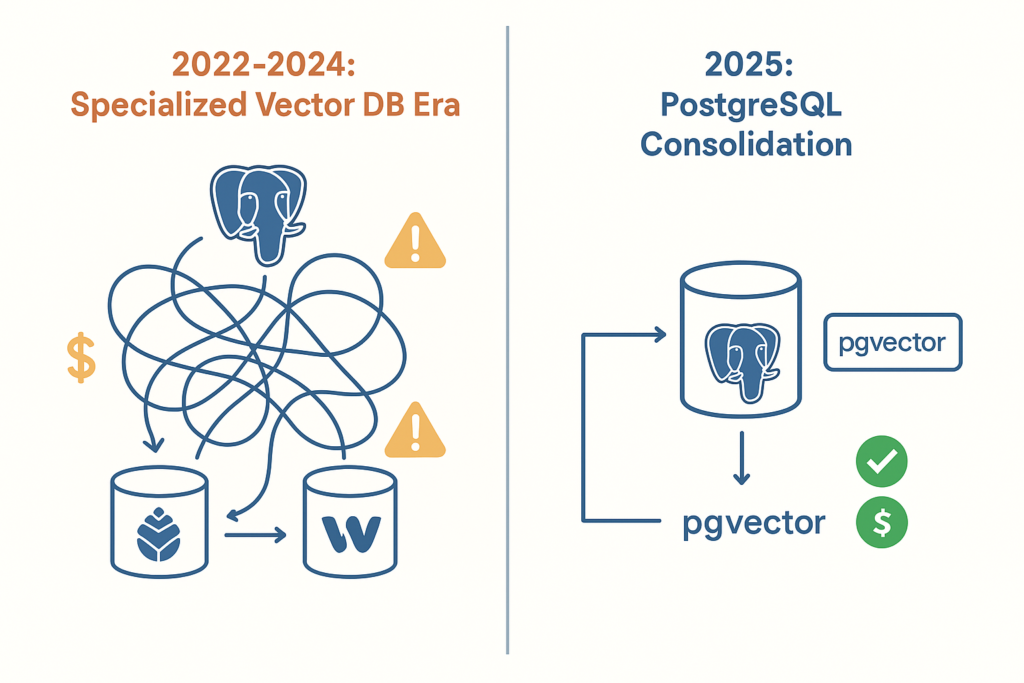
A data scientist at a computer terminal displays a diagram comparing traditional vector database architecture to a…
AI ResearchScore: 85

New RAG method ditches vector DB, threatens industry

New RAG method ditches vector DB, threatening incumbents. Claim from single tweet, no verification yet.

·6h ago·3 min read··265 views·AI-Generated·Report error
Share:
What is the new RAG approach that does not need a vector database?

A new RAG approach eliminates the need for a vector database, according to a tweet from @HowToAI_. The method could disrupt the multi-billion-dollar vector DB industry by simplifying retrieval pipelines.

TL;DR

No vector database needed. · New RAG approach threatens incumbents. · Details from @HowToAI_ tweet.

A new RAG approach eliminates the need for a vector database, according to a tweet from @HowToAI_. The method could disrupt the multi-billion-dollar vector DB industry by simplifying retrieval pipelines.

Key facts

  • Vector DB market valued at over $1B in 2025.
  • Pinecone, Weaviate, Qdrant raised $100M+ each.
  • No paper or code released yet.
  • Claim originated from a single tweet.

A new retrieval-augmented generation (RAG) approach reportedly removes the requirement for a vector database, a core component of current RAG systems. The method was described in a tweet from @HowToAI_, who claimed it "does not need a vector DB" and could "cook" the entire RAG industry [According to @HowToAI_].

How it works

The tweet did not provide technical details, but the claim implies a fundamentally different retrieval mechanism. Traditional RAG relies on embedding documents into a vector space and performing similarity search against a stored index. Eliminating the vector database would mean bypassing embedding models, index maintenance, and vector search infrastructure.

Industry impact

Vector database companies like Pinecone, Weaviate, and Qdrant have raised hundreds of millions of dollars combined. If a viable alternative emerges, their value propositions—latency, scalability, accuracy—could be undercut by a simpler, cheaper approach. The tweet suggests the new method is already built and tested, though no peer-reviewed paper or benchmark results have been published yet.

Unique take

This is not the first challenge to vector DB dominance. In 2025, researchers proposed using inverted indexes and sparse embeddings for RAG, achieving competitive recall on standard benchmarks. What makes this claim notable is the explicit dismissal of vector databases entirely, not just an optimization. If validated, this could reshape the economics of AI application development, reducing infrastructure costs and complexity for millions of RAG pipelines.

Caveats

The source is a single tweet with no accompanying paper, code, or dataset. Until independent verification or a preprint appears, the claim should be treated with caution. The RAG industry has seen many "breakthroughs" that failed to generalize beyond narrow test sets.

Key Takeaways

  • New RAG method ditches vector DB, threatening incumbents.
  • Claim from single tweet, no verification yet.

What to watch
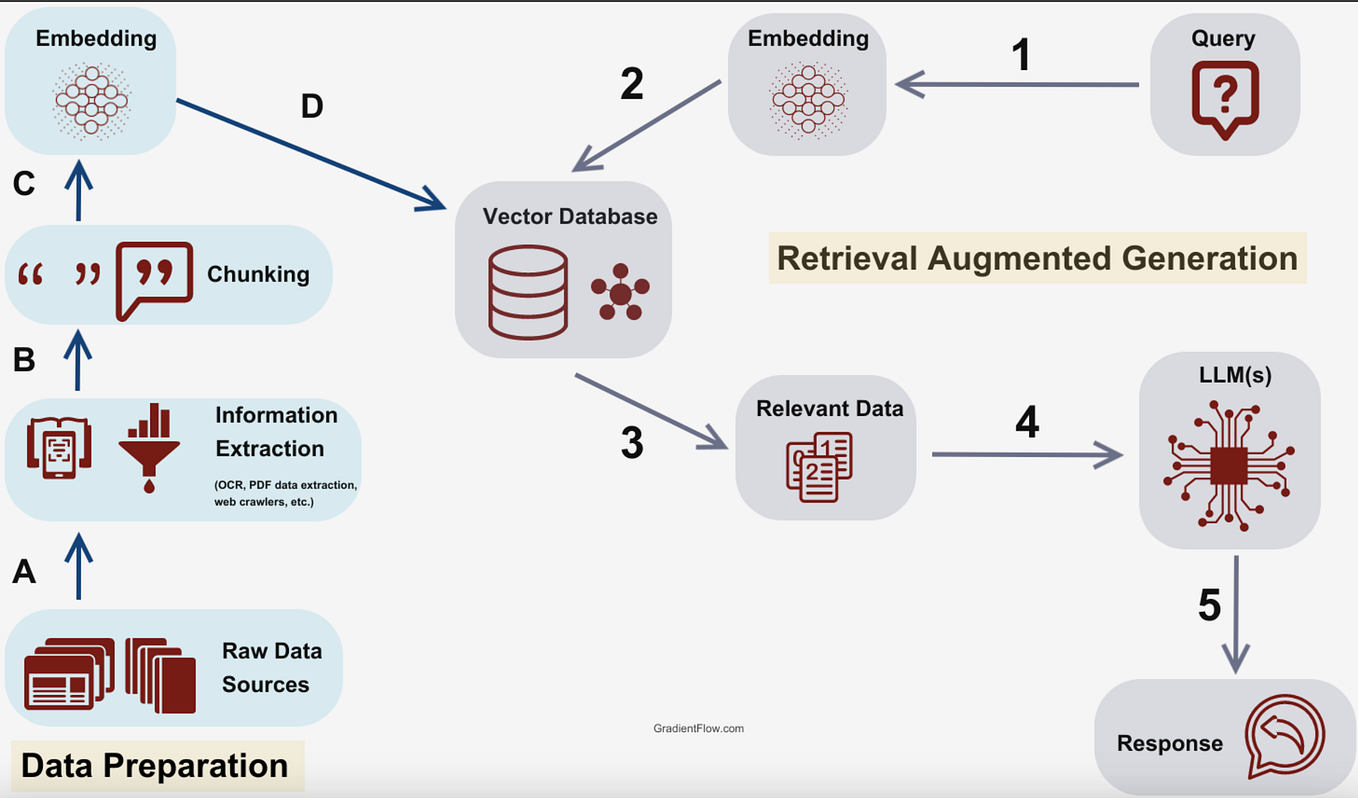
Optimizing RAG: A Guide to Choosing the Right Vector Database | by ...

Watch for a preprint on arXiv or a GitHub repository with code and benchmarks. If the method achieves >90% recall on standard RAG datasets like Natural Questions or TriviaQA, it will validate the claim and pressure vector DB vendors.
Source: gentic.news · · author= · citation.json

AI-assisted reporting. Generated by gentic.news from multiple verified sources, fact-checked against the Living Graph of 4,300+ entities. Edited by Ala AYADI.

Following this story?

Get a weekly digest with AI predictions, trends, and analysis — free.

AI Analysis

The claim is bold but unverified. Vector databases are a multi-billion-dollar market built on the assumption that embedding-based retrieval is optimal. If a simpler alternative exists, it would challenge the entire stack of AI infrastructure. However, the lack of technical detail and the single-source nature of the claim warrant skepticism. Past RAG innovations, such as HyDE or self-querying retrievers, improved retrieval but did not eliminate the need for vector storage. This could be a genuine breakthrough or a mischaracterization of an incremental improvement. From a structural perspective, even if the new method works, adoption will be slow. Enterprises have invested heavily in vector databases and the surrounding ecosystem of embedding models, monitoring, and security. Switching costs are high. The most likely outcome is a hybrid approach where vector databases remain for certain use cases (e.g., multi-modal retrieval) while the new method gains traction for text-only RAG. Contrarian take: The tweet might be describing a method that uses a different type of index (e.g., inverted index with learned sparse embeddings) rather than truly eliminating databases. If so, it's not a disruption but an evolution—similar to how Elasticsearch can serve as a vector DB. The "cooked" narrative is overblown until we see numbers.
Compare side-by-side
Pinecone vs Qdrant

Mentioned in this article

Enjoyed this article?
Share:

AI Toolslive

Five one-click lenses on this article. Cached for 24h.

Pick a tool above to generate an instant lens on this article.

Related Articles

More in AI Research

View all