A new player has entered the industrial automation arena with credentials that read like a technology dream team. Noble Machines, founded by veterans from SpaceX, Apple, and NASA, has launched with an ambitious mission: to advance industrial Physical AI systems capable of handling substantial payloads in manufacturing and logistics environments.
The Founding Team's Unprecedented Pedigree
The startup's founding team brings together expertise from three of the most demanding technological environments on Earth—and beyond. SpaceX alumni contribute experience with the extreme reliability requirements of aerospace systems, where failure is not an option. Apple veterans bring consumer-grade design sensibilities and human-centered engineering approaches. NASA engineers add deep knowledge of autonomous systems operating in unstructured environments.
This combination represents a significant departure from traditional robotics companies, which typically emerge from either academic research or industrial automation backgrounds. The Noble Machines team instead combines the precision of aerospace, the design excellence of consumer technology, and the autonomy expertise of space exploration.
Technical Capabilities and Industrial Applications
According to initial reports, Noble Machines' systems can manage payloads up to 27 kilograms—a significant capability that places them in the medium-duty category of industrial robotics. This weight capacity makes them suitable for numerous applications including:
- Manufacturing component handling
- Warehouse logistics and fulfillment
- Assembly line operations
- Material transport in industrial settings
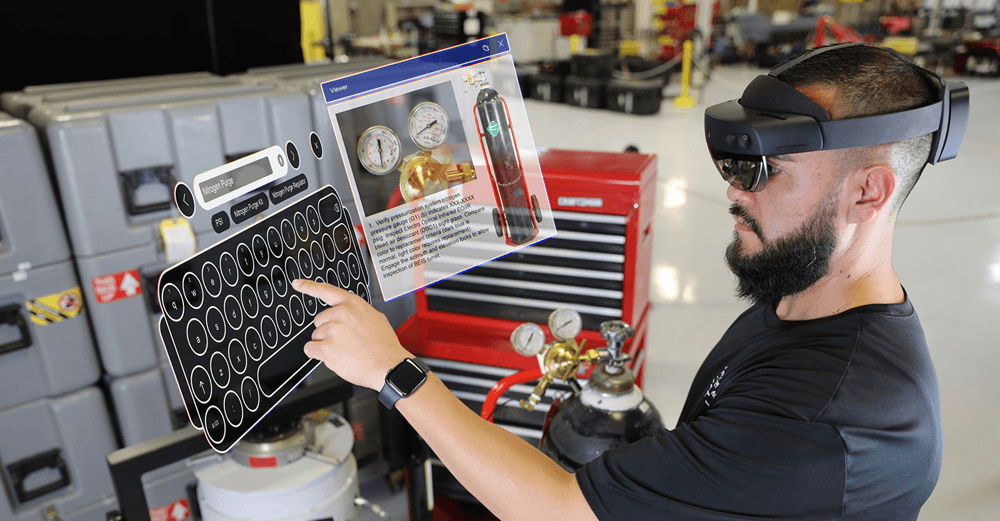
Physical AI represents the next evolution beyond traditional robotics, integrating advanced perception, decision-making, and learning capabilities directly into physical systems. Unlike conventional industrial robots that follow pre-programmed paths, Physical AI systems can adapt to changing environments, learn from experience, and make autonomous decisions about how to manipulate objects and navigate spaces.
The Physical AI Revolution in Industrial Contexts
Industrial Physical AI sits at the convergence of several technological trends: improved sensor technology, more capable machine learning algorithms, advanced actuation systems, and decreasing compute costs. What makes Noble Machines particularly interesting is their approach to integrating these elements with the reliability standards of aerospace and the usability focus of consumer technology.
Traditional industrial automation has largely followed a "dumb robot" model—highly precise but inflexible systems that require extensive programming and perfect environmental conditions. Physical AI promises to change this equation by creating systems that can:
- Handle variability in parts and positioning
- Adapt to changing factory layouts and workflows
- Learn new tasks through demonstration rather than programming
- Collaborate safely with human workers
Market Context and Competitive Landscape
The industrial robotics market is undergoing significant transformation. Established players like Fanuc, ABB, and KUKA dominate traditional applications, while newer companies like Boston Dynamics have pushed the boundaries of mobility and dexterity. Startups like Covariant and Veo Robotics have focused on specific aspects of AI-powered robotics.
Noble Machines enters this landscape with a distinctive value proposition: applying the extreme reliability mindset of aerospace to the rapidly evolving field of AI-powered industrial automation. Their 27kg payload capacity suggests they're targeting applications that require both strength and precision—a sweet spot in manufacturing and logistics.
Implications for Manufacturing and Workforce
The emergence of capable Physical AI systems has significant implications for industrial operations. For manufacturers, these systems could reduce dependence on increasingly scarce skilled labor for repetitive but precise tasks. They could also enable more flexible production lines that can be reconfigured quickly for different products.
However, this technology also raises important questions about workforce displacement and the changing nature of industrial jobs. The most likely scenario isn't wholesale replacement of human workers, but rather a transformation of roles—with humans focusing on supervision, exception handling, and tasks requiring higher-level judgment while Physical AI systems handle repetitive physical tasks.
Technical Challenges and Noble Machines' Approach
Developing reliable Physical AI for industrial environments presents numerous challenges:
- Safety: Ensuring safe operation around human workers
- Reliability: Achieving the uptime requirements of industrial operations
- Adaptability: Handling the variability of real-world environments
- Integration: Working with existing manufacturing equipment and software systems
Noble Machines' aerospace heritage suggests they may take a particularly rigorous approach to reliability and safety—potentially a competitive advantage in industries like automotive or aerospace manufacturing where downtime costs are measured in thousands of dollars per minute.
Future Trajectory and Industry Impact
While details about Noble Machines' specific technology and business model remain limited, their emergence signals several important trends:
- Cross-pollination of expertise: The flow of talent from consumer technology and aerospace into industrial automation
- Convergence of disciplines: The blending of AI, robotics, and human-centered design
- Democratization of advanced robotics: Making sophisticated automation accessible to smaller manufacturers
As the company develops and releases more details about their technology, they could potentially accelerate adoption of AI-powered automation across multiple industries. Their particular combination of strengths—reliability, design, and autonomy—might enable applications that have previously been impractical with either traditional robotics or earlier generations of AI systems.
Conclusion
Noble Machines represents an intriguing new direction in industrial automation. By bringing together expertise from some of the world's most demanding technological environments, they're positioned to advance Physical AI in ways that could transform manufacturing, logistics, and beyond. Their focus on substantial payload capacity (27kg) suggests they're targeting real industrial problems rather than niche applications.
The success of this venture will depend not just on their technical capabilities, but on their ability to understand and address the practical realities of industrial operations. If they can successfully translate their aerospace reliability standards and consumer design sensibilities into the industrial context, they could help usher in a new era of flexible, intelligent automation.
Source: Based on reports from Rohan Paul and industry analysis of the emerging Physical AI sector.