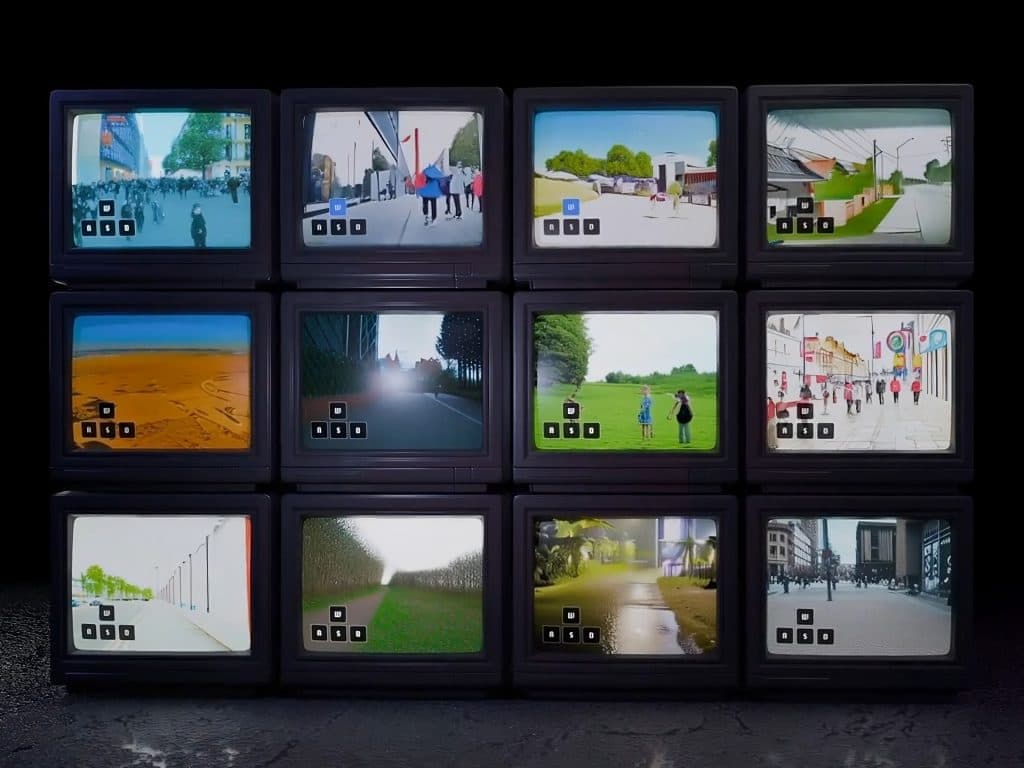
Odyssey AI released Starchild-1, the first real-time multimodal world model. The model generates video from text and image inputs in real time, targeting embodied AI and robotics.
Key facts
- Starchild-1 is first real-time multimodal world model
- Generates video from text and image inputs
- Targets embodied AI and robotics
- Odyssey AI did not disclose training compute or dataset size
- No benchmark results released against prior world models
Odyssey AI announced Starchild-1, described as the first real-time multimodal world model capable of generating video from text and image inputs [According to @rohanpaul_ai]. The model processes and outputs video frames in real time, a departure from prior world models that required offline generation or significant latency.
Technical Architecture
Starchild-1 operates as a vision-language-action model, taking text prompts and image inputs to produce coherent video sequences. The model's real-time capability suggests a lightweight architecture optimized for inference speed, though Odyssey AI has not disclosed training compute, parameter count, or dataset specifics [Source is silent on these details].
Unique Take
Starchild-1's real-time generation distinguishes it from prior world models like Google's Genie or OpenAI's Sora, which generate video offline with seconds-to-minutes latency. This latency reduction is critical for robotics and autonomous systems where models must react to live sensor streams. If Odyssey's claims hold, Starchild-1 represents the first world model that could plausibly serve as an interactive simulation environment for embodied agents.
Applications
Odyssey AI targets embodied AI and robotics applications where real-time world simulation enables closed-loop training and deployment. The model could allow robots to simulate environment responses during operation, reducing the sim-to-real gap. However, Odyssey AI has not released benchmark results or comparison data against prior state-of-the-art world models [Source is silent on benchmarks].
Comparison to Prior Art
Prior world models, including Google DeepMind's Genie (2024), DreamerV3 (2023), and OpenAI's Sora (2024), generate video but lack real-time inference. Genie required minutes to generate a single 10-second clip; Sora's inference time remains undisclosed but is widely reported as sub-real-time. Starchild-1's real-time claim, if validated, would be a step-function improvement in latency.
What to watch
Odyssey AI has not released benchmarks, code, or third-party evaluation results. Watch for independent replication attempts and comparison against Google DeepMind's Genie and OpenAI's Sora on latency and generation quality metrics. A public demo or API would validate the real-time claim.