A collaborative team of researchers from Stony Brook University, Carnegie Mellon University (CMU), Yale University, the University of British Columbia (UBC), and Fudan University has open-sourced a new multi-agent large language model (LLM) system. The system is specifically architected to handle complex, multi-step software engineering tasks that typically exceed the capabilities of a single LLM agent.
The announcement was made via social media, indicating the project's immediate availability to the research and developer community. While the initial post is brief, the involvement of major academic institutions in AI and software engineering suggests a focus on rigorous, research-driven system design rather than a commercial product launch.
What Happened
The research team has publicly released the code and presumably the framework for a multi-agent LLM system. The core premise is that many real-world software engineering problems—such as refactoring a large codebase, designing a system architecture, or debugging a distributed service—are not monolithic. They can be decomposed into subtasks better handled by specialized agents working in concert.
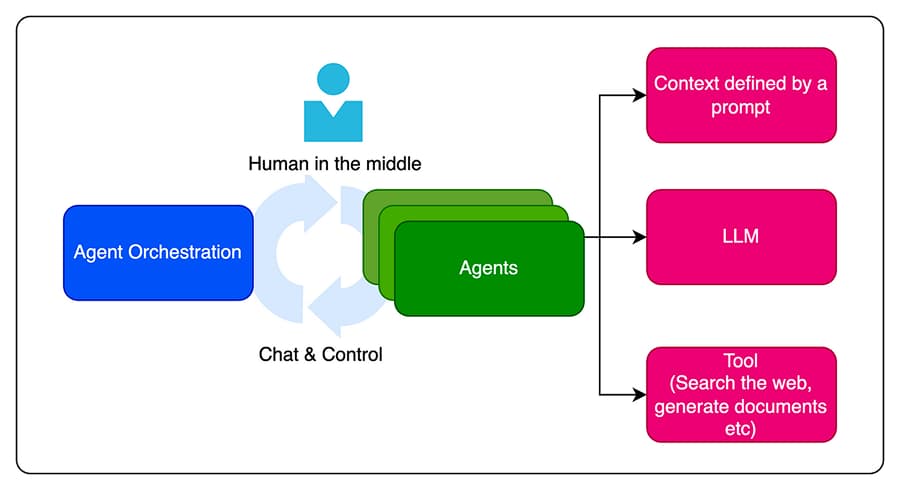
This system moves beyond the now-common pattern of using a single LLM (like GPT-4 or Claude) in a loop with a code interpreter. Instead, it proposes a coordinated ecosystem of agents, each potentially with a defined role (e.g., "Architect," "Coder," "Tester," "Reviewer"), that can communicate, share context, and collaboratively work towards a solution.
Context
The push towards multi-agent systems represents a significant evolution in applied AI. Single-agent models, while powerful, often struggle with long-horizon reasoning, maintaining consistency over very long contexts, and integrating multiple specialized skills. The open-source AI community has seen growing experimentation with multi-agent frameworks (like AutoGen, CrewAI, and ChatDev) to address these limitations, particularly in coding and problem-solving.
This academic release is notable for its institutional backing. CMU and Yale are powerhouses in AI and human-computer interaction research, Stony Brook and UBC have strong software engineering groups, and Fudan University adds a significant international collaboration dimension. Their combined effort likely brings formal rigor, novel coordination mechanisms, and benchmark evaluations to the multi-agent space.
Key Questions and Next Steps
As the source is a brief announcement, critical details remain to be explored by the community:
- Architecture: What is the agent coordination paradigm? Is it based on hierarchical planning, blackboard systems, or market-based mechanisms?
- Benchmarks: How does the system perform on established software engineering benchmarks like SWE-Bench, HumanEval, or MBPP compared to single-agent and other multi-agent baselines?
- Model Requirements: Does the framework require specific base LLMs (e.g., CodeLlama, DeepSeek-Coder) or is it model-agnostic?
- Communication Overhead: A known challenge in multi-agent systems is the cost and latency of inter-agent communication. How does this system manage that trade-off?
The open-source nature means developers and researchers can now inspect the code, run the system, and begin answering these questions directly.
gentic.news Analysis
This release is a direct contribution to the rapidly accelerating trend of multi-agent AI systems, a trend we identified as a key 2024 development vector in our analysis of OpenAI's o1 model family and its strategic implications. While OpenAI is pushing the frontier with single-agent reasoning models, this academic consortium is betting on a collaborative, modular approach. This isn't necessarily contradictory; the two paths may converge, where powerful reasoning models like o1 become the "brains" of individual agents within a larger multi-agent framework.
The institutional makeup of the team is telling. It combines top-tier AI research (CMU, Yale) with deep software engineering expertise (Stony Brook, UBC). This suggests the system's design is likely grounded in real software development lifecycle challenges, not just abstract reasoning puzzles. It follows a pattern of academia filling specific, foundational niches—like creating robust frameworks and benchmarks—that commercial entities, focused on end-user products and proprietary models, may under-invest in.
Furthermore, this aligns with and potentially accelerates the trend of AI-powered software development moving from autocomplete (Copilot) to autonomous, complex task completion. If successful, such systems could change the role of the software engineer from a coder to a specifier and system orchestrator, managing a team of AI agents. The open-source nature is crucial here; it allows for transparency, auditability, and customization—key concerns for enterprise adoption where code security and reproducibility are paramount. This development adds a significant new open-source option to a landscape that includes other frameworks, creating healthy competition and diversity in approach.
Frequently Asked Questions
What is a multi-agent LLM system?
A multi-agent LLM system is a framework where multiple instances or specialized versions of large language models work together to solve a problem. Instead of one model trying to do everything, different agents can take on specific roles (like planning, coding, testing, or critiquing), communicate with each other, and collaborate through a defined protocol. This is designed to tackle complex, multi-step tasks more effectively than a single model operating alone.
Which universities built this multi-agent AI system?
The system was developed by a research consortium from five universities: Stony Brook University, Carnegie Mellon University (CMU), Yale University, the University of British Columbia (UBC), and Fudan University. This collaboration brings together expertise in artificial intelligence, machine learning, software engineering, and human-computer interaction from leading institutions in North America and Asia.
How does this multi-agent system compare to ChatGPT or GitHub Copilot?
ChatGPT and GitHub Copilot are primarily single-agent interaction models. You give a prompt or a code comment, and one model generates a response or code completion. This new multi-agent system is a framework for orchestrating multiple LLM-based agents to work together on a single, larger objective. It's a different paradigm aimed at more complex software engineering workflows, like designing a full feature or refactoring an entire module, which might involve planning, implementation, and review steps handled by different agents.
Is this multi-agent AI system free to use?
Yes. The researchers have open-sourced the system, meaning the code and framework are publicly released, likely under a permissive license (like MIT or Apache 2.0). This allows anyone to download, use, modify, and distribute the software for free, both for research and commercial purposes, subject to the terms of its specific license.