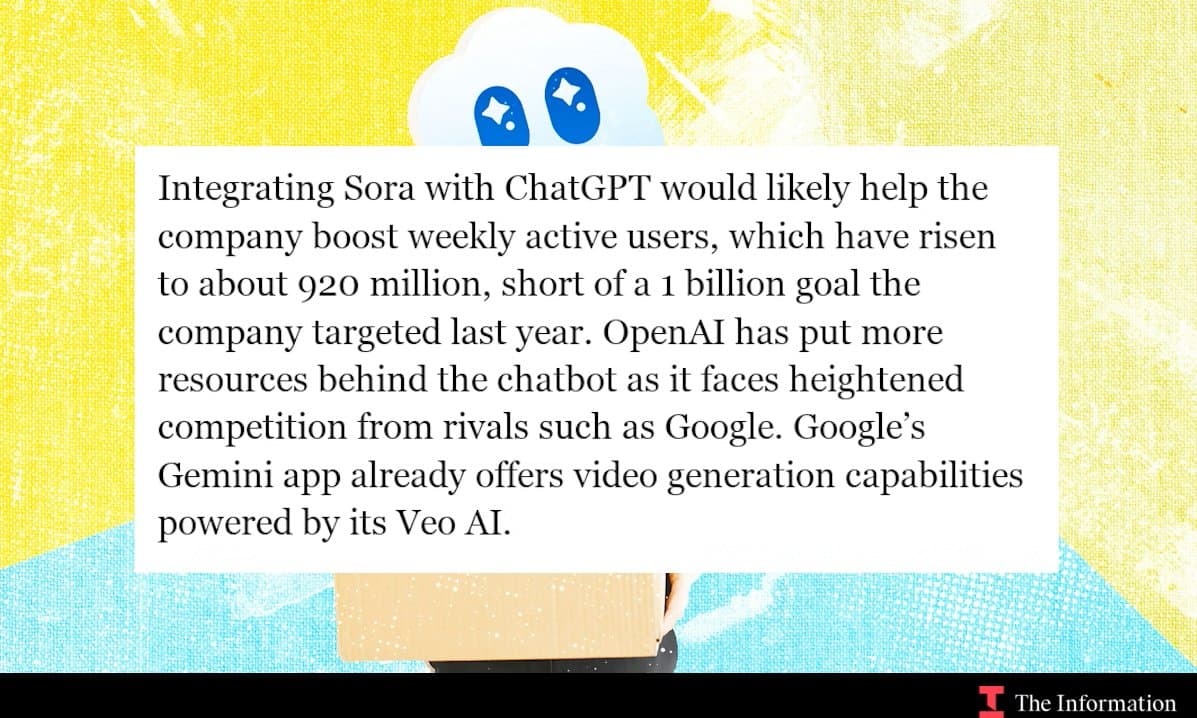
OpenAI is taking a monumental step in the AI landscape by integrating its powerful Sora video generation model directly into ChatGPT, according to recent reports. This strategic move could potentially propel the platform's weekly user base beyond the coveted 1 billion mark, fundamentally transforming how users interact with AI. However, this ambitious expansion comes with a staggering financial reality: the company projects spending over $225 billion on inference costs between now and 2030, with video generation being exponentially more resource-intensive than text or image creation.
The Sora-ChatGPT Integration Strategy
The integration of Sora into ChatGPT represents a significant evolution in OpenAI's product strategy. Sora, which generates realistic video content from text prompts, has been one of the most impressive demonstrations of AI capabilities since its initial unveiling. By bringing this technology directly into the ChatGPT interface, OpenAI is creating a unified platform where users can seamlessly transition between text conversations, image generation, and now video creation.
This move follows the pattern of OpenAI gradually expanding ChatGPT's multimodal capabilities. The platform already incorporates DALL-E for image generation and voice interaction features. Adding Sora completes a trifecta of content creation tools within a single conversational interface, potentially making ChatGPT the most comprehensive AI assistant available to the general public.
The Billion-User Threshold
The potential to push weekly ChatGPT users above 1 billion represents a watershed moment for AI adoption. Currently, ChatGPT reportedly has hundreds of millions of weekly active users, making it one of the fastest-growing consumer applications in history. The addition of sophisticated video generation capabilities could be the feature that pushes it into the rarefied air of platforms like YouTube, WhatsApp, and Facebook in terms of user engagement.
This user growth isn't merely about vanity metrics. A billion-user platform would give OpenAI unprecedented influence over how people create and consume digital content. It would also provide the company with vast amounts of interaction data to further refine its models, creating a powerful feedback loop that could accelerate AI development.
The Astronomical Cost of Video Inference
The most striking aspect of this development is the projected cost. OpenAI's estimate of spending over $225 billion on inference costs by 2030 reveals the extraordinary financial commitment required to operate at this scale. Inference costs refer to the computational resources needed to run AI models after they've been trained—essentially, the expense of actually using the models to generate content for users.
Video generation is significantly more resource-intensive than text or image creation for several reasons:
- Temporal complexity: Videos require generating coherent sequences of frames rather than single images
- Higher resolution requirements: Video typically demands more detailed outputs
- Longer generation times: Creating seconds of video requires more computational cycles than generating text responses
- Memory and bandwidth: Video files are larger and require more storage and transmission resources
The Business Model Challenge
These projected costs raise serious questions about OpenAI's business model. Even with its substantial revenue from ChatGPT Plus subscriptions and enterprise contracts, $225 billion represents an extraordinary financial commitment. This suggests several possible strategic directions:
- Massive infrastructure investment: OpenAI may be planning to build or secure unprecedented computing resources
- Radical efficiency improvements: The company might be banking on dramatic reductions in inference costs through algorithmic breakthroughs
- New revenue streams: Higher-tier pricing or novel monetization strategies may be necessary
- Partnerships and subsidies: Strategic alliances with cloud providers or other tech giants could help shoulder the burden
Competitive Implications
OpenAI's move puts pressure on competitors like Google, Meta, and Anthropic to match or exceed these capabilities. The race to integrate advanced video generation into consumer-facing products could accelerate across the industry, potentially leading to similar massive infrastructure investments from multiple companies.
This development also highlights the growing divide between well-funded AI giants and smaller players. The barrier to entry for providing state-of-the-art AI services continues to rise, potentially limiting competition and innovation in the long term.
User Experience Transformation
For end users, the integration promises to revolutionize content creation. Imagine being able to describe a scene in conversation with ChatGPT and instantly receive a custom video illustrating that concept. This could transform education, marketing, entertainment, and personal creativity. However, it also raises questions about content authenticity, copyright, and the potential for misuse in creating misleading media.
Environmental Considerations
The energy consumption required for video inference at this scale cannot be ignored. Training and running large AI models already contribute significantly to carbon emissions, and expanding to video generation for potentially a billion users would multiply this impact. OpenAI and other AI companies will face increasing pressure to address the environmental consequences of their computational demands.
Looking Toward 2030
The $225 billion projection through 2030 suggests OpenAI is planning for the long term. This isn't a short-term experiment but a fundamental commitment to making advanced video generation a mainstream technology. The success or failure of this gamble will likely shape the AI industry for years to come.
As with many of OpenAI's announcements, the exact timeline for Sora's integration into ChatGPT remains unclear. The company has been cautious about releasing Sora broadly due to safety concerns around realistic video generation. How they navigate these concerns while pursuing massive user growth will be a critical challenge.
Source: Based on reporting from @kimmonismus on X/Twitter regarding OpenAI's plans to integrate Sora into ChatGPT and associated inference cost projections.