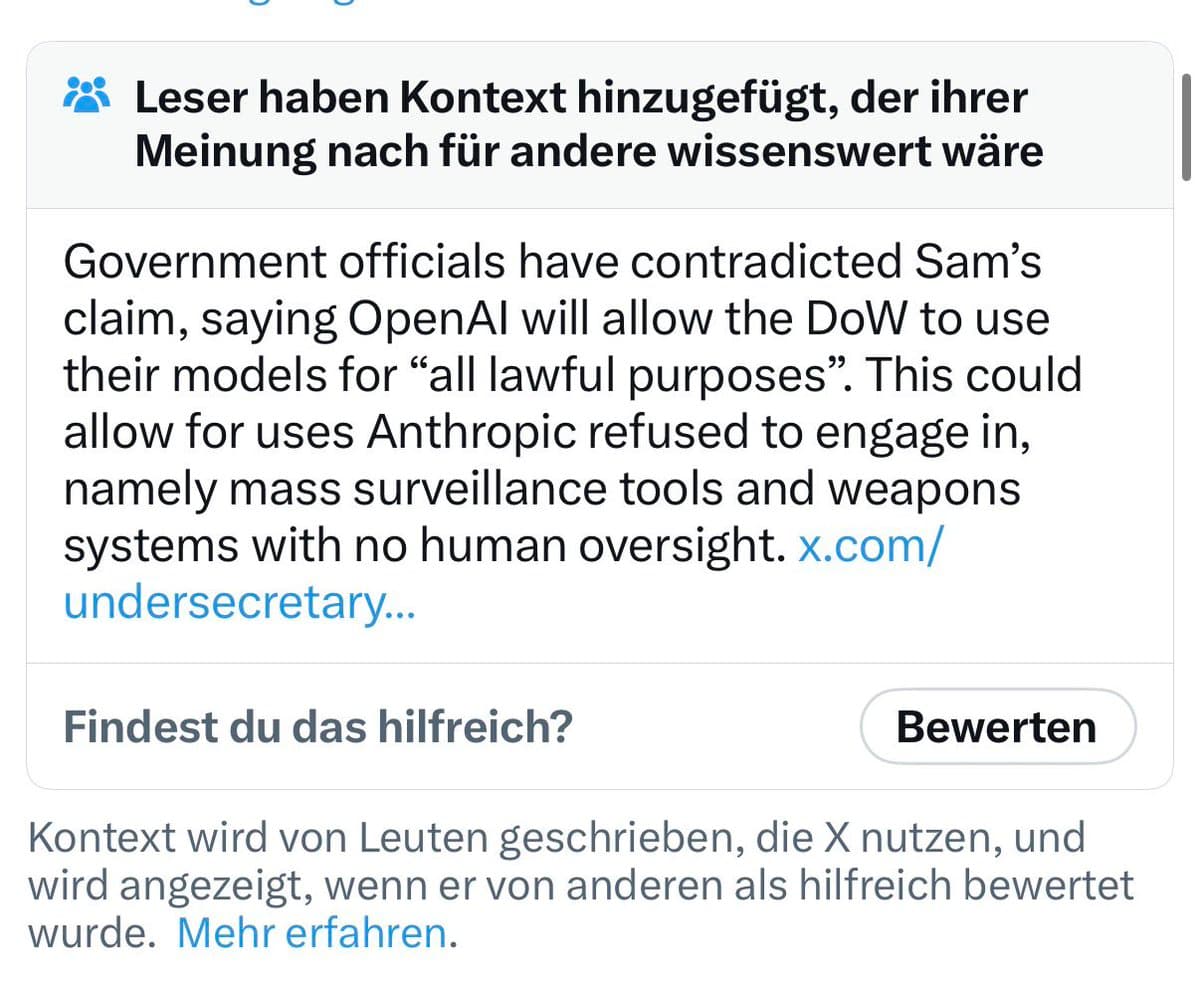
A recent community note attached to OpenAI CEO Sam Altman's social media post has ignited a significant controversy about the company's technology and its potential applications. The note pointed out that OpenAI's terms of service appear to permit military and surveillance uses of ChatGPT, contradicting the company's public positioning about responsible AI development.
The Community Note That Started It All
The controversy began when a user on X (formerly Twitter) added a community note to one of Sam Altman's posts, highlighting that OpenAI's usage policies don't explicitly prohibit military applications. The note specifically referenced section 2.3 of OpenAI's usage policies, which states that users cannot utilize their services to "develop or use weapons." However, the community note argued that this prohibition is narrowly defined and leaves room for various military applications that don't involve weapon development.
What makes this revelation particularly significant is the timing. OpenAI has been actively pursuing government contracts while simultaneously positioning itself as an ethical leader in AI development. The community note suggests a potential disconnect between OpenAI's public messaging and its actual business practices.
The Dual-Use Nature of Modern AI
ChatGPT and similar large language models represent what experts call "dual-use technology"—systems that can serve both beneficial and potentially harmful purposes depending on their application. The same natural language processing capabilities that can help researchers analyze scientific papers or assist students with learning can also be repurposed for surveillance, intelligence analysis, or psychological operations.
This isn't merely theoretical. Documents and reports have shown that defense contractors and government agencies worldwide are actively exploring how to integrate large language models into their operations. Potential applications include:
- Automated analysis of intercepted communications
- Social media monitoring and influence operation detection
- Intelligence report generation and summarization
- Training simulation and scenario planning
- Psychological operations and targeted messaging
OpenAI's Evolving Position on Military Applications
OpenAI's official usage policy states that users may not "use our service to harm yourself or others" or "use our service for any illegal activity." The policy specifically prohibits using their services to "develop or use weapons." However, critics argue that this language is sufficiently vague to allow numerous military applications that don't directly involve weapon development.
In recent months, OpenAI has been more openly discussing partnerships with government agencies. The company has participated in defense technology conferences and has reportedly been in discussions with various military organizations about potential applications of their technology. This represents a significant shift from OpenAI's earlier positioning, which emphasized civilian and research applications.
The Broader Context: AI in Defense and Surveillance
The revelation about OpenAI's terms comes amid a broader trend of AI integration into defense and surveillance systems worldwide. Major technology companies, including Google, Microsoft, and Amazon, have faced similar controversies over their defense contracts. The difference with OpenAI is that the company has built much of its brand around ethical AI development and safety-conscious approaches.
Several factors are driving this trend:
Technological Advancement: Modern AI systems have reached capabilities that make them genuinely useful for defense applications, particularly in data analysis and decision support.
Geopolitical Competition: Nations are racing to integrate AI into their military capabilities, creating market pressure for technology companies to engage with defense sectors.
Commercial Imperatives: As AI development costs skyrocket, companies face increasing pressure to find lucrative government contracts to sustain their research and development efforts.
Ethical Implications and Public Trust
The community note revelation raises significant questions about transparency and public trust. OpenAI has positioned itself as a leader in responsible AI development, but if its technology is being used for surveillance or military applications without clear disclosure, this could undermine public confidence in the organization.
Key ethical questions include:
- Should AI companies be more transparent about who uses their technology and for what purposes?
- Where should the line be drawn between acceptable and unacceptable military applications of AI?
- How can companies balance commercial opportunities with ethical responsibilities?
- What oversight mechanisms should exist for dual-use AI technologies?
Industry Reactions and Expert Perspectives
AI ethics experts have expressed concern about the implications of this revelation. Dr. Rumman Chowdhury, a prominent AI ethicist, noted that "the gap between corporate messaging and actual practice in AI is becoming a significant trust issue for the industry." Other experts have pointed out that the lack of clear boundaries in OpenAI's terms creates ambiguity that could be exploited.
The controversy also highlights the growing importance of community-driven accountability mechanisms like X's community notes. These systems allow users to collectively fact-check and provide context for public statements by influential figures and organizations.
Looking Forward: Regulation and Accountability
This incident occurs as governments worldwide are developing regulatory frameworks for AI. The European Union's AI Act, currently in final negotiations, includes specific provisions for high-risk AI applications, including some military and surveillance uses. In the United States, the Biden administration's executive order on AI safety includes requirements for transparency about potential risks.
The OpenAI situation may accelerate calls for:
- Mandatory disclosure of government and military contracts
- Clearer definitions of prohibited uses in terms of service
- Independent oversight of AI companies' compliance with ethical guidelines
- Stronger whistleblower protections for employees concerned about ethical violations
Conclusion: A Watershed Moment for AI Ethics
The community note on Sam Altman's post represents more than just a social media correction—it highlights fundamental tensions in the AI industry between commercial ambitions, ethical commitments, and public trust. As AI systems become more powerful and integrated into critical infrastructure, including defense systems, these tensions will only intensify.
OpenAI now faces a choice: clarify and potentially restrict its terms to align with its ethical positioning, or acknowledge that its technology will inevitably be used in ways that may conflict with some users' expectations. The company's response to this controversy will likely influence not only its own reputation but also broader industry standards for transparency and accountability in AI development.
The incident serves as a reminder that in the age of social media and community-driven fact-checking, the gap between corporate messaging and actual practice is increasingly difficult to maintain. For the AI industry, this may mean that ethical commitments need to be backed by more than just carefully worded terms of service—they require genuine transparency and accountability to maintain public trust in an increasingly powerful technology.