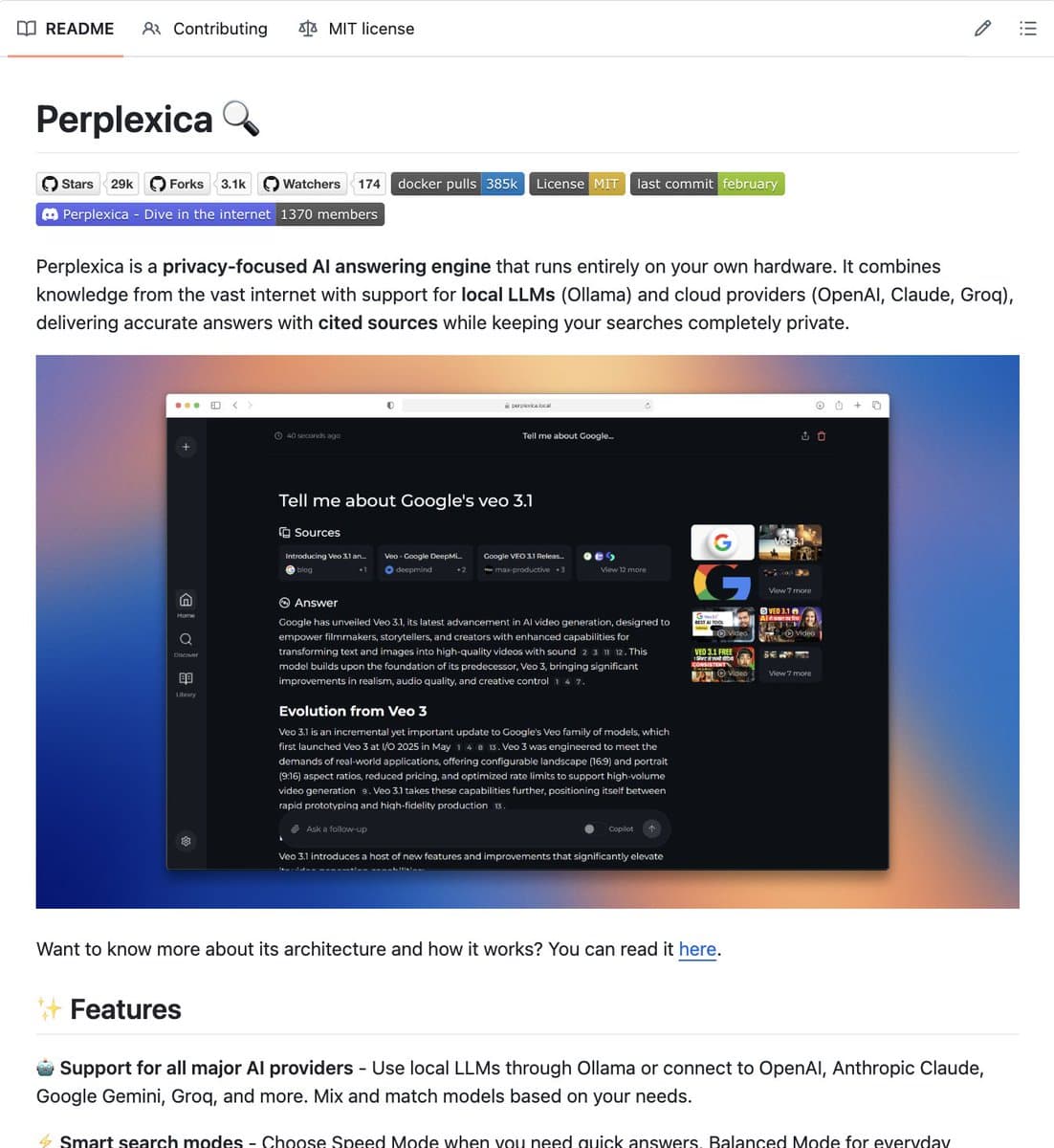
In an era where data privacy concerns continue to mount against big tech companies, a new open-source project called Perplexica has emerged as a potential game-changer for AI-powered search. Developed as a privacy-first alternative to popular services like Perplexity AI, this innovative tool runs entirely on users' own hardware, eliminating the need for subscriptions, data collection, or tracking by third-party corporations.
What Makes Perplexica Different?
Perplexica distinguishes itself through its fundamental architecture and philosophical approach to AI search. Unlike cloud-based alternatives that process queries through remote servers owned by large corporations, Perplexica operates locally on the user's device. This means search queries, browsing history, and personal data never leave the user's control, addressing growing concerns about digital surveillance and data monetization practices prevalent in the tech industry.
The project's creator describes it as "a full open-source alternative to Perplexity AI" that requires "no subscriptions" and ensures "no data sent to big tech" with "no tracking" of user activities. This approach represents a significant shift in how AI-powered search tools can be designed and deployed.
Technical Architecture and Flexibility
One of Perplexica's most compelling features is its compatibility with multiple AI backends. The system works seamlessly with Ollama (a popular framework for running large language models locally), Claude, OpenAI, and Groq, giving users the flexibility to choose their preferred AI model based on performance needs, cost considerations, or philosophical alignment.
This modular approach allows users to:
- Run completely offline using local models via Ollama
- Connect to various cloud-based AI services while maintaining control over data transmission
- Mix and match different AI providers based on specific use cases
- Avoid vendor lock-in that characterizes many proprietary AI solutions
The Open-Source Advantage
As a 100% open-source project, Perplexica offers transparency that proprietary alternatives cannot match. Developers and security researchers can examine the codebase to verify privacy claims, identify potential vulnerabilities, and contribute improvements. This collaborative development model typically leads to more secure, robust software that better serves community needs rather than corporate interests.
The open-source nature also enables customization for specific use cases, whether for individual privacy enthusiasts, organizations with strict data governance requirements, or researchers studying AI search technologies.
Privacy Implications in the AI Era
Perplexica arrives at a critical moment in the evolution of AI technologies. As mainstream AI services increasingly face scrutiny over their data practices, tools that prioritize user sovereignty offer an important alternative. The ability to conduct AI-powered searches without creating permanent records on corporate servers addresses fundamental privacy concerns that have become more pronounced with the widespread adoption of generative AI.
This development reflects a broader trend toward decentralized AI infrastructure, where computational power and data control shift from centralized providers to individual users and local networks. While this approach presents technical challenges (particularly regarding hardware requirements for running sophisticated models locally), it represents an important philosophical counterpoint to the current trajectory of AI development.
Practical Considerations and Limitations
While Perplexica's privacy-first approach is compelling, potential users should consider several practical factors:
Hardware Requirements: Running AI models locally requires significant computational resources, particularly for more sophisticated language models. Users may need powerful hardware with substantial RAM and processing capabilities.
Performance Trade-offs: Local processing may result in slower response times compared to cloud-based services that leverage massive server farms, though this gap continues to narrow as hardware improves.
Model Selection: Users must carefully select which AI models to run locally, balancing factors like accuracy, speed, and hardware compatibility.
Technical Expertise: While the project aims for accessibility, some technical knowledge may be required for optimal setup and configuration.
The Future of Private AI Search
Perplexica represents more than just another open-source project—it signals a growing demand for AI tools that respect user autonomy and data sovereignty. As privacy regulations evolve and public awareness of data issues increases, we can expect more developments in this direction.
The project's success will likely depend on several factors: continued development and refinement, growing community support, improvements in local AI model efficiency, and increasing mainstream concern about digital privacy. If these elements align, Perplexica could inspire a new generation of privacy-focused AI applications that challenge the dominance of big tech in this rapidly evolving space.
Source: @hasantoxr on X/Twitter