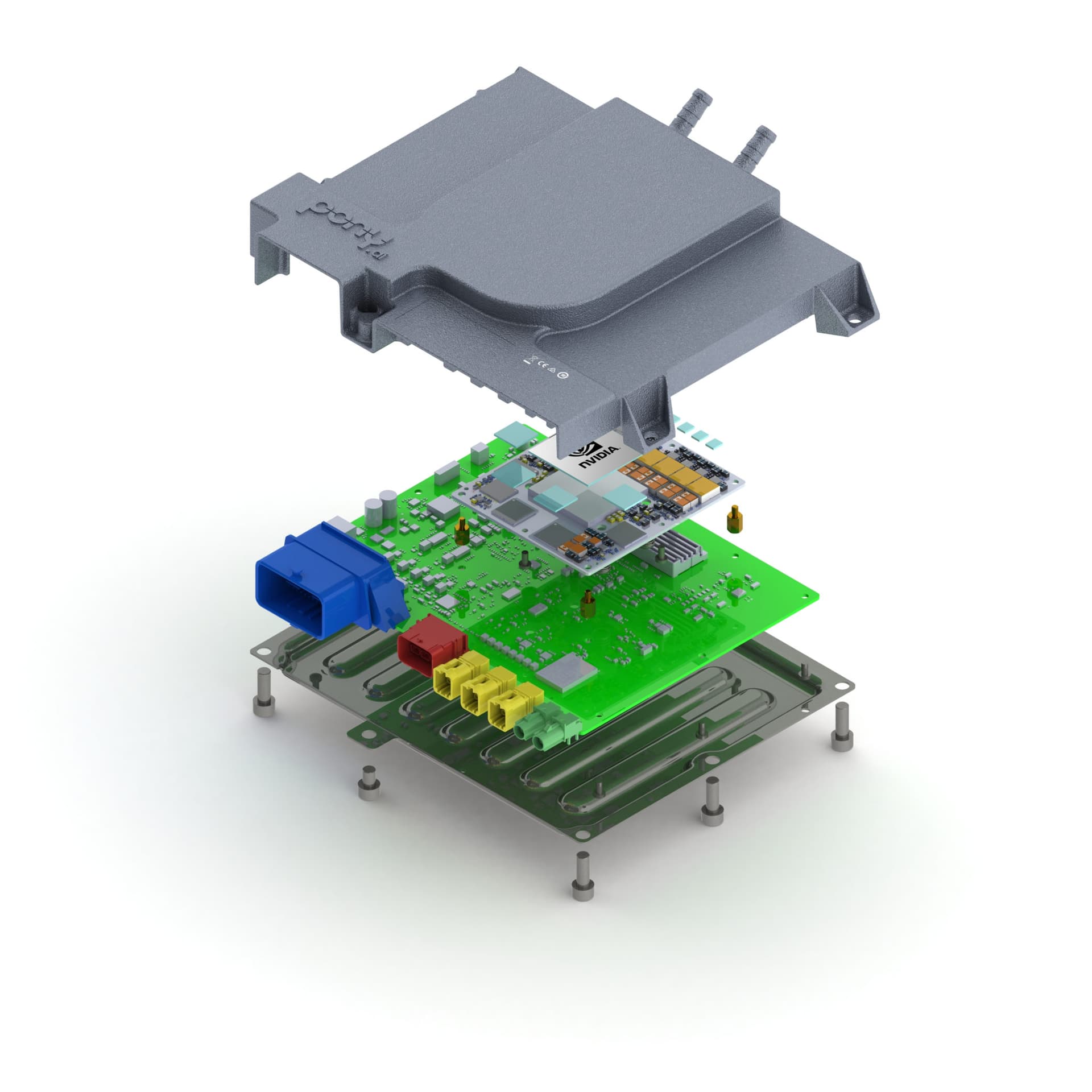
Pony.ai (NASDAQ:PONY) has unveiled its next-generation autonomous driving domain controller, developed in collaboration with NVIDIA (NASDAQ:NVDA). The announcement, made via a press release covered by Gasgoo, signals Pony.ai's push to scale L4 autonomous driving systems for commercial deployment.
Key Takeaways
- Pony.ai introduced a new autonomous driving domain controller built with NVIDIA, targeting large-scale L4 deployment.
- The controller integrates NVIDIA's DRIVE platform to handle sensor fusion and planning.
What's New
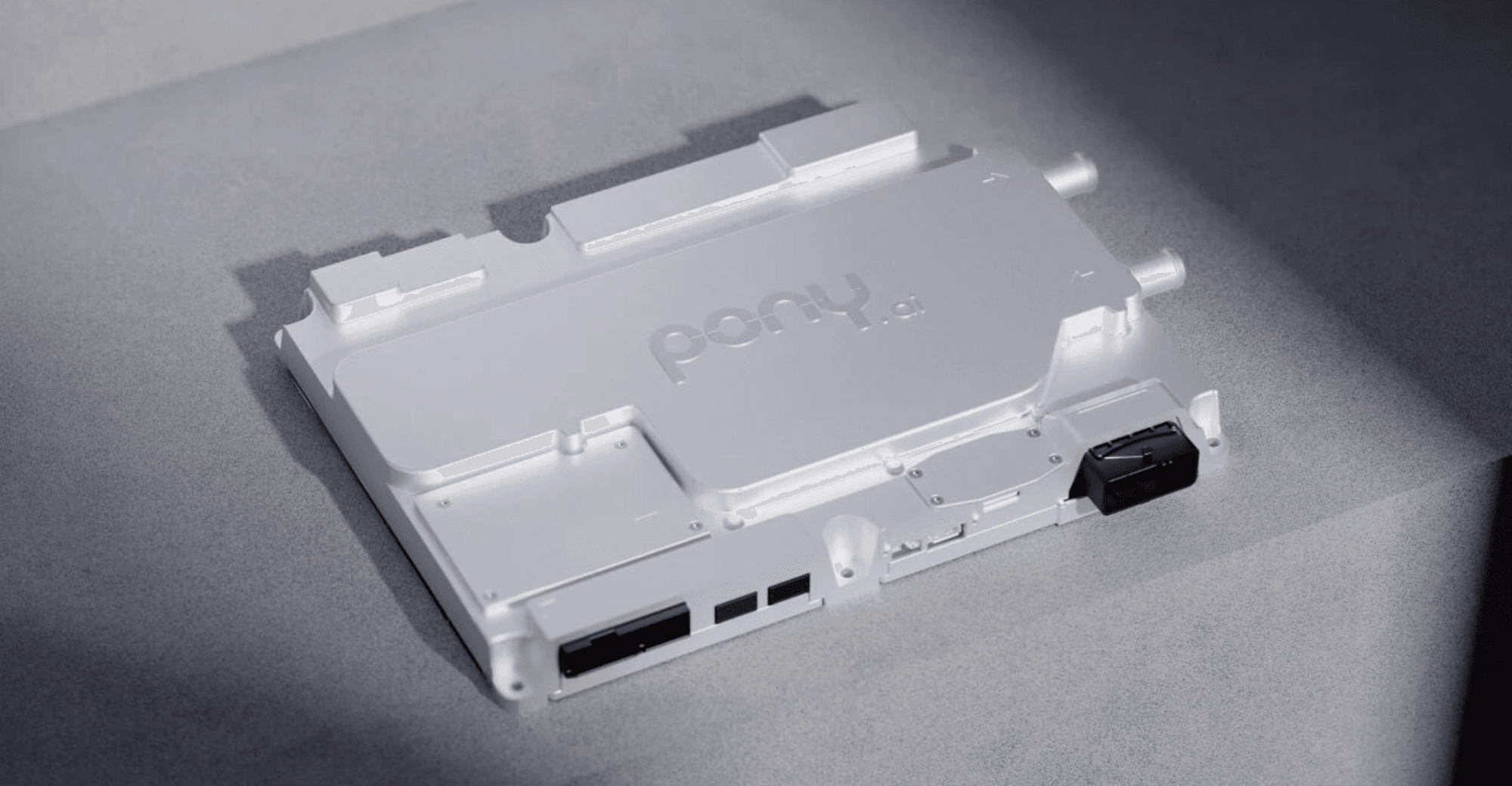
The new domain controller is designed to serve as the central compute brain for Pony.ai's autonomous vehicle fleet. It integrates NVIDIA's DRIVE platform—likely the DRIVE Thor or DRIVE Orin system-on-a-chip—to handle real-time sensor fusion, perception, path planning, and vehicle control.
Key features include:
- High-performance compute: NVIDIA DRIVE SoC providing up to 254 TOPS (Orin) or 2,000 TOPS (Thor) for AI inference.
- Sensor fusion: Unified processing of camera, LiDAR, radar, and ultrasonic data.
- Redundancy: Fail-operational architecture for safety-critical L4 operations.
- Scalability: Designed to support multiple vehicle platforms from robotaxis to logistics vehicles.
Pony.ai already operates autonomous taxi services in Beijing, Shanghai, and Guangzhou, and has been testing in California. This controller is intended to reduce hardware costs and improve reliability for production-grade fleets.
Technical Details
While Pony.ai has not published detailed specs, the controller is built on NVIDIA's automotive-grade DRIVE platform. NVIDIA's DRIVE Thor, announced in 2022 and sampling in 2024, consolidates traditional distributed ECUs into a single centralized computer. It supports:
- Multi-domain: Cockpit, automated driving, and parking on one chip.
- Safety: ISO 26262 ASIL-D compliance.
- Software: NVIDIA DriveOS, CUDA, and TensorRT for AI model deployment.
Pony.ai's controller likely leverages these capabilities to run its proprietary autonomous driving stack, which includes perception, prediction, and planning modules trained on millions of miles of real-world and simulated data.
How It Compares
Pony.ai's domain controller enters a competitive landscape dominated by:
Pony.ai NVIDIA DRIVE Thor/Orin L4 robotaxis, logistics Baidu (Apollo) NVIDIA DRIVE Orin L4 robotaxis (Apollo RT6) Waymo Self-developed Custom (Intel/Google TPU) L4 robotaxis, trucks Tesla Self-developed FSD Computer (custom) L2+ / L4 (claimed) Mobileye Intel EyeQ Ultra L2+ / L4 (supervision)Pony.ai's advantage is its tight integration with NVIDIA's ecosystem, which provides access to a mature software stack (DriveWorks, DRIVE Sim) and a clear upgrade path to next-gen chips.
What to Watch

- Cost: Domain controllers must hit a price point that makes robotaxi operations economically viable. NVIDIA's DRIVE Thor is expected to cost several thousand dollars per unit; Pony.ai needs to balance performance with fleet economics.
- Regulation: Chinese regulators have been cautious about L4 deployment. Pony.ai received approval for paid robotaxi services in Beijing in 2023, but scaling nationwide remains a hurdle.
- Competition: Baidu's Apollo Go fleet, which uses NVIDIA hardware, is also expanding. Pony.ai must differentiate on safety record, operational efficiency, or cost.
- NVIDIA's role: NVIDIA is becoming the de facto compute provider for autonomous driving, partnering with almost every major player. This creates a dependency that could limit Pony.ai's ability to customize hardware.
gentic.news Analysis
Pony.ai's domain controller announcement is less about technical novelty and more about operational maturity. The company is transitioning from a research-stage robotaxi operator to a commercial fleet manager. Partnering with NVIDIA for compute is a pragmatic choice—NVIDIA's DRIVE platform is the most proven automotive-grade AI compute solution available.
This move mirrors a broader trend we've covered extensively: autonomous driving companies are standardizing on NVIDIA hardware. Baidu's Apollo RT6, Zoox's custom vehicle, and numerous trucking startups all use NVIDIA DRIVE. For Pony.ai, the risk is commoditization—if every competitor uses the same compute platform, differentiation must come from software, data, and operational excellence.
Google Cloud's recent expansion of its partnership with NVIDIA for AI infrastructure (covered on April 23, 2026) further underscores NVIDIA's dominance in the AI compute layer. Pony.ai's controller is one more data point in NVIDIA's strategy to own the automotive AI stack from cloud to edge.
What's notable is Pony.ai's focus on a domain controller rather than a full vehicle platform. Unlike Waymo, which builds its own hardware (custom compute, sensor suite, and vehicle integration), Pony.ai is positioning itself as a technology provider that can integrate into existing vehicle platforms. This could accelerate deployment but limits control over the full stack.
Frequently Asked Questions
What is a domain controller in autonomous driving?
A domain controller is a centralized computer that processes sensor data and runs autonomous driving software. It replaces dozens of distributed electronic control units (ECUs) in traditional vehicles, enabling real-time sensor fusion, perception, planning, and control on a single chip or chipset.
How does Pony.ai's domain controller compare to Waymo's hardware?
Waymo uses custom-designed compute hardware integrated with Intel and Google TPUs for its fifth-generation Driver platform. Pony.ai's controller uses off-the-shelf NVIDIA DRIVE SoCs, which may be less optimized but benefit from NVIDIA's mature software ecosystem and faster iteration cycles.
When will Pony.ai deploy this domain controller in commercial robotaxis?
Pony.ai has not announced a specific deployment timeline. The controller is likely in validation testing now, with commercial deployment expected within 12-18 months, pending regulatory approvals and fleet integration.
Is this domain controller exclusive to Pony.ai?
No. NVIDIA's DRIVE platform is available to any automaker or autonomous driving company. Pony.ai has co-developed the controller with NVIDIA, meaning it may have early access or customization, but the underlying hardware is not exclusive.