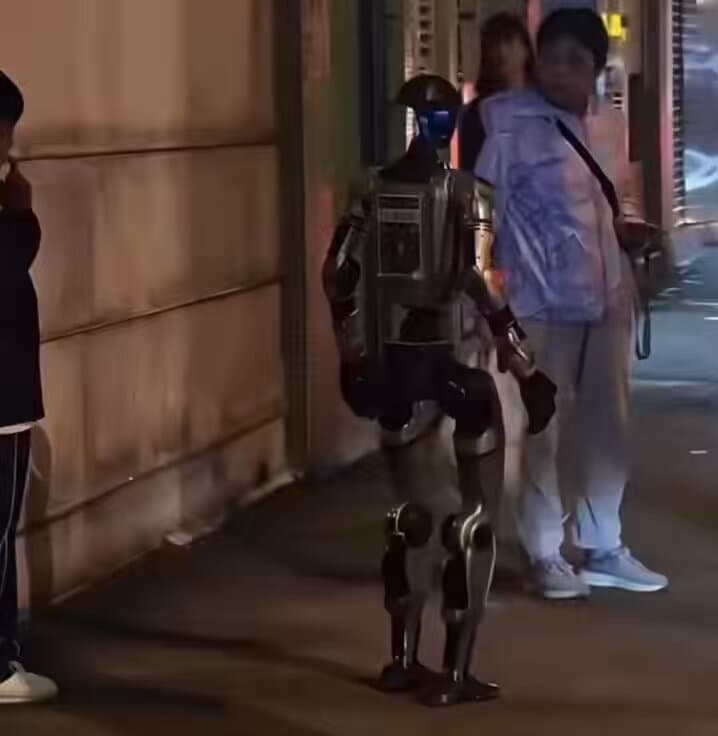
A routine demonstration of robotic technology turned into a scene of public chaos in Macau this week when a Unitree G1 humanoid robot being walked through public spaces triggered an extreme emotional reaction from bystanders, ultimately requiring police intervention to restore order. According to eyewitness reports and social media documentation, the incident unfolded when a woman encountered the walking robot and "lost it, screams madness," creating a domino effect of panic that led to crowd surges and ultimately the seizure of the robot by authorities.
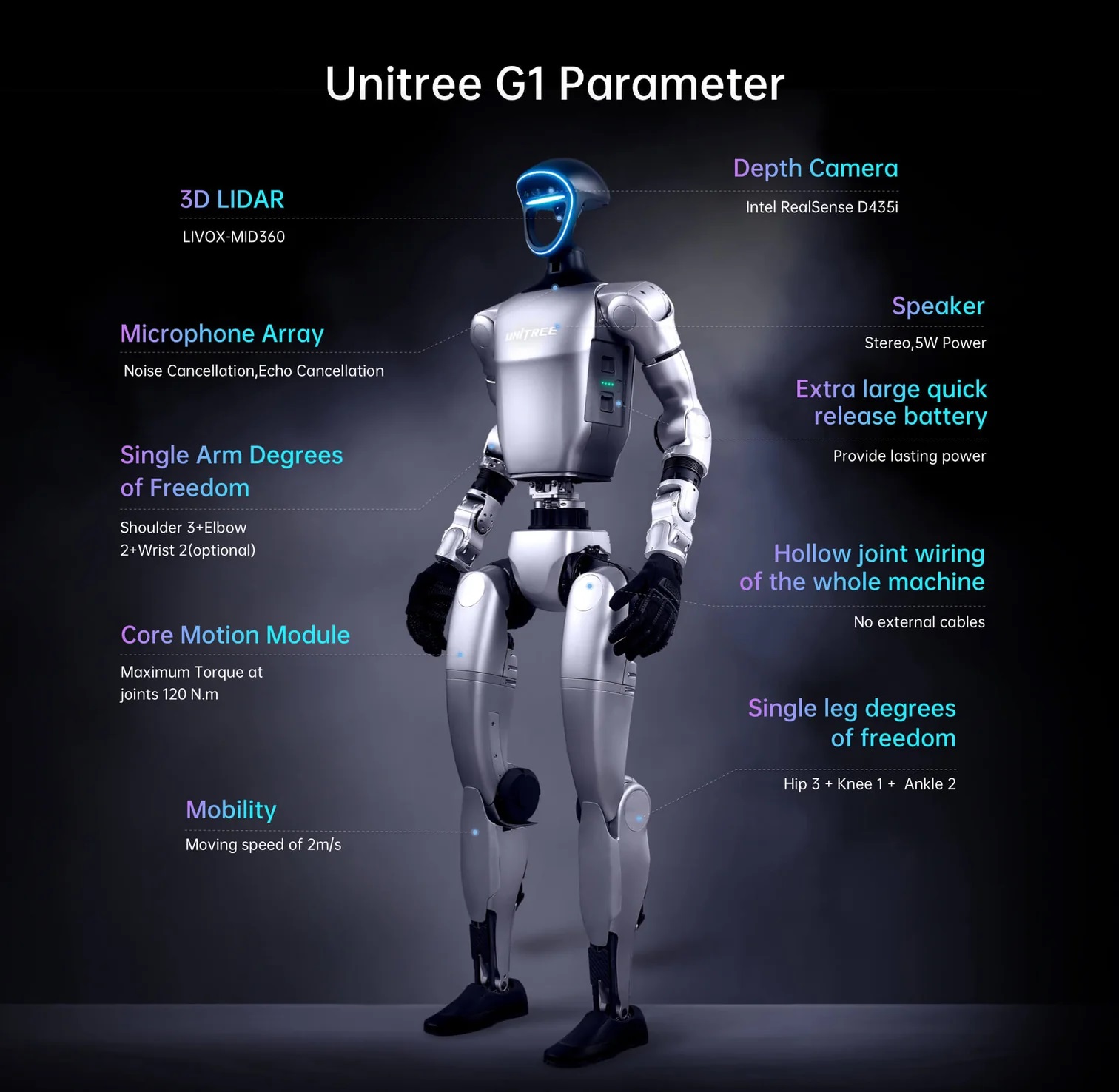
The video documentation shows what appears to be a Unitree G1 humanoid robot—a commercially available bipedal robot standing approximately 5 feet tall with human-like proportions and movement capabilities—being guided through what seems to be a commercial or tourist area of Macau. The robot moves with the characteristic mechanical gait of current-generation humanoids, walking upright while being accompanied by what appears to be its owner or operator.
The Escalation of Public Reaction
The situation escalated rapidly when one woman, upon encountering the robot, reportedly screamed in what witnesses described as "madness" or extreme distress. This initial reaction appears to have triggered a broader panic response, with crowds surging either toward or away from the scene—reports are unclear about the exact nature of the crowd movement, but the result was significant enough to require law enforcement intervention.
Macau police responded to the disturbance by seizing the robot and escorting it away from the area, apparently to de-escalate the situation. The robot was reportedly removed from public view, though it's unclear whether the owner faced any penalties or whether the seizure was temporary. The incident represents one of the first documented cases of public authorities intervening to remove a humanoid robot from public spaces due to crowd safety concerns rather than technical malfunctions.
Context: The Unitree G1 and Public Robotics
The Unitree G1 represents the current frontier of commercially available humanoid robotics. Priced at approximately $16,000, the robot stands 127 cm tall (about 4'2") and weighs 35 kg (77 lbs). It features 23 degrees of freedom, allowing for remarkably human-like movement including walking, climbing stairs, and maintaining balance when pushed. The G1 can operate for about 2 hours on a single charge and has a maximum walking speed of 2 m/s (about 4.5 mph).
What makes this incident particularly noteworthy is that the Unitree G1, while advanced, is not an experimental prototype but a commercially available product. Its presence in Macau—a special administrative region of China known for its tourism and entertainment industries—suggests either a demonstration, personal use, or possibly testing in real-world environments. The public's extreme reaction to what is essentially a consumer product highlights the significant gap between technological advancement and public readiness.
Psychological and Social Dimensions of Robot Acceptance
This incident provides a case study in the psychological barriers to humanoid robot acceptance. The woman's extreme reaction—described as screaming "madness"—suggests elements of the "uncanny valley" phenomenon, where humanoid objects that appear almost, but not exactly, like real human beings elicit feelings of eeriness and revulsion. However, the crowd's subsequent reaction indicates this was more than individual discomfort—it became a collective safety concern.
Social scientists have long warned about public readiness for humanoid robots in shared spaces. While robots in industrial settings or as specialized tools (like robot vacuums) have gained acceptance, humanoid forms moving through human environments trigger different psychological responses. The Macau incident demonstrates that these concerns are not merely theoretical but have real-world implications for public safety and order.
Regulatory and Legal Implications
The police decision to seize the robot raises important questions about the legal status of humanoid robots in public spaces. Currently, most jurisdictions lack specific regulations governing the operation of humanoid robots in public areas. Police likely acted under general public safety or disturbance ordinances, but this incident may prompt more specific regulatory frameworks.
Key questions emerging from this incident include:
- What constitutes responsible operation of humanoid robots in public?
- Should there be designated areas or times for robot demonstrations?
- What liability do owners bear for public reactions to their robots?
- How should first responders be trained to handle robot-related disturbances?
Industry Response and Future Trajectory
The robotics industry has generally focused on technical challenges rather than social acceptance. Incidents like the Macau panic may force manufacturers to consider not just what robots can do, but how humans will react to them in real-world settings. Some possible industry responses could include:
- Public education campaigns to familiarize people with humanoid robots
- Design modifications to make robots less intimidating or more clearly non-human
- Operator training requirements for public demonstrations
- Development of social protocols for robot-human interactions in public spaces
Rohan Paul, who shared the original report, commented: "imo, we are going to see many such scenes from now on." This prediction seems increasingly plausible as humanoid robots become more capable, affordable, and numerous.
Broader Implications for Human-Robot Coexistence
The Macau incident serves as a microcosm of larger societal questions about human-robot coexistence. As humanoid robots transition from research labs and controlled environments to public spaces, we can expect more frequent clashes between technological capability and social comfort. These incidents will likely shape public policy, industry practices, and cultural attitudes toward robotics.
Particular challenges will emerge in dense urban environments, tourist areas, and other spaces where diverse populations congregate. Cultural differences in robot acceptance may become apparent, with some societies embracing humanoid robots more readily than others. The incident in Macau—a cultural crossroads between East and West—may offer early insights into these global dynamics.
Looking Forward: Navigating the Transition
As humanoid robotics continues to advance, stakeholders across sectors will need to collaborate to ensure smooth integration into society. This includes:
- Policymakers developing appropriate regulations
- Manufacturers considering social impact alongside technical innovation
- Psychologists and sociologists studying human reactions
- Urban planners designing robot-friendly infrastructure
- The public gradually acclimating to new technological realities
The Macau incident, while dramatic, represents a growing pain in the inevitable integration of advanced robotics into daily life. How we respond to these early challenges will set precedents for the decades to come, determining whether humanoid robots become seamless parts of our social fabric or perpetual sources of tension and conflict.
Source: Social media report by @rohanpaul_ai documenting incident in Macau involving Unitree G1 humanoid robot causing public disturbance and police intervention.