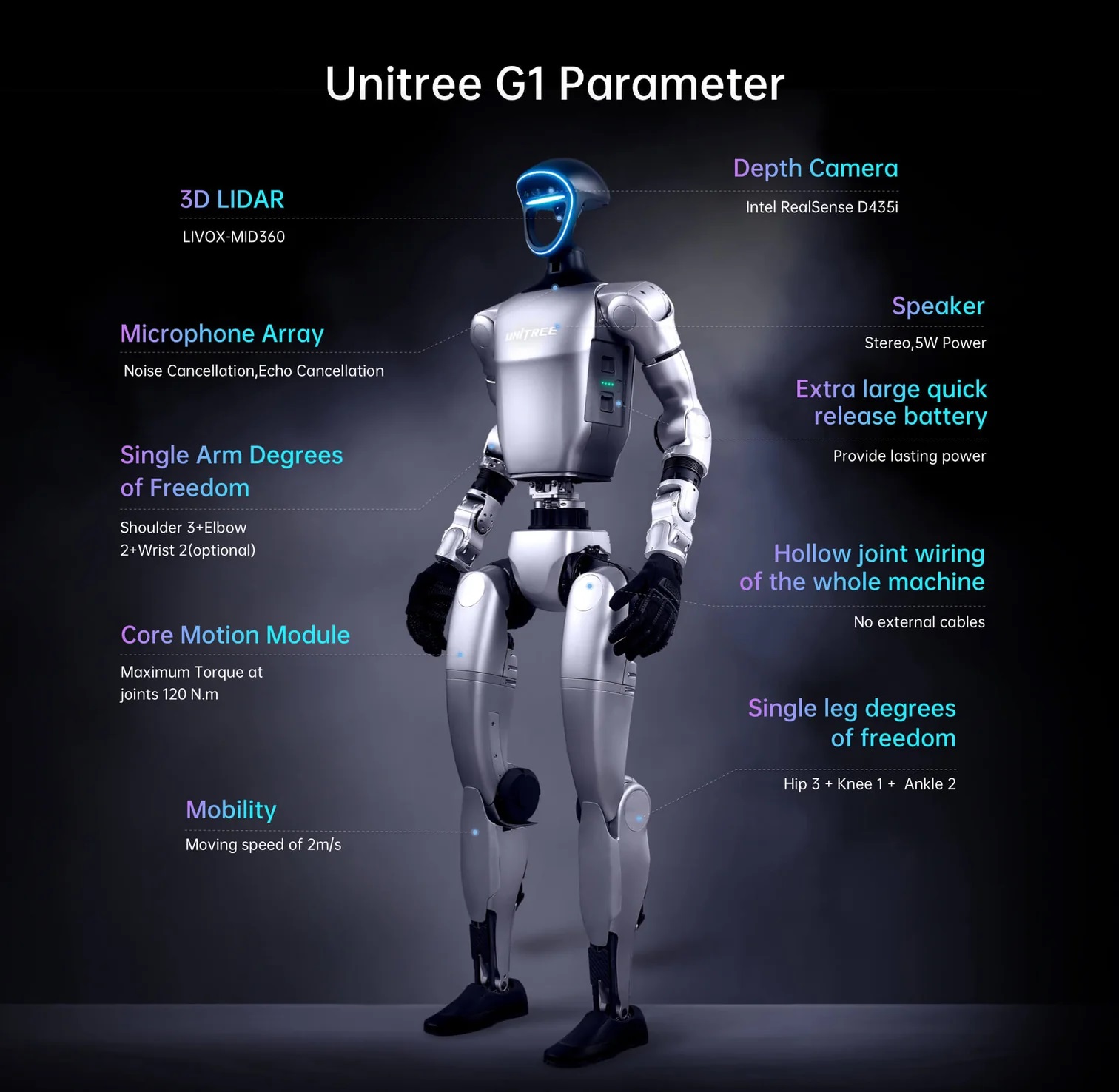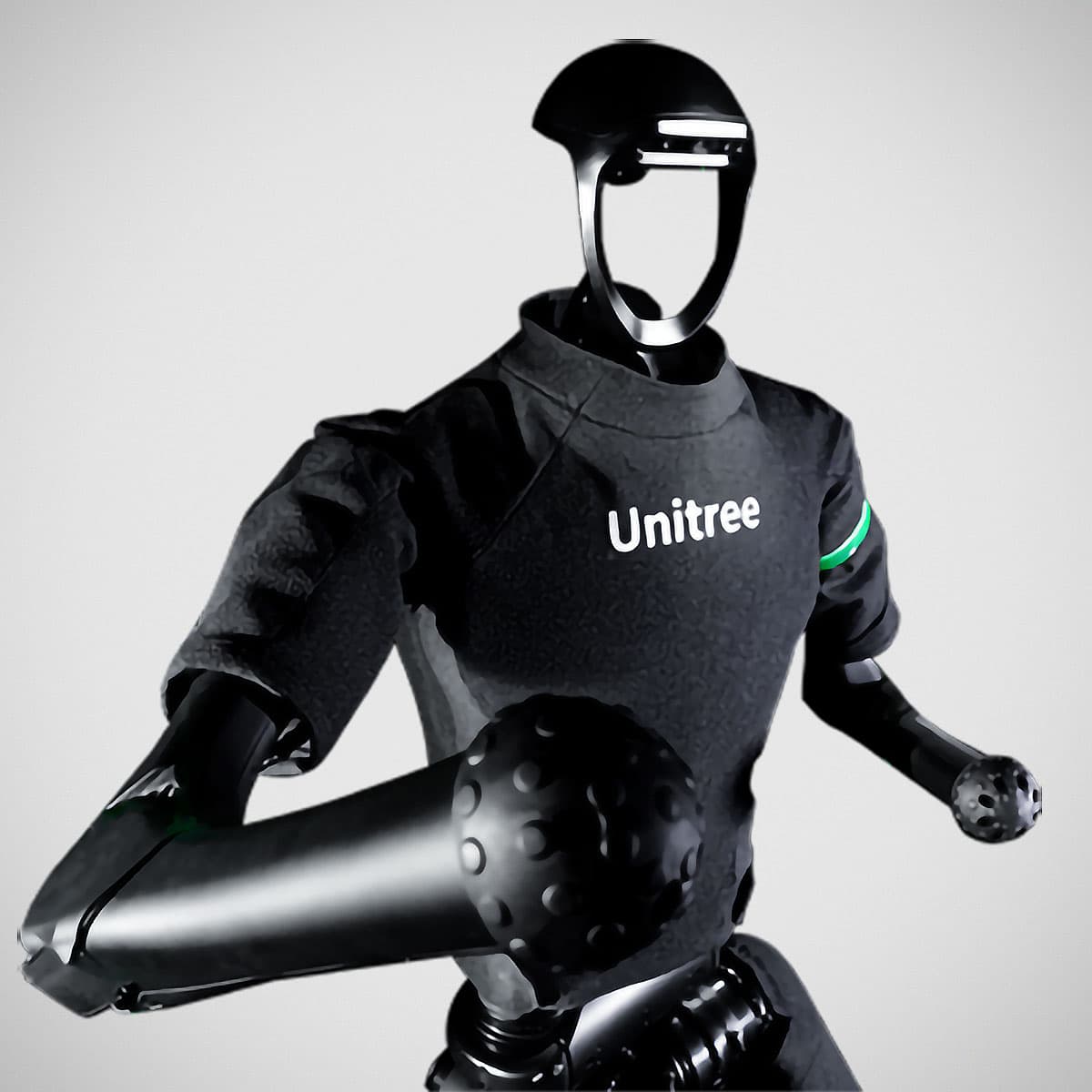
A brief social media post from robotics enthusiast @kimmonismus highlights a key advancement in legged robotics: the Unitree H1 humanoid robot transitioning from a jogging gait to a running gait within seconds. The accompanying video, though short, provides a clear visual demonstration of this dynamic capability.
What Happened

The core claim is straightforward: the Unitree H1 robot can "outrun" a human, accelerating from a jog to a run. The video evidence supports the basic functionality—the robot is shown moving at a steady jog before its stride lengthens and frequency increases, entering a recognizable running motion. This represents a step beyond static walking or pre-programmed trotting, implying real-time adaptation and control.
Context in Humanoid Robotics
Dynamic gait transition is a non-trivial challenge in bipedal robotics. Maintaining balance while shifting between locomotion modes (walk, jog, run) requires sophisticated real-time state estimation, momentum control, and actuator response. For humanoid robots, running introduces a flight phase where both feet are off the ground, dramatically increasing the complexity of stability calculations and hardware demands.
Unitree, primarily known for its highly dynamic quadruped robots like the Go1 and B2, entered the humanoid race with the H1. The company's expertise in high-torque actuators and robust mechanical design for quadrupeds is now being applied to a bipedal form factor. Demonstrations of dynamic running, even in controlled environments, are a key benchmark for judging a platform's potential for real-world, unstructured deployment.
Technical Implications

While the source provides no technical specifications, the demonstration suggests progress in several areas:
- Actuator Performance: Running requires explosive power output and rapid force modulation. The H1 likely utilizes Unitree's proprietary high-torque density joint actuators to achieve the necessary impulse.
- Control Architecture: The transition appears smooth, indicating a robust whole-body controller (WBC) capable of handling the non-linear dynamics of gait switching. This likely involves hybrid zero dynamics or similar model-based reactive control strategies.
- State Estimation: Accurate perception of the robot's own momentum and orientation is critical during the flight phase of a run. This points to a capable sensor fusion system integrating IMU, joint encoders, and potentially vision.
gentic.news Analysis
This demonstration from Unitree is a direct counterpoint to the current narrative dominated by Tesla's Optimus and Boston Dynamics' Atlas. While Optimus videos have focused on precise manipulation and slow, deliberate walking, and Atlas on parkour-style agility, Unitree is pushing the envelope on raw, dynamic locomotion speed. This aligns with a broader trend we identified in our 2025 year-end review: the fragmentation of the humanoid market into specialized niches—some focusing on industrial dexterity, others on logistics mobility, and others, like Unitree, on dynamic movement.
The H1's progress also reflects the intense competition in actuator technology. As we covered in our deep-dive on Figure AI's partnership with BMW, the race is not just about software but about the fundamental hardware that enables force-controlled, compliant movement. Unitree's vertical integration in actuator manufacturing, a lesson from its quadruped success, gives it a potential cost and performance advantage in creating powerful, affordable platforms. However, the true test will be benchmarks on standardized courses measuring speed, efficiency, and stability over varied terrain—metrics where Boston Dynamics has historically set the bar.
This video is a tactical move in a strategic war. It serves to attract developer interest, secure potential commercial and research partnerships, and position the H1 as a platform for high-mobility applications, potentially in security or rapid inspection scenarios where speed is a primary requirement.
Frequently Asked Questions
How fast can the Unitree H1 run?
The source video does not provide a specific speed measurement. Based on the gait and stride length visible in similar demonstrations, a running speed of 3-4 meters per second (roughly 7-9 mph) is a plausible estimate, though unconfirmed by Unitree.
What is Unitree Robotics known for?
Unitree Robotics is a Chinese company best known for manufacturing highly dynamic and relatively affordable quadruped (four-legged) robots like the Go1, A1, and B2. These robots are widely used in research and development. The H1 represents their major foray into the humanoid robotics market.
How does the Unitree H1 compare to Boston Dynamics' Atlas?
Atlas, using hydraulic actuators, is currently the gold standard for dynamic agility and balance, capable of complex parkour. The Unitree H1, using electric actuators, appears focused on achieving efficient and fast bipedal locomotion. Atlas demonstrates a wider range of complex behaviors, while the H1 may aim for robustness and commercial viability. They represent different engineering philosophies and stages of development.
What are the main technical challenges for a running humanoid robot?
Key challenges include: generating sufficient actuator torque/power for explosive push-off; designing lightweight yet strong limbs to handle high impact forces; developing control algorithms that maintain balance during the flight phase; and creating state estimation systems that accurately predict landing points and adjust posture in milliseconds.