What the Researchers Propose
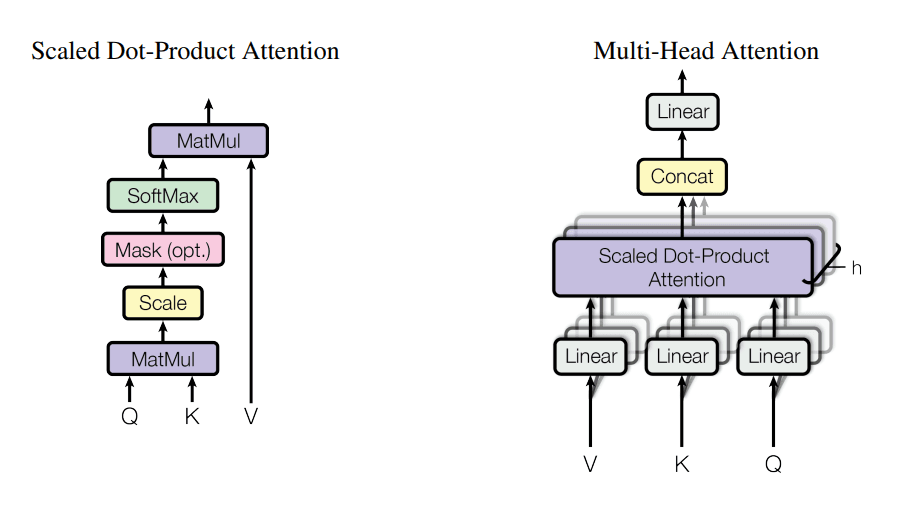
A theoretical analysis paper on arXiv, "QV May Be Enough: Toward the Essence of Attention in LLMs," makes a bold architectural claim: the standard Query-Key-Value (QKV) attention mechanism in Transformers may be over-parameterized. The authors argue that the Key (K) projection is not a fundamental component and can be eliminated or simplified without losing representational power.
The work starts from a linguistic first-principles perspective, analyzing attention through part-of-speech (POS) tagging and syntactic dependencies. The core thesis is that the semantic role of the Key vector—to compute compatibility scores with the Query—can be functionally absorbed or rendered unnecessary through a re-parameterization of the attention operation.
The QV Paradigm and QV-Ka Scheme
The paper introduces the "QV paradigm," a conceptual framework where attention is computed directly between Queries and Values, with the Key matrix removed. The authors then propose a specific optimization scheme called QV-Ka, which stands for "Query-Value with Key approximation." In this scheme:
- The standard
K = X * W_Kprojection is eliminated. - The attention compatibility scores are computed using a simplified, often fixed or shared, transformation of the input tokens.
- The
QandVprojections remain, maintaining the model's ability to generate context-aware representations.
The authors provide a unified explanatory framework showing how existing efficiency-focused architectures like Multi-Query Attention (MQA), Grouped-Query Attention (GQA), and Multi-Latent Attention (MLA) can be viewed as specific points on a spectrum of simplifying the K projection. QV-Ka is positioned as the logical endpoint of this trajectory.
Empirical Validation
The paper includes experimental validation, though the specific benchmarks, model scales, and exact numerical results are not detailed in the abstract. The authors state they provide "empirical evidence for [the QV paradigm's] validity" and that the QV-Ka scheme is "further substantiated through experimental validation." The claim is that models using the QV-Ka scheme achieve comparable performance to standard QKV models on unspecified language understanding tasks, while reducing parameter count and computational overhead associated with the W_K projection matrix.

Theoretical Implications
The primary contribution is interpretable theory. The paper deconstructs the attention mechanism from a linguistic-information-flow perspective, arguing that the essential function is for a Query (seeking token) to retrieve a Value (context token). The Key, in this view, is merely an intermediary computation that can be optimized away. This analysis aims to establish a "robust foundation for the future evolution of large language model architectures" by clarifying the core, irreducible components of attention.

Reference: Zhang, Y., et al. "QV May Be Enough: Toward the Essence of Attention in LLMs." arXiv preprint arXiv:2603.15665 (2026).