What Happened
A new research paper, "ReBOL: Retrieval via Bayesian Optimization with Batched LLM Relevance Observations and Query Reformulation," was posted to arXiv on March 20, 2026. The work addresses a fundamental limitation in modern AI-powered search and retrieval systems.
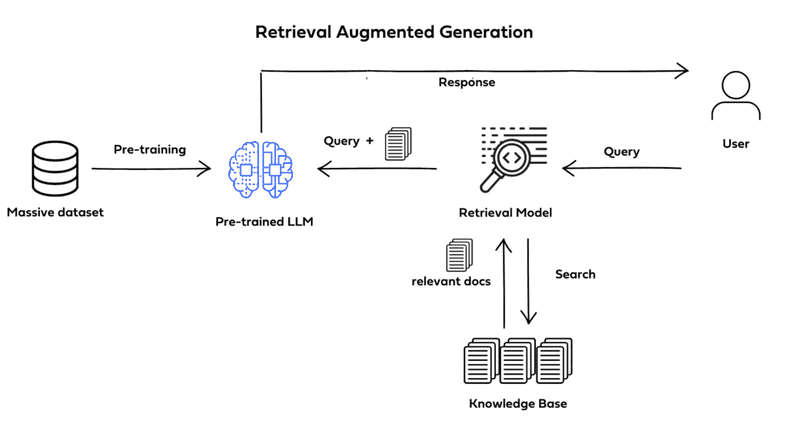
Currently, a standard Retrieval-Augmented Generation (RAG) pipeline involves two main steps: first, an initial retrieval of documents using vector similarity search (e.g., with embeddings), and second, a "reranking" of the top-k results using a more powerful but expensive Large Language Model (LLM) to judge relevance. The authors argue this approach is flawed from the start because the initial vector search cannot capture the nuanced, contextual relationship between a query and a document. It also assumes a single, simple distribution of relevance, which may not reflect reality. While techniques like LLM query reformulation try to improve the first step, they still rely on the same underlying vector similarity retrieval.
ReBOL proposes a different architecture. Instead of a linear retrieve-then-rerank process, it frames retrieval as a Bayesian Optimization (BO) problem. The goal is to efficiently find the most relevant documents in a large corpus by strategically selecting which ones to evaluate with an LLM.
Technical Details
The ReBOL method works in two key phases:
Posterior Initialization with Query Reformulation: The process begins by using an LLM to generate multiple reformulations of the user's original query. These varied queries are used to initialize a "multimodal posterior"—a probabilistic model that represents the system's belief about the relevance of every document in the corpus. This starting point is richer than a single vector search point.
Iterative Bayesian Optimization: The system then enters a loop. It uses the current posterior to select a diverse batch of documents that are promising candidates for high relevance. This batch is sent to an LLM for direct query-document relevance scoring. The scores from the LLM are then used to update the Bayesian posterior, refining the model's understanding of what makes a document relevant. This loop repeats, allowing the system to intelligently explore the document space and exploit what it learns to hone in on the best results.
The authors experimented with techniques for query reformulation and batch diversification to improve the BO process. They evaluated ReBOL against strong LLM reranker baselines on five standard BEIR (Benchmarking Information Retrieval) datasets, using two powerful LLMs: Gemini-2.5-Flash-Lite and GPT-5.2.
The results were significant. ReBOL consistently achieved higher recall (finding more truly relevant documents) while maintaining competitive ranking quality (NDCG). For example, on the Robust04 dataset, ReBOL achieved a Recall@100 of 46.5%, compared to 35.0% for the best LLM reranker baseline—an 11.5 percentage point (or ~33%) improvement. It also achieved a higher NDCG@10 (63.6% vs. 61.2%). Critically, the paper demonstrates that through batching and efficient optimization, ReBOL can achieve latency comparable to standard LLM rerankers, making it a practical consideration, not just a theoretical improvement.
Retail & Luxury Implications
The core challenge ReBOL tackles—finding the most relevant items in a vast, unstructured dataset based on a nuanced query—is the central problem of luxury and retail search.

- Product Discovery & Search: A customer searching for "a summer dress for a garden wedding that isn't too formal" presents a complex, multi-faceted query. Traditional vector search might retrieve dresses tagged "summer" and "wedding," but miss the subtle stylistic cue of "garden party" or the exclusion of "too formal." ReBOL's iterative, LLM-guided approach could more effectively navigate a catalog of millions of SKUs, product descriptions, and style guides to surface the perfect item, dramatically improving recall without sacrificing speed.
- Internal Knowledge Retrieval: For design teams, trend forecasters, or CRM analysts, finding relevant past campaign data, customer feedback, or material research in internal databases is crucial. ReBOL's ability to handle ambiguous, long-tail queries (e.g., "Find examples where we used sustainable silk alternatives after negative press in 2024") could unlock deeper organizational intelligence.
- Personalized Recommendations & Lookbooks: The method's strength in modeling a multimodal relevance distribution aligns with the need to balance multiple customer signals: purchase history, browsing behavior, stated preferences, and current context. It could power a next-generation recommendation engine that doesn't just suggest similar items, but constructs a coherent set of products (a "look") that satisfies a complex set of latent desires.
However, it is vital to note this is a research paper, not a deployed product. The evaluation is on academic IR datasets, not live e-commerce catalogs with real-time constraints, dynamic inventory, and business rules (like profitability or stock level). The computational cost, while managed, is non-trivial, involving multiple LLM calls per query. For a luxury retailer, implementing this would require significant investment in AI engineering, robust evaluation on proprietary data, and careful calibration to balance precision (showing the right item first) with the improved recall ReBOL offers.
gentic.news Analysis
This paper is part of a clear and accelerating trend on arXiv and in the broader AI research community: moving beyond simple RAG pipelines to more sophisticated, agentic, and optimization-driven retrieval frameworks. The use of Bayesian Optimization here is particularly notable, as it represents a shift from deterministic retrieval to a probabilistic, learning-based search process. This follows a week of intense activity on arXiv, where the platform featured 43 articles, including related work on LLMs' ability to self-purify against poisoned data in RAG systems and new methods to mitigate unfairness in recommenders.

The choice of Gemini-2.5-Flash-Lite and GPT-5.2 as the backbone LLMs underscores the industry's reliance on these ever-more-capable foundational models for complex reasoning tasks. As covered in our recent article on LLMs de-anonymizing users, the capabilities of these models continue to expand in surprising ways, including deep pattern recognition that can be harnessed for relevance judgment.
For retail AI leaders, the implication is that the "search and retrieval" stack is becoming a primary competitive battleground. It is no longer just about having good embeddings. The winning architecture will likely involve an intelligent controller (like ReBOL's BO agent) that orchestrates multiple LLM calls, queries different data modalities, and iteratively refines its understanding of customer intent. This aligns with the broader move towards autonomous AI agents, a technology we've noted frequently uses large language models as their core engine. The challenge, as highlighted in our coverage of Lowe’s struggle with AI agent proliferation, will be managing the cost, complexity, and governance of these more autonomous systems in a production environment. ReBOL offers a promising glimpse of the next generation of search intelligence, but its journey from arXiv preprint to boardroom ROI will require careful, domain-specific engineering.