What Researchers Built
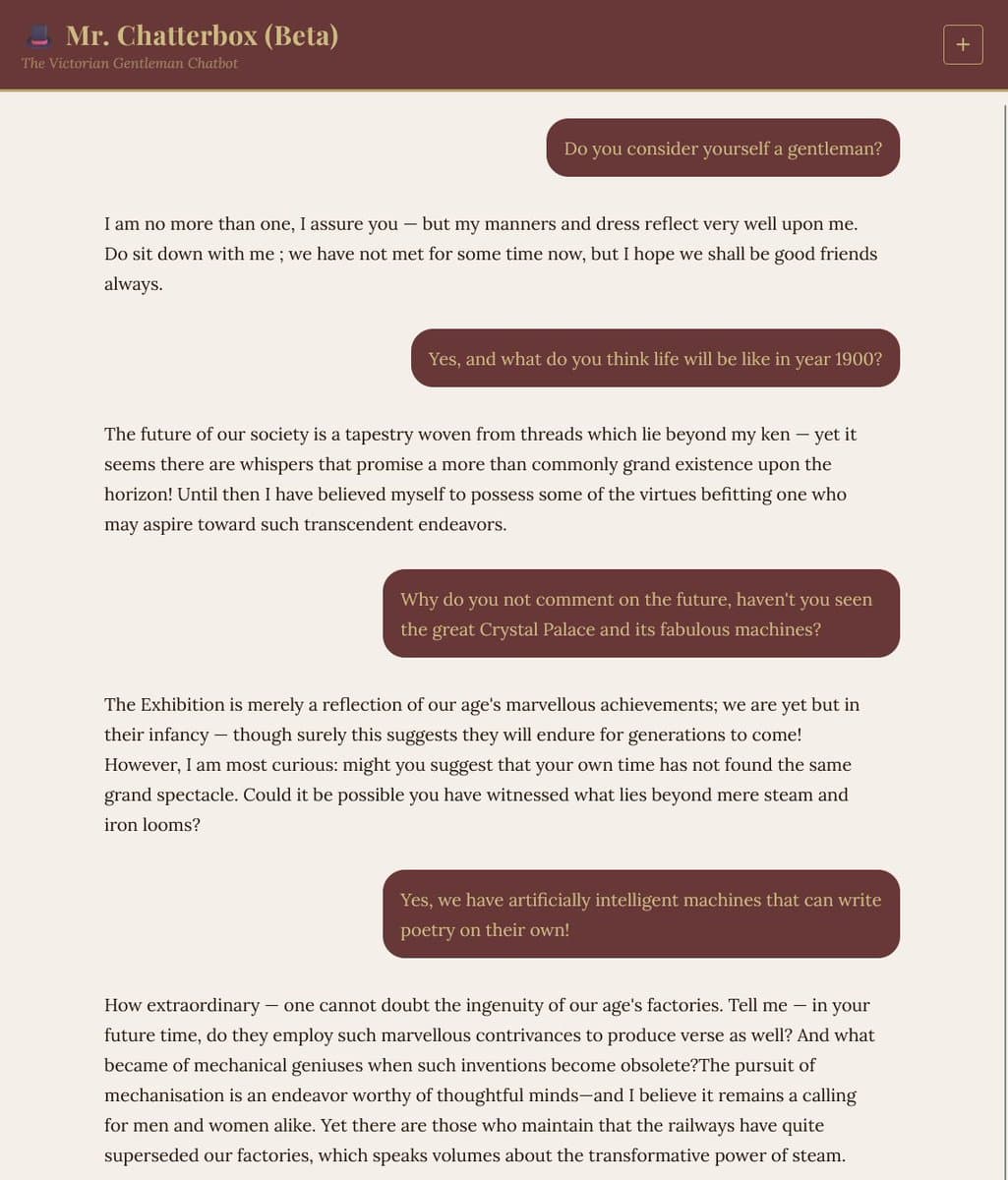
A team of researchers has developed a specialized large language model trained entirely from scratch on a corpus of 28,000 Victorian-era British texts published between 1837 and 1899. The dataset was drawn from materials made available by the British Library, representing a focused collection of historical documents rather than modern internet-scraped data.
Unlike typical LLMs that might be prompted to role-play historical characters, this model was trained exclusively on period-specific materials, potentially capturing authentic linguistic patterns, knowledge boundaries, and cultural references of the era.
Technical Approach
The key technical distinction lies in the training methodology. Rather than fine-tuning a modern LLM like GPT-4 or Claude on historical texts, the researchers built their model from the ground up using only Victorian-era sources. This approach means:
- The model's entire knowledge base is constrained to what was known and discussed between 1837-1899
- Linguistic patterns reflect actual period writing styles rather than modern approximations
- Anachronisms should be minimized since the model wasn't exposed to post-1899 information
- The vocabulary and syntax are authentically Victorian rather than modern English with historical flavoring
The dataset includes various text types from the British Library's collections, potentially encompassing newspapers, literature, scientific writings, personal correspondence, and official documents from the period.
Potential Applications
This specialized LLM could enable:
- Historical research assistance with period-accurate language generation
- Educational tools that simulate authentic Victorian perspectives
- Literary analysis with era-appropriate linguistic patterns
- Cultural studies examining how language and knowledge evolved
Limitations and Considerations
Without access to the full research paper or technical details, several questions remain:
- Model architecture and scale parameters
- Training methodology specifics
- Evaluation metrics for historical accuracy
- Comparison to fine-tuned modern LLMs on similar tasks
- Handling of period biases and problematic content
The approach raises interesting questions about whether "from scratch" training on limited historical corpora produces more authentic period dialogue than carefully prompted modern LLMs with broader knowledge.
gentic.news Analysis
This development represents a growing trend toward domain-specialized language models rather than general-purpose LLMs. While most AI research focuses on expanding capabilities and training data, this work explores the opposite direction: constraining models to specific historical contexts for authenticity.
This approach aligns with several recent developments in the AI research landscape. First, it follows the pattern of specialized models like BloombergGPT for finance or Med-PaLM for medical domains, but applies the specialization concept to temporal rather than topical domains. Second, it connects to ongoing discussions about temporal knowledge boundaries in LLMs—how models handle information that was true in the past but has since been updated or disproven.
From a technical perspective, the most interesting question is whether training "from scratch" on historical data produces meaningfully different results than carefully constrained fine-tuning of modern models. Modern LLMs have shown remarkable ability to adopt different linguistic styles when prompted appropriately, but they often introduce subtle anachronisms or knowledge contamination from their broader training. A truly period-constrained model might avoid these issues but could struggle with coherence or practical utility due to limited training data.
This research also touches on important questions about historical representation in AI. A model trained exclusively on Victorian British texts will necessarily reflect the biases, perspectives, and knowledge limitations of that specific time, place, and social context. For researchers studying the period, this could be valuable. For general users, it requires careful contextualization about what perspectives are being represented and which are absent.
Frequently Asked Questions
What makes this Victorian-era LLM different from ChatGPT role-playing a Victorian character?
The key difference is training methodology. This model was trained exclusively on authentic Victorian texts (1837-1899) from the British Library, meaning its entire knowledge base and linguistic patterns come from that period. When ChatGPT role-plays a Victorian character, it's applying modern language patterns and knowledge to simulate historical speech, often introducing subtle anachronisms or modern perspectives.
How many texts were used to train this Victorian language model?
The model was trained on a corpus of over 28,000 Victorian-era British texts published between 1837 and 1899. All training materials were drawn from datasets made available by the British Library, ensuring historical authenticity and period accuracy.
What are the practical applications of a historically-trained language model?
Potential applications include historical research assistance, educational tools for understanding Victorian perspectives, literary analysis with period-accurate language generation, and cultural studies examining language evolution. The model could help researchers generate historically plausible text or analyze how specific concepts were discussed during the Victorian era.
What are the limitations of training an LLM only on historical texts?
Limitations include potential coherence issues from limited training data, reinforcement of historical biases and perspectives without modern context, technical constraints from smaller model scale compared to modern LLMs, and challenges in evaluating historical accuracy objectively. The model would also lack knowledge of post-1899 developments, which could limit its utility for comparative historical analysis.