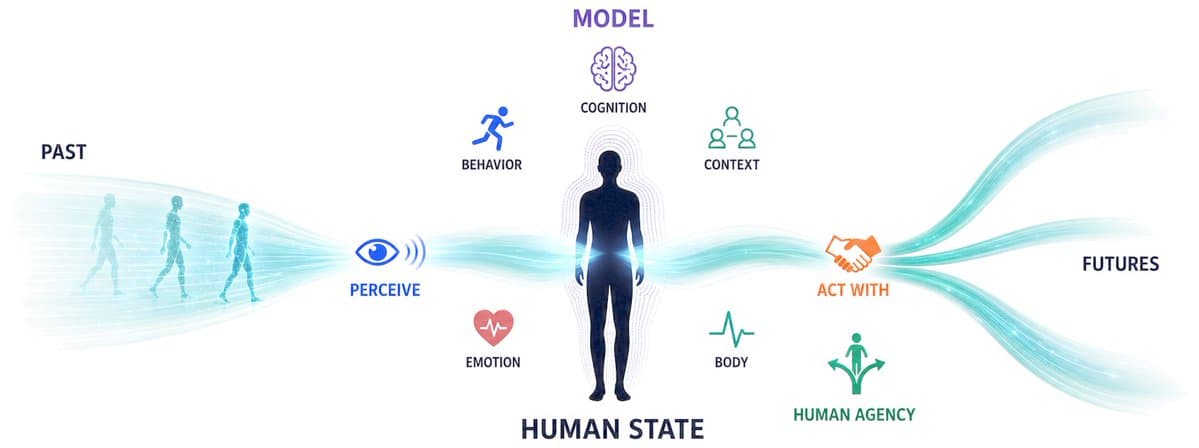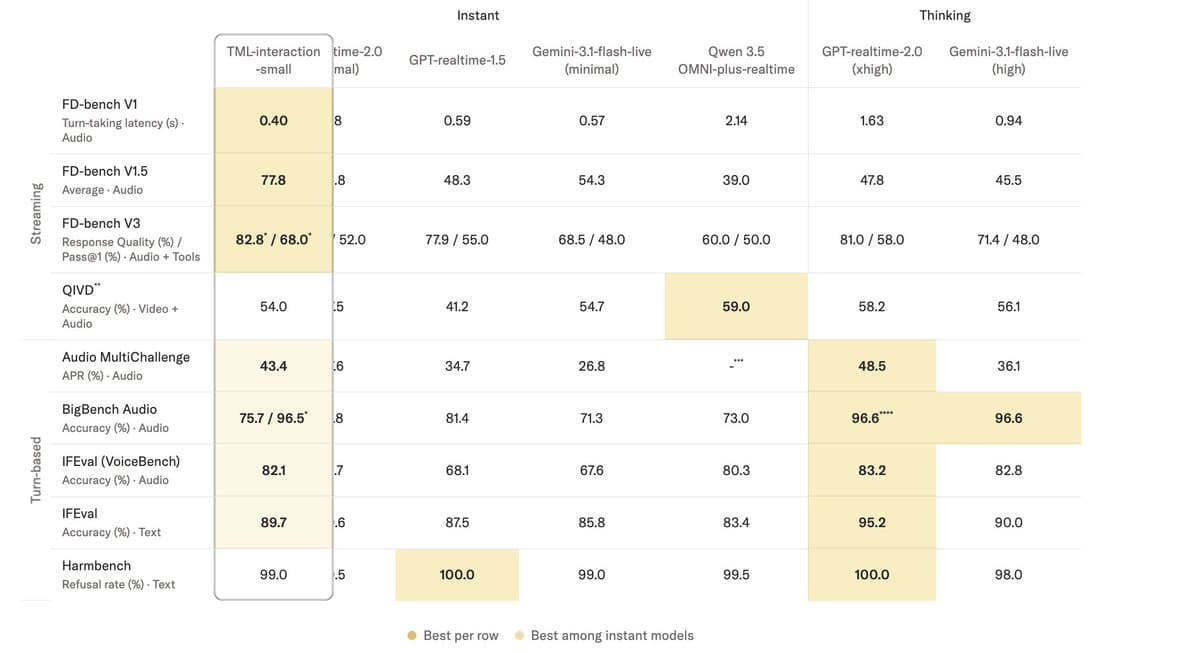
Thinking Machines unveiled a native interaction model that simultaneously listens, sees, speaks, interrupts, reacts, thinks in the background, and uses tools. The approach, described by analyst @kimmonismus as "bigger than it sounds at first glance," targets the fundamental turn-based bottleneck of current AI assistants.
Key facts
- Model simultaneously listens, sees, speaks, interrupts, reacts, thinks in background
- Uses tools natively, not via cobbled-together pipeline
- Targets turn-based bottleneck of current AI assistants
- Company has not disclosed training details or benchmark scores
Most AI assistants today operate like email with very clever replies: you say something, the model waits, it replies, you wait. Thinking Machines' new Interaction Model breaks this barrier by integrating perception, reasoning, and action as a single native capability — not a pipeline of speech-to-text, turn detection, and agent hacks [According to @kimmonismus].
The model can simultaneously listen, see, speak, interrupt, react, think in the background, and use tools. This isn't a cobbled-together stack of separate components; it's a unified model designed from the ground up for real-time collaboration. The company's demos show the AI noticing user hesitation, jumping in when it sees something relevant, and anticipating next moves while the user is still speaking.
The deeper shift: from prompt-reply to presence
The unique take here is that Thinking Machines is not just iterating on ChatGPT's capabilities — they're redefining the interaction paradigm itself. Good collaboration doesn't happen because someone gives a perfect answer at the end; it happens because someone is present in the moment. If the model works as demonstrated, AI shifts from "prompt in, answer out" to something that feels more like working alongside a human colleague who notices when you hesitate and anticipates your next move.
What's at stake
Current AI assistants from OpenAI, Google, and Anthropic rely on turn-based architectures with separate speech-to-text, turn detection, and tool-calling pipelines. Thinking Machines' native approach could reduce latency and improve fluidity — but the real question is whether the model can maintain coherence across simultaneous modalities without hallucinating or losing context. The company has not disclosed training details, parameter counts, or benchmark scores for the new model.
Key Takeaways
- Thinking Machines unveiled a native interaction model that simultaneously listens, sees, speaks, interrupts, reacts, thinks in background, and uses tools.
- The approach targets the fundamental turn-based bottleneck of current AI assistants.
What to watch
Watch for Thinking Machines to release technical details — architecture, parameter count, training data mix — and independent benchmarks comparing latency and task completion against GPT-4o and Gemini. The first enterprise integrations will reveal whether the model maintains coherence under real-world multitasking loads.