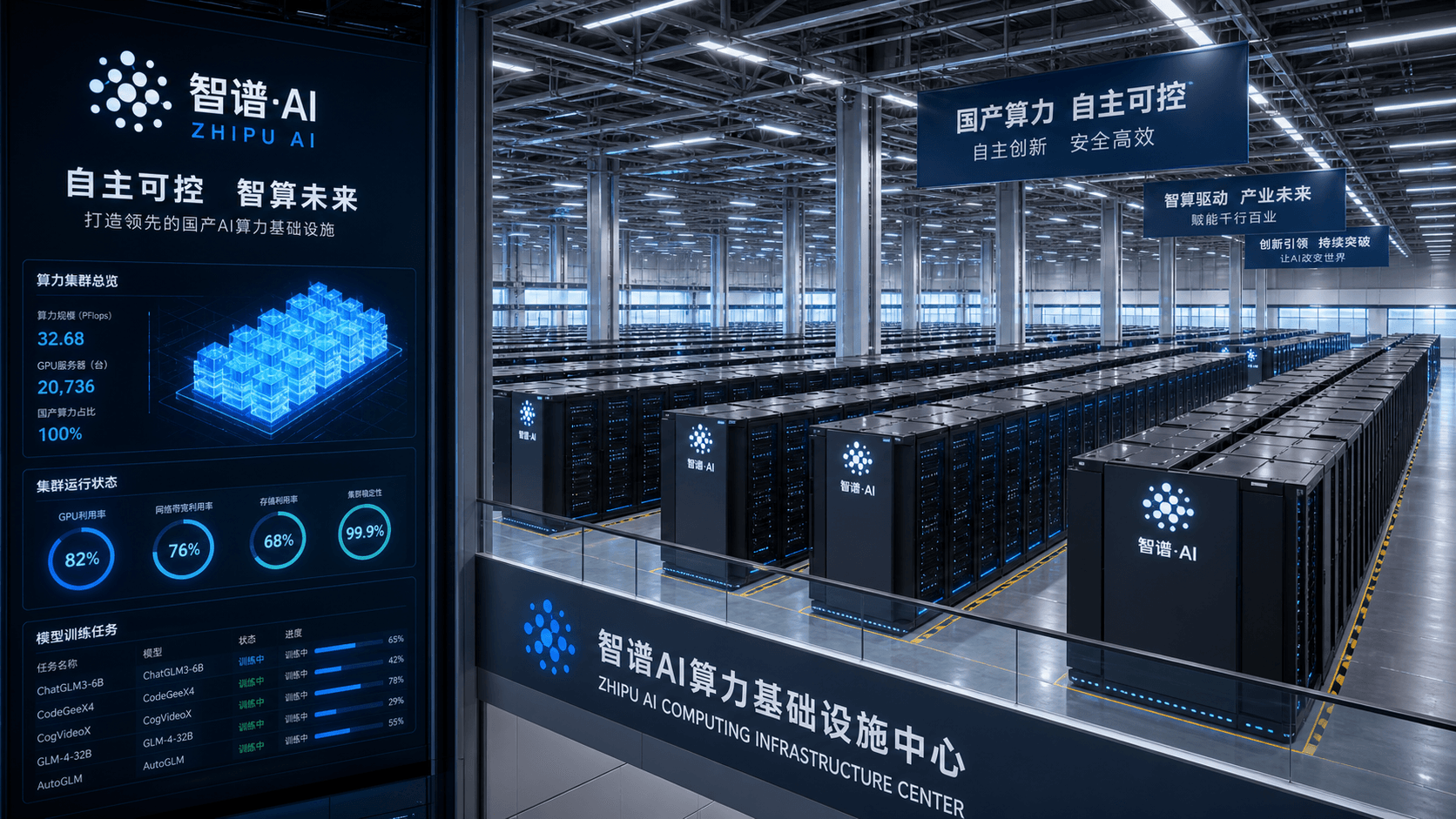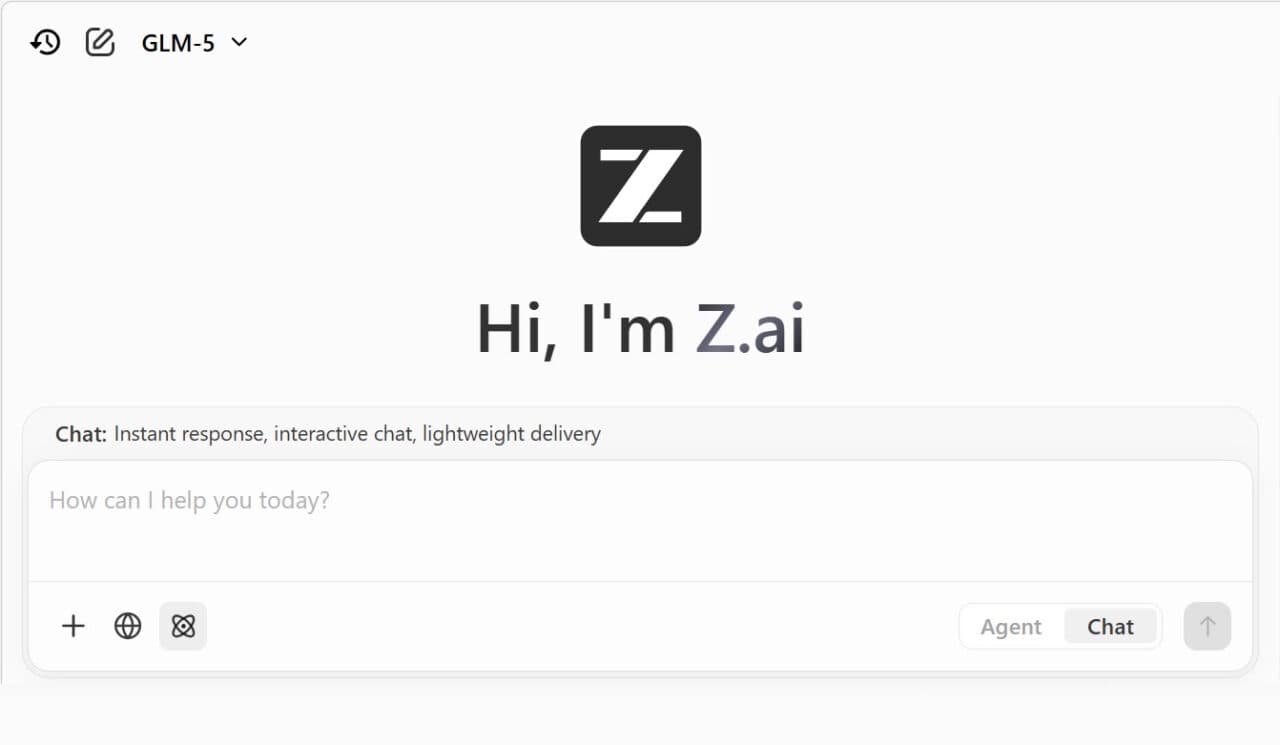
Zhipu AI, a leading Chinese AI company, has announced the release of its GLM-5.1 series of large language models. The announcement, made via social media, positions the new models as a significant step forward for the Chinese AI ecosystem, with the company claiming its flagship model is now "coming closer" to the performance of top-tier Western models like OpenAI's GPT-4o and Anthropic's Claude 3.5 Sonnet.
What's New
The GLM-5.1 release includes several model variants, with the most notable being the GLM-5.1-9B/1M. This model features a 9-billion parameter base and a 1-million token context window. The "1M" context length represents a substantial increase over the standard 128K or 200K contexts common in many open-source models, aiming to match the long-context capabilities of frontier models.
Other variants in the series include smaller, more efficient models, but the 9B/1M version is positioned as the performance leader. Zhipu AI's claim is that this model demonstrates capabilities that significantly narrow the perceived performance gap between leading Chinese LLMs and the current Western state-of-the-art.
Technical Details & Availability
As of this announcement, Zhipu AI has not released a full technical report or comprehensive benchmark scores. The model is expected to be accessible through Zhipu's API platform, continuing the company's strategy of offering both open-source and proprietary commercial models. The GLM-5.1 series likely builds upon the architecture of its predecessor, GLM-4, which utilized a General Language Model framework with a unique mix of autoregressive and autoencoding pretraining objectives.
The key advertised feature is the 1-million token context window, which enables the processing of extremely long documents, lengthy codebases, or extended multi-turn conversations without losing coherence. This directly competes with features offered by Claude 3.5 Sonnet (200K context) and GPT-4o (128K context).
How It Compares
Zhipu AI's claim of closing the gap is a bold one in the competitive LLM landscape. The previous generation, GLM-4, was a capable model but generally benchmarked below GPT-4 and Claude 3 Opus on standard evaluations like MMLU, GPQA, and coding benchmarks.
If GLM-5-9B/1M's performance claims hold under independent verification, it would represent one of the most powerful models originating from China's domestic AI research efforts. Its 9B parameter size is also noteworthy; achieving high performance at this scale would suggest significant efficiency gains, as frontier models like GPT-4o and Claude 3.5 are understood to be orders of magnitude larger.
Key Claimed Positioning:
- Performance: Close to GPT-4o & Claude 3.5 Sonnet.
- Context: 1M tokens, surpassing the standard context of its claimed competitors.
- Scale: 9B parameters, potentially offering a more efficient cost-to-performance ratio.
What to Watch
The critical next step is independent evaluation. The AI community will be looking for published scores on established benchmarks such as:
- MMLU (Massive Multitask Language Understanding)
- HumanEval or MBPP (Code Generation)
- GPQA (Graduate-Level Google-Proof Q&A)
- IFEval (Instruction Following)
Without these numbers, the claim of being "close" remains qualitative. Furthermore, real-world performance on complex, multi-step reasoning tasks and susceptibility to jailbreaking are crucial differentiators that benchmarks don't always capture.
Another factor is availability and pricing for the API. Zhipu AI's ability to offer a model with competitive performance at a lower cost than OpenAI or Anthropic could drive significant adoption in cost-sensitive markets and applications.
gentic.news Analysis
This release is the latest move in Zhipu AI's aggressive push to establish itself as a global AI leader, not just a domestic champion. It follows the company's previous major update, GLM-4, released in early 2024, which itself was a substantial leap forward. The pattern shows a rapid iteration cycle, typical of the intense competition within China's AI sector involving rivals like Baidu (Ernie), Alibaba (Qwen), and 01.AI (Yi).
The claim of nearing GPT-4o-level performance aligns with a broader, observable trend we've been tracking: the performance gap between top Chinese and Western LLMs is indeed shrinking incrementally with each generation. However, claiming parity with the very frontier (Claude 3.5, GPT-4o) is a new and significant assertion. If validated, it could alter the global competitive dynamics, providing a high-performance alternative for developers and enterprises outside of the OpenAI/Anthropic/Google ecosystem.
This development also connects to the strategic context of increasing technological self-reliance in China. A model that performs close to the international best, developed domestically and deployable on local infrastructure, carries significant strategic weight. For global practitioners, the emergence of another credible, high-performance model provider increases options and could exert downward pressure on API pricing and spur more innovation in model efficiency.
Frequently Asked Questions
What is GLM-5.1?
GLM-5.1 is the latest series of large language models released by the Chinese AI company Zhipu AI. The flagship model, GLM-5.1-9B/1M, is a 9-billion parameter model with a 1-million token context window. Zhipu AI claims its performance is close to leading Western models like OpenAI's GPT-4o and Anthropic's Claude 3.5 Sonnet.
How does GLM-5.1 compare to GPT-4 and Claude?
Based on Zhipu AI's announcement, GLM-5.1 is claimed to be "coming closer" in performance to GPT-4o and Claude 3.5 Sonnet. Its 1-million token context window is technically larger than the 128K-200K context of those models. However, comprehensive, independent benchmark scores comparing reasoning, coding, and knowledge capabilities are not yet publicly available to fully verify this claim.
Is GLM-5.1 open source?
Zhipu AI has not specified the release model for GLM-5.1. The company typically follows a dual strategy, releasing some model variants as open-source (like parts of the GLM-3 and GLM-4 series) while offering its most advanced models via a commercial API. The GLM-5.1-9B/1M is most likely to be a proprietary API offering initially.
Why does the 1M context window matter?
A 1-million token context window allows the model to process and reason over extremely long documents—such as entire books, lengthy legal contracts, massive code repositories, or hours of transcribed conversation—in a single prompt. This enables more coherent analysis of long-form content and reduces the need for complex chunking and summarization techniques, potentially unlocking new use cases in research, enterprise document analysis, and long-term conversational agents.