Key Takeaways
- Shark Beauty's VP Julie Bailey Blanche revealed at Glossy's E-Commerce Summit that a community-driven, benefit-first marketing strategy drove 40% Q1 2026 skin-care growth.
- The approach prioritizes UGC and consumer outcomes over technical education.
What Happened
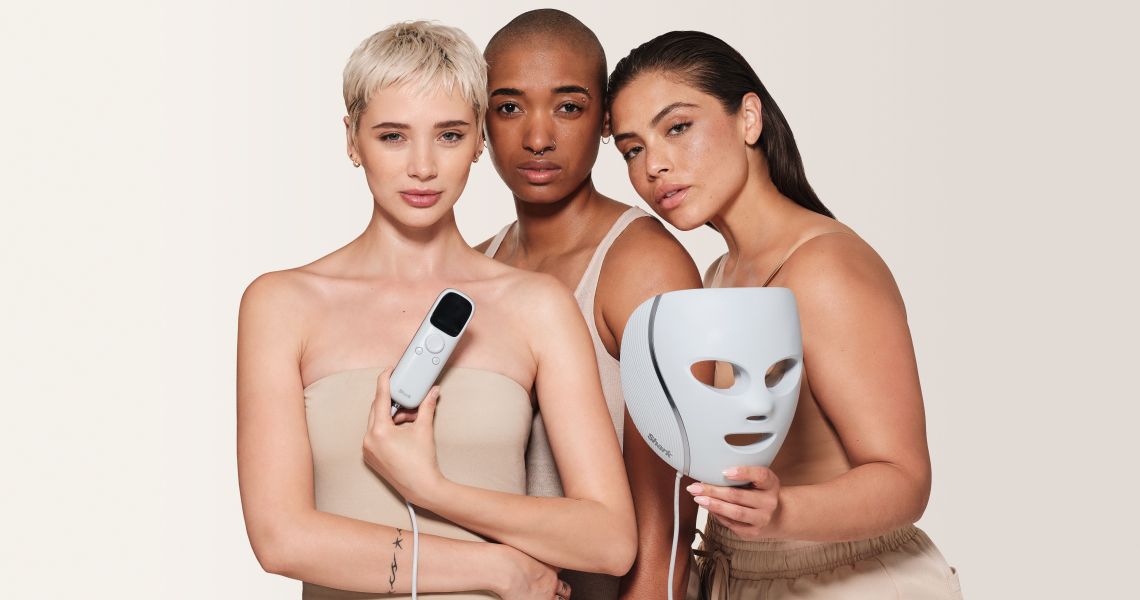
At Glossy's annual E-Commerce Summit in Miami Beach, Julie Bailey Blanche, VP of global marketing at Shark Beauty, detailed the strategy behind the brand's remarkable growth. Parent company SharkNinja reported a 15.6% net sales increase in Q1 2026 to $1.4 billion, driven by a 40% surge in skin-care device sales. The beauty division, launched in 2021, has since built a cult following for hair tools, LED face masks, and at-home facial systems.
The Core Insight: Lead with 'The What'
Blanche's central thesis is that consumers are overwhelmed by science-heavy beauty marketing. "The consumer doesn't care about how they get [a product's promised results], they care about what they get," she said. Her team leads with the benefit (e.g., "eliminates frizz") rather than the technology (ion technology), using the technical details only as supporting proof.
This approach counters a trend where brands emphasize innovation for its own sake. "There are a lot of brands that focus on innovation — almost innovation for innovation's sake," Blanche noted. "My job is to make sure [our] engineers, the marketing folks and the social teams are focused on the what."
The Community Engine: 70% UGC
Shark Beauty's community strategy relies on a 70/30 content split: 70% user-generated content (UGC) from creators and unpaid users, 30% brand-produced content. This ensures authenticity and relatability — shoppers see "their neighbor" using the product, not a polished ad.
To maintain authenticity, the team involves creators early in product development. "We'll give them the product weeks and months in advance… so that they feel like, as they're using it, I'm not telling them how to use it; I'm actually observing how they're using it," Blanche said. This process has even uncovered new use cases.
Retail & Luxury Implications
For luxury and retail brands, Shark Beauty's playbook offers a counterintuitive lesson: in an era of AI-powered personalization and tech-forward marketing, simplicity and community trust can outperform complexity. The approach is particularly relevant for:
- Luxury skincare and cosmetics: Brands often lead with clinical studies or ingredient science. Shark Beauty's data suggests that before-and-after visuals and authentic UGC may drive higher conversion than technical claims.
- High-consideration purchases: LED masks and facial devices are premium products. Community validation reduces purchase anxiety without requiring consumers to become experts.
- Brand loyalty: Involving creators in product development builds advocates who feel ownership, driving repeat purchases.
Business Impact
SharkNinja's 40% skin-care device growth in Q1 2026, on top of 30% growth in 2024 and 15.7% in 2025, demonstrates the strategy's scalability. The beauty division's success contributed significantly to the parent company's $1.4 billion quarterly revenue.
Implementation Approach
Retailers and beauty brands seeking to replicate this model should:
- Shift messaging from features to benefits: Audit existing campaigns to ensure the primary message answers "what does this do for me?"
- Build a creator network early: Recruit creators who align with the brand and involve them in product testing before launch.
- Target a 70/30 UGC-to-branded ratio: Invest in tools to source, curate, and amplify authentic user content.
- Measure what matters: Track before-and-after campaign conversion rates against science-led campaigns.
Governance & Risk Assessment
- Authenticity risk: Over-scripted UGC can backfire. Brands must allow creators genuine freedom.
- Scale challenges: Maintaining quality UGC at scale requires robust community management and content moderation.
- Maturity: The strategy is proven for Shark Beauty but may need adaptation for luxury brands where exclusivity is valued over relatability.
gentic.news Analysis
Shark Beauty's success is a case study in community-driven growth that AI practitioners should study. The 70/30 UGC split mirrors data from our prior coverage on retrieval-augmented generation (RAG) systems: both prioritize relevant, authentic signals over polished but generic outputs. Just as RAG grounds LLM responses in trusted external data, Shark Beauty grounds its marketing in real user stories.
Notably, MIT's recent research on AI coding assistants (May 2026) showed that simpler, well-crafted prompts outperform complex ones. Shark Beauty's "lead with the what" principle aligns: consumers, like LLMs, perform better with clear, benefit-oriented inputs.
For luxury brands, the challenge is adapting this model without diluting brand equity. UGC from "your neighbor" may not suit a heritage maison. However, the core insight — prioritize consumer outcomes over technical education — is universally applicable. Brands that can blend aspirational storytelling with authentic community voices will likely outperform those that double down on science-first marketing.
The 40% growth figure is not just a vanity metric; it represents a real shift in consumer preference. As AI enables hyper-personalized marketing, the winning brands may be those that use technology to amplify human stories, not replace them.
Source: glossy.co